




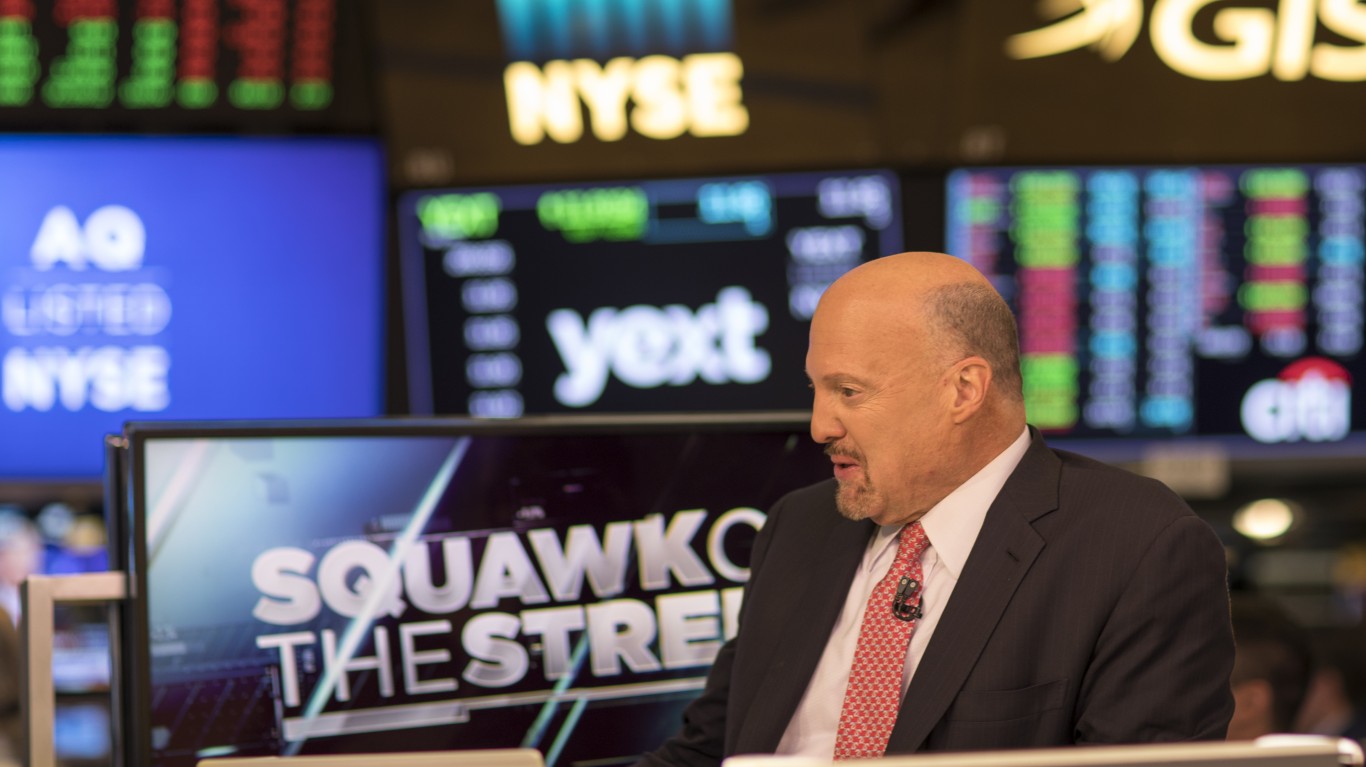
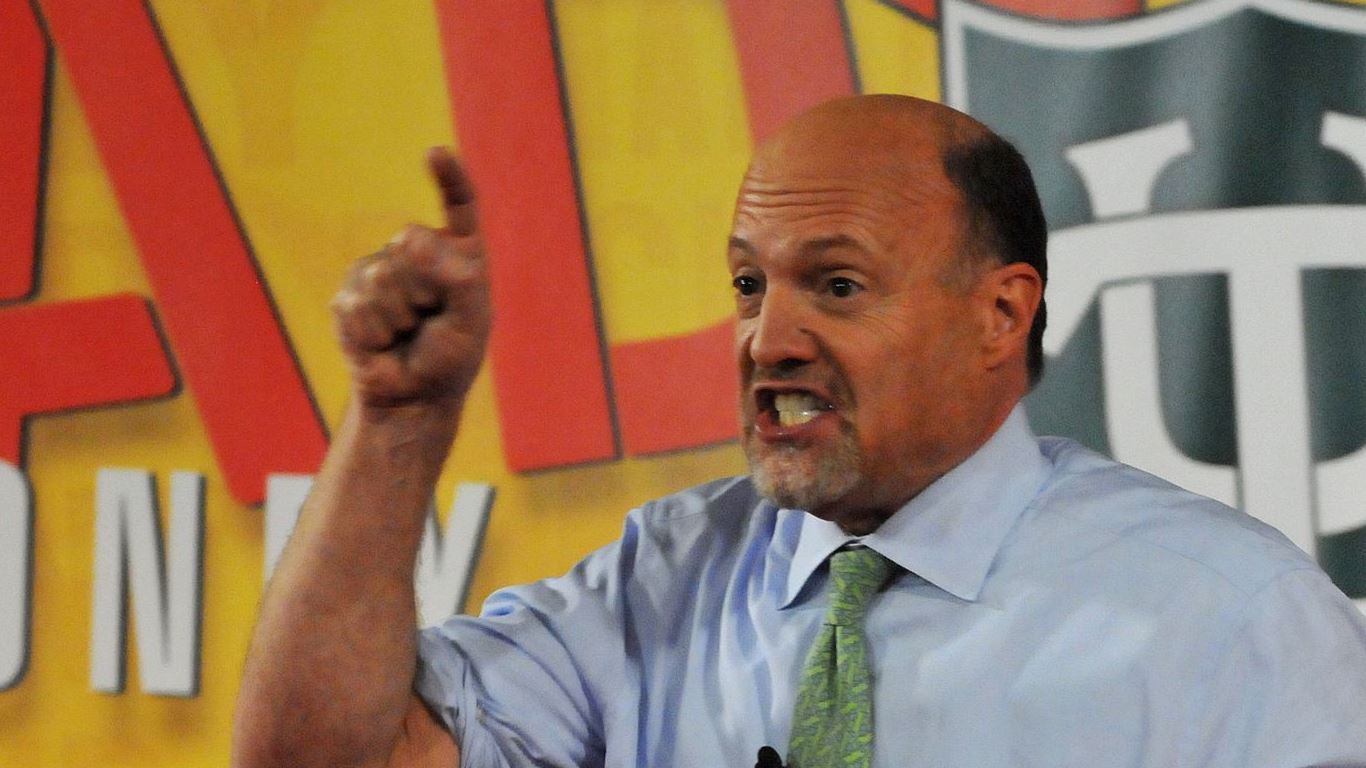
“Last year I invested in this stock, and I am currently down 30%, patiently waiting on a rebound.” That confession came from a caller on the May 26 episode of Mad Money, asking Jim Cramer whether DoorDash still belonged in his “own it, don’t trade it” bucket.
Cramer’s answer was immediate: “I think DoorDash is a buy.”
Then he diagnosed what he thinks is actually wrong with the stock, and it has very little to do with the company itself.
Cramer’s Diagnosis: A Sector Rotation Story
Here is the full Cramer read on DoorDash (NASDAQ:DASH | DASH Price Prediction): “There’s a real group of stocks now. Uber, DoorDash, Reddit, they are going down. People want to own hardware. They don’t want to own those others, they don’t want to own Zscaler. They don’t want to own semiconductors. I mean they want to do so for this one Semi only semi. And that’s what’s hurting DoorDash.”
He repeated the punchline for emphasis: “That’s what they want is semi, not DoorDash.”
I have been watching this rotation play out for months now, and the tape backs Cramer up. DASH is down 32% year to date, with shares at $158.30 after starting the year above $226. Uber (NYSE:UBER) is down 14% YTD. Reddit (NYSE:RDDT) is down 37% YTD. Three platform companies bleeding in unison.
Meanwhile, the Semis Cramer Is Talking About
NVIDIA (NASDAQ:NVDA) is up 15% YTD and 64% over the past year, riding 85% revenue growth and a Q2 guide of $91 billion. Broadcom (NASDAQ:AVGO) is up 22% YTD and 86% over the past year.
When Jensen Huang calls AI infrastructure “the largest infrastructure expansion in human history,” capital follows. Every dollar chasing that thesis is a dollar not buying food delivery, ride-share, or social. Goldman’s 2026 outlook flagged this directly, noting that semiconductors are seeing continued multiple expansion as opposed to software.
What DoorDash Actually Did Last Quarter
The business is still growing fast. In Q1 2026, DoorDash posted revenue of $4.04 billion, up 33% year over year, with Marketplace GOV up 37% to $31.6 billion and adjusted EBITDA up 28% to $754 million. The Deliveroo deal that closed in October contributed $362 million in revenue. Free cash flow came in at $420 million.
The blemishes are real but mostly investment-related. GAAP net income fell 5% while revenue grew a third, and Q2 carries a $50 million Dasher gas relief headwind. Q4 2025 EPS of $0.48 missed the $0.59 consensus kicked off the slide.
The Valuation Question Investors Need to Answer
Even after the haircut, DASH trades at a forward P/E of 53 and trailing P/E of 76. Compare that to Uber’s roughly 14x trailing earnings, and you can see why some investors balk at “cheap.” The analyst community still likes it: 36 buy-or-strong-buy ratings versus 10 holds, with an average target of $245.99, well above today’s $158.
Reddit’s own community is wrestling with the same question. The dominant thread on RDDT this week asks whether the recent dip is a great buying opportunity or has more downside. DASH composite sentiment sits at 52.98, neutral, with a 30-day improvement of 10 points.
The Logic Bridge
You buy DoorDash here IF you believe Cramer is right that the semiconductor rotation is temporary, that 56 million monthly active users and 35 million members represent a durable platform, and that Deliveroo integration delivers the $200 million in incremental 2026 EBITDA management is guiding to. You avoid it IF you think a 53x forward multiple cannot survive a deeper consumer slowdown, or if you believe the “own hardware, not software” trade has further to run.
The caller asked Cramer whether to keep waiting patiently while down 30%. His answer was that Wall Street’s tunnel vision is what’s testing the patience, while DoorDash’s own execution remains intact. Every company is becoming a tech company or dying, and DoorDash already crossed that bridge. The question is whether the market remembers before the rotation reverses, or after.








 Top Gaining Stocks
 Top Losing Stocks