




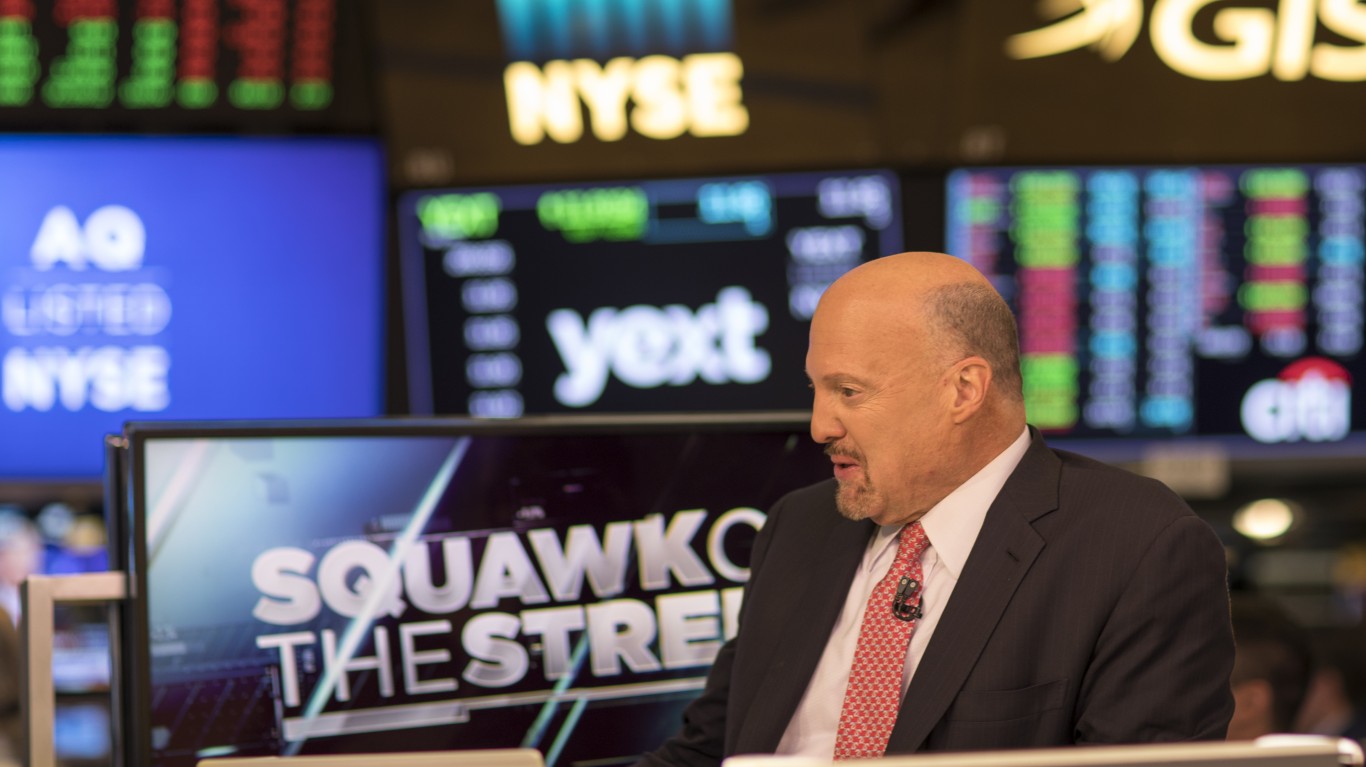
Two of the loudest, most experienced voices in financial media just pounded the table on a stock the crowd has written off. On Mad Money on May 28, 2026, Jim Cramer hosted legendary technician Larry Williams for one of those segments that makes you put your coffee down. The setup: an $85.99 billion Latin American commerce and fintech machine, trading like nobody wants to own it, with smart money quietly buying every dip.
That company is MercadoLibre (NASDAQ:MELI | MELI Price Prediction), and I have been a shareholder since July 2012. So when Cramer and Williams started talking, I listened closely.
The 10% Bullish Signal
Williams has been trading for more than 60 years, and his framework rests on one idea: when nobody wants a stock, that is when you start wanting it. He laid out the cycle work and advisor surveys, then said this:
“Only 10% were bullish. And when we see such low bullish readings, regardless of where we are, the market’s oversold. It’s time to rally.”
Williams added that his historical cycle work shows MELI rallies 85% of the time during this phase. He also flagged something subtler in the tape. With roughly 85% of MercadoLibre’s float held by institutional investors (Alpha Vantage pegs institutional ownership at roughly 83%), accumulation data shows professionals leaning in while retail flees.
“Smart money, professional money, is seeing value even in the strength of weakness here. They started to buy. That’s unusual. That’s an abnormal position in the market, Jim. When they buy weakness, we usually rally.”
Cramer, who has called himself a student of Larry Williams since 1987, said:
“Nobody believes this market’s going to rally. Nobody believe it’s going to rally. Up it goes.”
Why the Crowd Bailed
The pessimism has real roots. MELI is down roughly 16% year to date and about 34% over the past year, with the 50-day moving average sitting well below the 200-day at $2,032. Management is spending aggressively, and it shows up in the income statement.
In Q1 2026, reported May 7, MercadoLibre delivered $8.85 billion in revenue, up 49% year over year, beating consensus. But operating income fell roughly 20% to $611 million, operating margin compressed roughly 600 basis points, and adjusted free cash flow turned negative at $56 million. You can pull the actual earnings exhibit from the SEC filing and see the trade-off in black and white.
What the Spending Is Buying
The same quarter that spooked margin watchers showed Brazil unique buyer growth of 32% year over year, the fastest pace in five years. The credit card portfolio grew 104% to $6.6 billion. Advertising revenue jumped 73% in USD. Fintech monthly active users hit 83 million, and assets under management climbed 77% to roughly $20 billion.
The long-term backdrop is what Wall Street keeps under-pricing. Latin American e-commerce penetration sits in the mid-teens, the average Latin American makes 7 online purchases a year versus 41 in the US, and 85% of Mexicans pay cash for purchases under $30. Every gap is a runway. We laid out the regional opportunity in our MercadoLibre vs. Alibaba comparison from February.
The Cramer Kicker
Cramer closed the segment with the line that stuck with me: “Latin America, I think, is very strong, but this stock’s weak. So it’s an opportunity.” He added, “I know a lot of people don’t like the stock, and obviously maybe they’re wrong. That’s a good time to buy right now.”
The thesis I am holding for: if you believe AI-driven productivity gains let MELI grow engineer-flat into a doubling LatAm e-commerce market, the current margin trough is the price of admission. If you think the spending never converts, this stays a value trap. Twenty-four analysts rate it buy or strong buy against two holds, with an average target near $2,230. The crowd at 10% bullish has been wrong before. Cramer and Williams are betting it is wrong again, and I am not selling a share of mine.















 Top Gaining Stocks
 Top Losing Stocks