ICICI Bank just marked a new 52-week high at $34.90, 0.09% above the peak it set on November 10. The $125 billion lender has added roughly $10 from its April low near $25, and it keeps making new highs on consecutive attempts.
Palo Alto Networks authorized a new $1 billion buyback running through the end of 2027, its first capital-return move after the post-earnings slide. That is 0.36% of its market cap, a confidence signal rather than a meaningful float reduction.
A 73-year-old with $1.2 million in his 401(k) is waiting for the market to bounce before touching his first RMD. The IRS grace period sounds like a gift, but it could quietly trigger a Medicare surcharge two years from now.
Just one launch today, and Capital Group owns it: a multi-asset income fund priced at 0.35%, cheap enough to compete directly with the income allocation funds already on the shelf.
Wilson is telling clients the final leg down, likely around the December Fed meeting, is the entry point. The call pairs an 8,700 target with a rotation inside quality toward cyclicals, led by industrials, and a hawkish Fed as the one risk that breaks it.

Cybersecurity took the close, with SentinelOne up 10.8% and CrowdStrike and Palo Alto Networks both above 8%, the latter alongside its fiscal Q1 2027 earnings. Managed care ran the opposite way, UnitedHealth down 10% and Elevance down 7.4%.
Sponsored
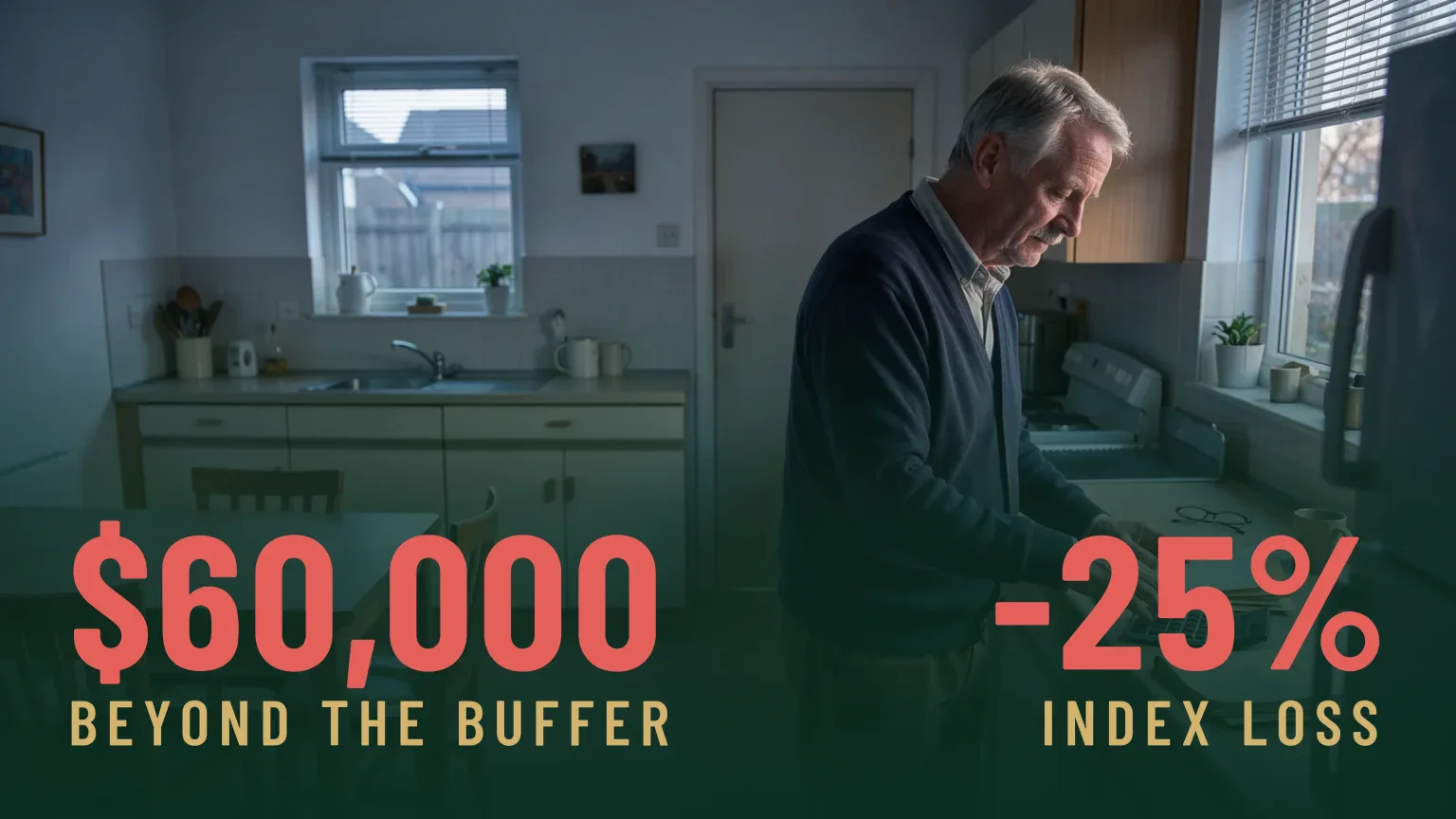
Insurers sell the word “protection,” but a buffer is not a floor, and the difference shows up only after the market drops. Before your next renewal, learn what the contract fine print really promises, what it costs in upside, and who absorbs the rest.
Three monthly income ETFs promise a regular paycheck, but 24 months of payouts reveal one that lurches wildly, one that wobbles, and one with a gap in January. Which check can a retiree actually budget around?
Hyperscale demand pushed product revenue up 77% year over year, and management raised full-year guidance for the third straight quarter, now calling for $5.20 billion to $5.21 billion. The tradeoff is mix: non-GAAP gross margin narrowed to 69.2% from 74.1%, though operating income more than absorbed it.
Next-Generation Security ARR jumped 66% to $9.73 billion, and management responded by lifting full-year guidance to $4.26 to $4.30 in non-GAAP EPS. The new wrinkle for holders: an agreement to buy Applied Compute, pushing the security platform deeper into open-weight AI models right after the CyberArk deal.
We had a strong start to the year with a record Q1 and delivered one of our highest NGS ARR beats ever as our customers turn to us to protect them against an unprecedented threat environment.
Arora is pointing at next-gen security ARR, the metric that decides whether the $275 billion platform story holds up, and he says the fiscal Q1 beat there ranks among the company's largest ever. Shares fell anyway on fiscal 2027 guidance.
Sponsored
As AI reshapes the threat landscape, we must continually evolve to protect our customers and enable them to adopt AI securely. To that end, we are pleased to announce our intent to acquire Applied Compute, which will allow us to deliver secure open weight models to our customers and accelerate the adoption of enterprise AI.
Arora used the fiscal 2027 first-quarter call to put a deal on the table: Applied Compute, aimed at shipping secure open-weight models to enterprises. For a $275 billion security franchise, that is a bet that AI model deployment itself becomes the next product line.