




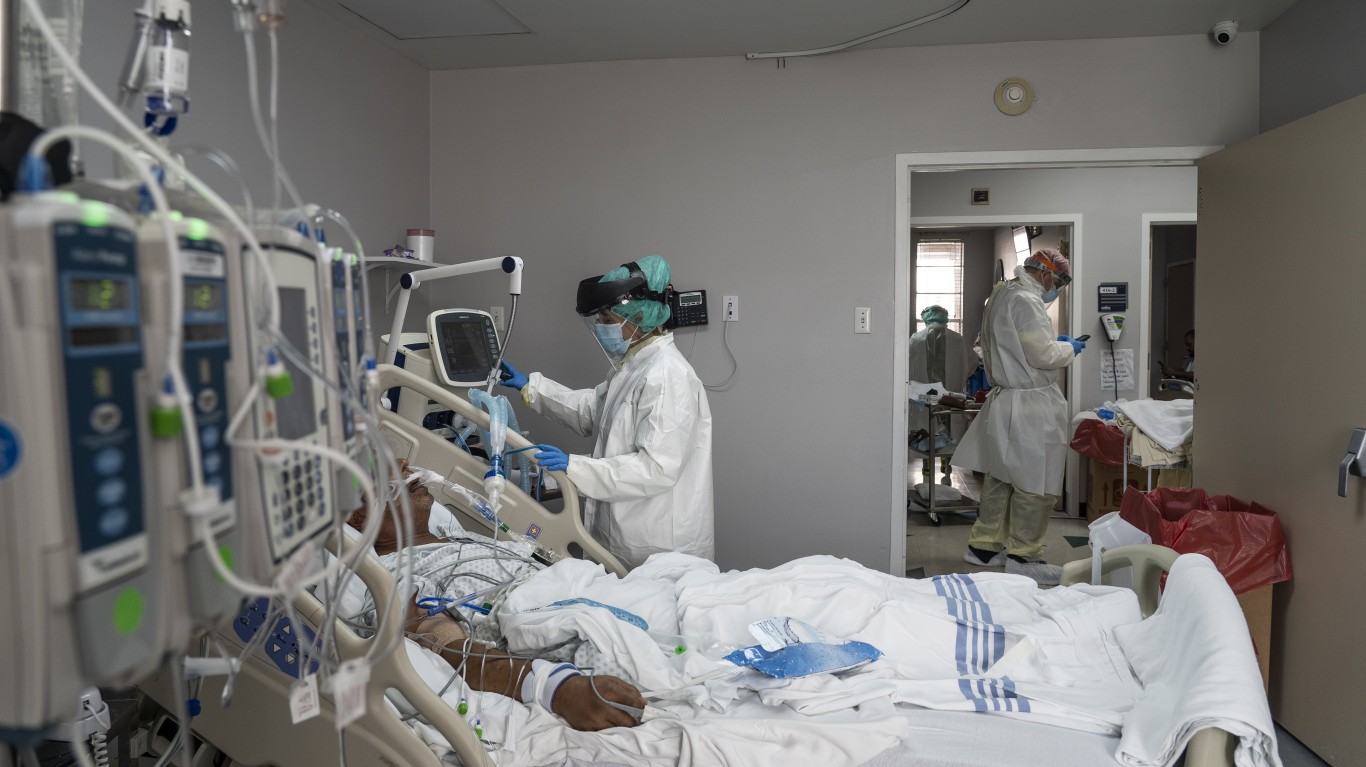
The U.S. reported over 289,000 new cases of coronavirus on July 20, bringing the total count to more than 33.7 million confirmed cases of COVID-19. There have been more than 603,000 COVID-19-related deaths — the highest death toll of any country.
New cases continue to rise at a steady rate. In the past week, there were an average of 7.5 daily new coronavirus cases per 100,000 Americans — essentially unchanged from the week prior, when there were an average of 4.5 daily new coronavirus cases per 100,000 people.
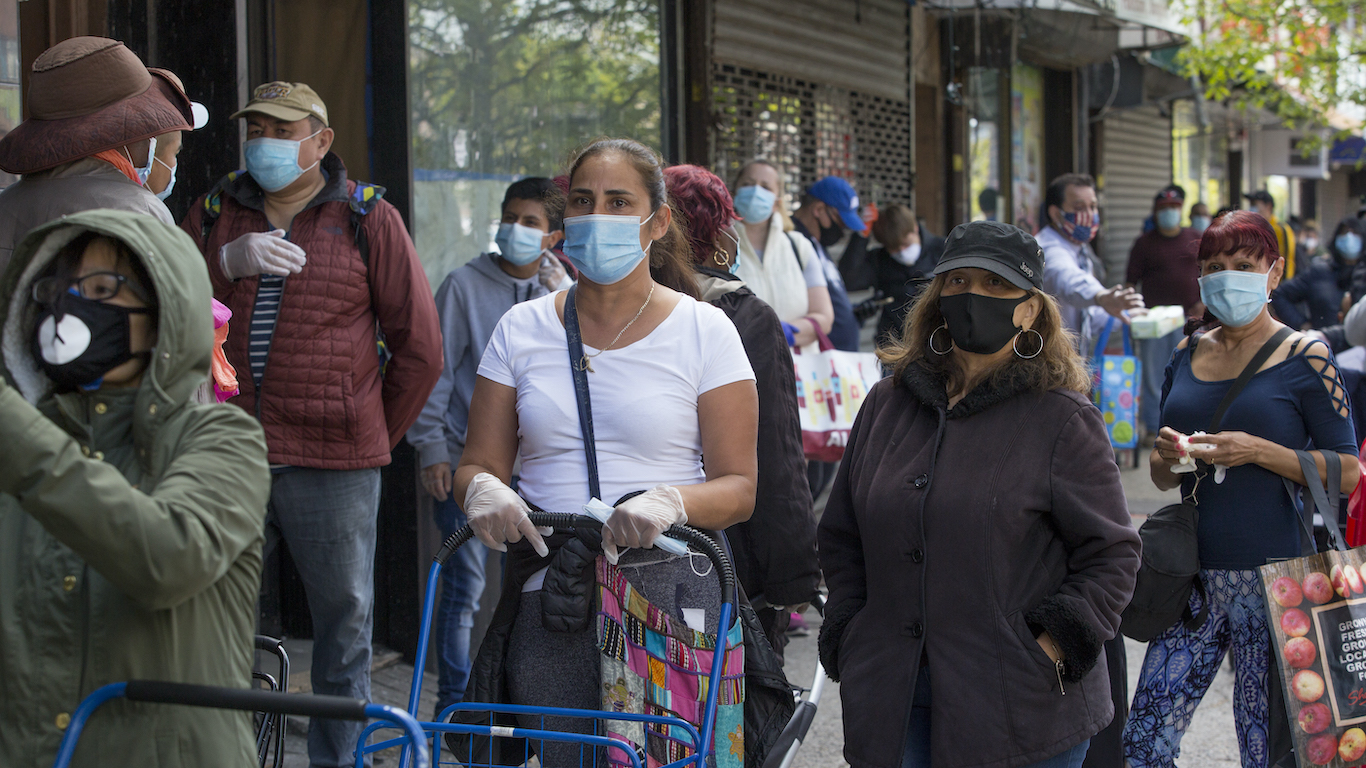
While new data shows that the risk of contracting COVID-19 is high in almost every part of the country, cities continue to be the sites of major outbreaks and superspreader events. Experts agree that the virus is more likely to spread in group settings where large numbers of people routinely have close contact with one another, such as colleges, nursing homes, bars, and restaurants. Metropolitan areas with a high degree of connectivity between different neighborhoods and a large population may be particularly at-risk.
The Goldsboro, NC metro area consists of just Wayne County. As of July 20, there were 9,421.3 confirmed cases of COVID-19 per 100,000 Goldsboro residents, 9.8% lower than the national rate. For comparison, the U.S. has so far reported 10,449.4 cases per 100,000 Americans nationwide.
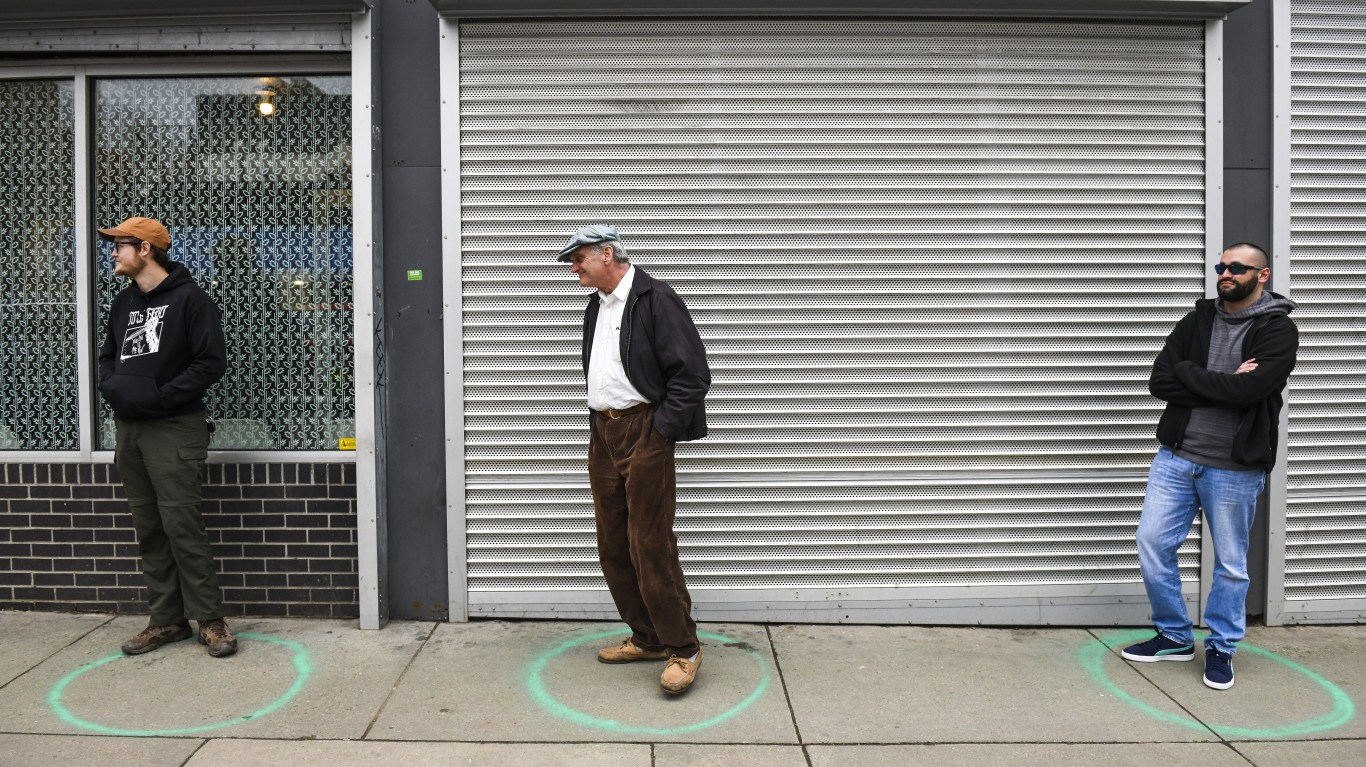
In order to slow the spread of COVID-19, city and county governments have ordered the closure of thousands of consumer-facing businesses. These measures have led to widespread job loss and record unemployment. In the Goldsboro metro area, unemployment peaked at 10.1% in April 2020. As of May 2021, the metro area’s unemployment rate was 5.3%.
To determine how the incidence of COVID-19 in the Goldsboro, NC metro area compares to the rest of the country, 24/7 Wall St. compiled and reviewed data from state and local health departments. We ranked metro areas based on the number of confirmed COVID-19 cases per 100,000 residents.To estimate the incidence of COVID-19 at the metropolitan level, we aggregated data from the county level using boundary definitions from the U.S. Census Bureau. Population data used to adjust case and death totals came from the U.S. Census Bureau’s 2019 American Community Survey and are five-year estimates. Unemployment data is from the Bureau of Labor Statistics and is seasonally adjusted.
| FIPS | MSA | Population | Confirmed COVID-19 cases as of July 20 | Confirmed COVID-19 cases as of July 20 per 100,000 residents | Cumulative COVID-19 deaths as of July 20 | Cumulative COVID-19 deaths as of July 20 per 100,000 residents |
|---|---|---|---|---|---|---|
| 25860 | Hickory-Lenoir-Morganton, NC | 366,678 | 44,175 | 12,047.4 | 670 | 182.7 |
| 40580 | Rocky Mount, NC | 146,678 | 17,507 | 11,935.7 | 313 | 213.4 |
| 15500 | Burlington, NC | 163,324 | 19,149 | 11,724.5 | 288 | 176.3 |
| 24780 | Greenville, NC | 178,433 | 20,736 | 11,621.2 | 96 | 53.8 |
| 16740 | Charlotte-Concord-Gastonia, NC-SC | 2,545,560 | 288,597 | 11,337.3 | 3,251 | 127.7 |
| 49180 | Winston-Salem, NC | 666,216 | 66,925 | 10,045.5 | 804 | 120.7 |
| 24660 | Greensboro-High Point, NC | 762,063 | 72,598 | 9,526.5 | 1,125 | 147.6 |
| 24140 | Goldsboro, NC | 123,603 | 11,645 | 9,421.3 | 243 | 196.6 |
| 27340 | Jacksonville, NC | 195,069 | 18,155 | 9,307.0 | 154 | 78.9 |
| 22180 | Fayetteville, NC | 519,101 | 48,185 | 9,282.4 | 563 | 108.5 |
| 35100 | New Bern, NC | 124,786 | 11,549 | 9,255.0 | 169 | 135.4 |
| 39580 | Raleigh-Cary, NC | 1,332,311 | 119,917 | 9,000.7 | 1,033 | 77.5 |
| 48900 | Wilmington, NC | 288,337 | 25,302 | 8,775.1 | 245 | 85.0 |
| 20500 | Durham-Chapel Hill, NC | 626,695 | 49,058 | 7,828.1 | 582 | 92.9 |
| 11700 | Asheville, NC | 454,351 | 34,802 | 7,659.7 | 633 | 139.3 |









 Top Gaining Stocks
 Top Losing Stocks