A New Problem for Clean Energy: Dealing With Old Windmill Blades
Recycling wind turbine blades that have reached the end of their useful lives is not something that public officials or landfill operators have thought much about. Now would be a good time to get serious.


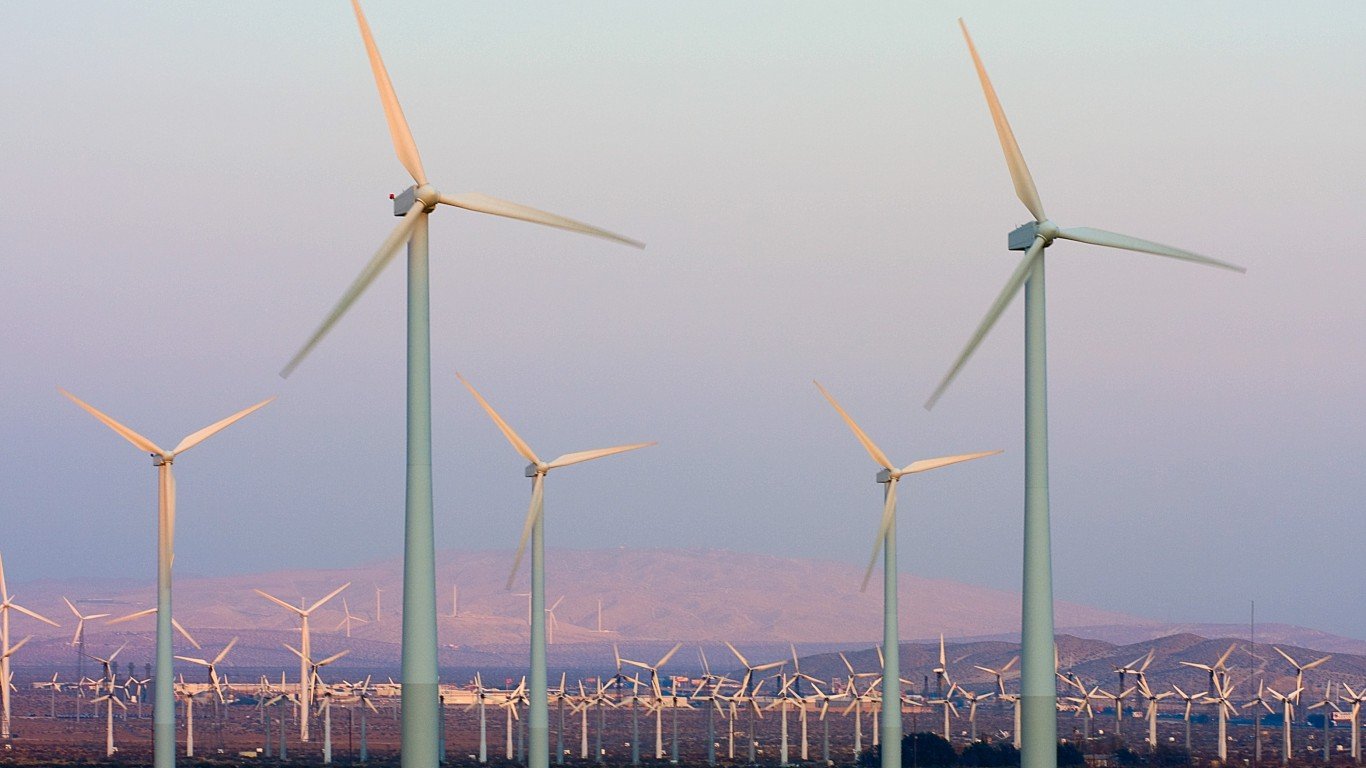
If you live in a state where wind power is generating an increasing share of electricity, you’ve probably passed a windmill blade being towed down the highway and assumed that another new wind turbine is being installed somewhere. You might be wrong.
Wind turbines put into service in the 1990s and the 2000s are reaching the end of their useful lives of 20 to 30 years and are being replaced. That’s creating a massive amount of junk that needs to be disposed of or recycled.
By one estimate, by 2020 some 50,000 tons of old blades will be added to the world’s waste stream, and by 2034 that total will rise to 200,000 tons. The blades (older ones are made from fiberglass while new ones are constructed from carbon fiber) are both large and difficult to recycle because they need to be strong in order to do their job.
MidAmerican Energy, for example, a Berkshire Hathaway-owned electricity provider in the Midwest, is upgrading a 110-turbine, western Iowa wind farm with taller towers, longer blades, new hubs and refurbished generators, according to an AP report from last week. Each turbine will send three blades to a landfill 130 miles away in Nebraska.
The metals in the blades, mostly steel and copper, can be recycled, U.S. Department of Energy Researcher Daniel Laird told The Des Moines Register. Landfill operators thought cutting the old blades into 40-foot sections would make them simple to crush and compact. It turns out that the blades don’t give up so easily.
In the Netherlands, old blades are cut up into pieces of various sizes and used to create playgrounds and other public outdoor furniture. Some have been configured as park benches with one blade positioned as the seat and another as the back.
According to a report at Chambre 237, researchers in Denmark are working on ways of separating the glass content of the blades from the fiber so that each could be recycled. In Washington state, other researchers have found that when the blades are cut into small pieces they can be used to make a new kind of composite material that could be used to manufacture other products.
Iowa State University associate professor of industrial and manufacturing systems engineering, Frank Peters, told the AP, “Unless there’s a better solution, they are going to get landfilled. But if you look at the total economic and environmental costs of reprocessing that blade, landfilling may be the best solution.”
Or maybe some creative thinking. A Dutch firm said that if the country used old blades to produce just 5% of their annual production of street furniture like playgrounds, public benches and bus shelters, the country would be recycling 100% of the 400 new blades it makes annually.
Contact [email protected] for any questions or corrections.
Paul Ausick has been writing for 247Wallst.com for more than a decade. He has written extensively on investing in the energy, defense, and technology sectors. In a previous life, he wrote technical documentation and managed a marketing communications group in Silicon Valley.
He has a bachelor's degree in English from the University of Chicago and now lives in Montana, where he fishes for trout in the summer and stays inside during the winter.