Hershey Company (HSY) Vs. Procter & Gamble (PG): Which Dividend Stock Is Better For Passive Income Lovers?
Consumer staple stocks are designed to add defensive features to an investor’s portfolio during times of economic uncertainty, such as the environment that is unfolding now. Even with the tariffs, consumers still must buy laundry detergent, and many will choose…


Consumer staple stocks are designed to add defensive features to an investor’s portfolio during times of economic uncertainty, such as the environment that is unfolding now. Even with the tariffs, consumers still must buy laundry detergent, and many will choose to stock up on candy to help take the edge off of the stock market swings. Hershey Company (NYSE: HSY | HSY Price Prediction) and Procter and Gamble (NYSE: PG) are two such stocks, and both of them have also prioritized shareholder value by rewarding investors with quarterly dividends for decades.
Now that the U.S. economy is officially slowing down due to the tariffs, as evidenced by the Q1 GDP report, consumers have greater reason to flock to bargain brands instead of name brands to save money. As a result, both Hershey and P&G could feel the pinch from changes in consumer behavior with the threat of an economic recession looming. But if it’s passive income you want, each of these companies prioritizes shareholder value even in the lean times. If you are trying to decide which stock is better for passive income — Hershey or P&G — stay with us because we are going to analyze both companies to find the strengths and weaknesses of each balance sheet.
Hershey Company Dividend Analysis
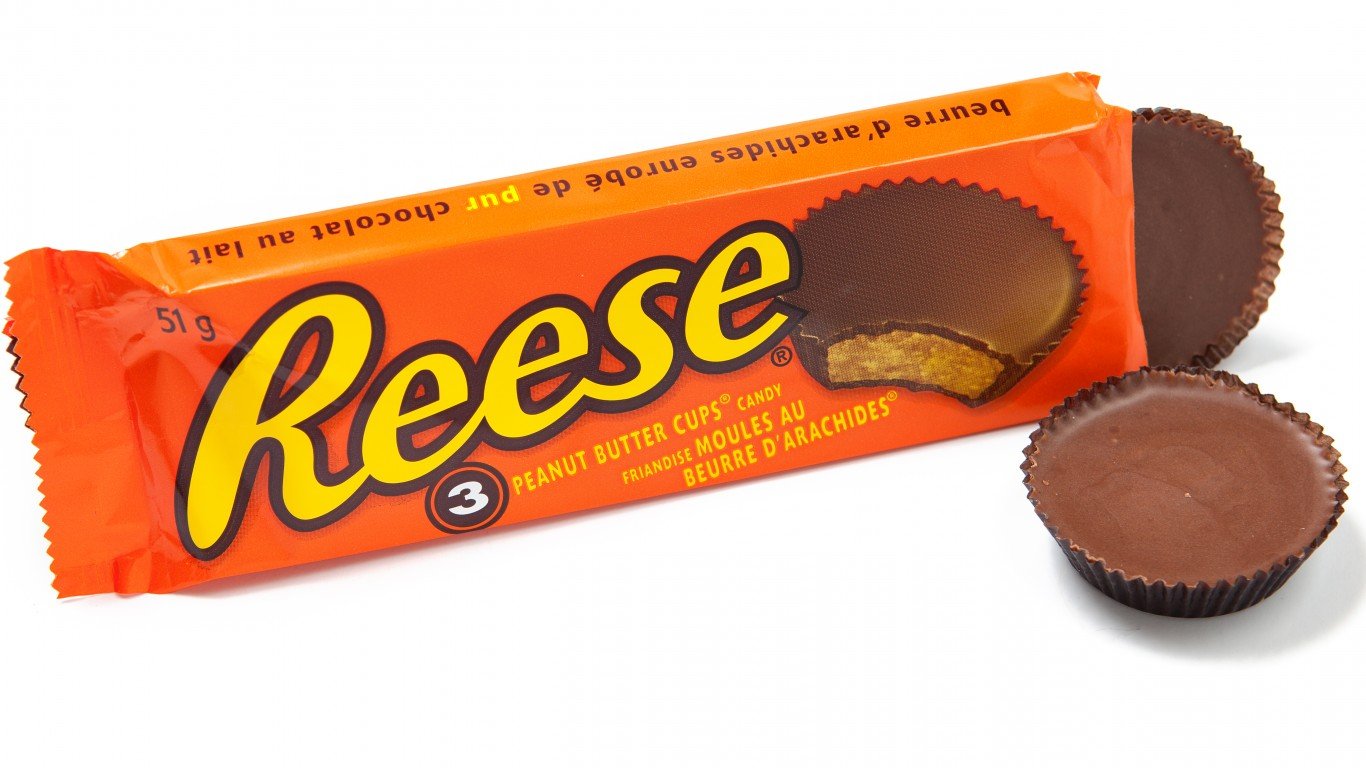
Dividend Amount: $1.37
Dividend Frequency: Quarterly
Dividend Yield: 3.35%
With a generous dividend yield of 3.35%, Hershey has a proven history of paying dividends and raising them steadily. In early May 2025, the company announced its latest cash dividend of $1.370 per share, marking its 381st straight dividend on its common stock. While Hershey has not raised its dividend in 2025, at least not yet, it has a reputation for raising its annual dividend, including over the past several years over which time it has grown from $3.874 in 2022 to $4.456 in 2023 to $5.48 in 2024.
As a consumer staple stock of one of America’s most beloved treats, including Reese’s Peanut Butter Cups, Hershey is one of those stocks designed to weather changes in economic cycles, such as the economic slowdown that is unfolding currently. As of Q2 2025, the stock has fallen 4.1% and is down a steeper 16.3% over the past 12-month stretch.
Hershey is in the midst of a two-year corporate restructuring in which it is looking to slash costs by $300 million. When that overhaul was announced in 2024, CFRA Research’s Arun Sundaram warned, “Consumers are spending less during non-seasonal periods, a trend that will likely continue throughout 2024,” a trend that seemingly has persisted in 2025.
Hershey’s Q1 2025 results were a mixed bag, with better-than-expected EPS of $2.09 per share but revenue that fell short of consensus estimates at $2.81 billion. The company’s FY 2025 guidance included an EPS range of $6.00-$6.18 per share, the low end of which is below analyst expectations of $6.08 per share. With a market cap of $33.1 billion Hershey has total cash of $1.52 billion and total debt of $6.29 billion on the balance sheet. Considering Hershey has not cut its dividend in the midst of its cost-cutting measures, it is reasonable to assume that the company will continue to reward shareholders with cash distributions even as the stock price languishes.
P&G Dividend Analysis
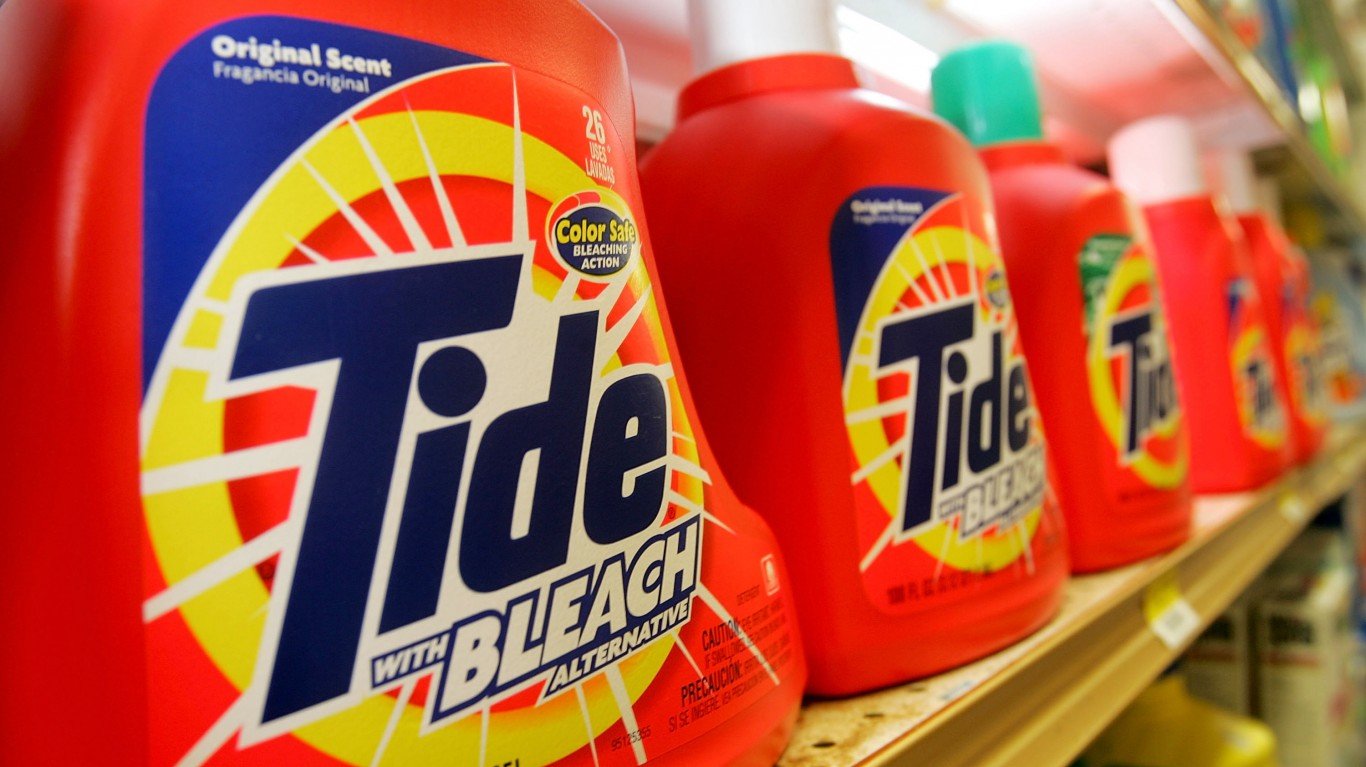
Dividend Amount: $1.0568
Dividend Frequency: Quarterly
Dividend Yield: 2.6%
When it comes to dividends, Procter & Gamble is in a league of its own, having been making cash distributions over the past 135 years, roughly half of which involved dividend increases. P&G’s last dividend increase was in April 2025, at which the company hiked its distribution by 5%, from $1.0065 to $1.0568. The company’s dividend yield hovers at 2.6%, slightly below that of Hershey but above the average S&P 500 company’s dividend yield of 1.8%. P&G stock is down 4.7% year-to-date and is nearly flat over the past 12 months.
In its fiscal Q3, P&G reported net sales of $19.8 billion, a 2% decline year-over-year. Cash flow came in at $3.7 billion in the quarter on net earnings of $3.8 billion. In addition to dividends, the company also returned shareholder value by way of a $1.4 billion in share repurchases during the period. P&G is targeting adjusted free cash flow productivity of 90% and plans to disperse $10 billion in dividends in 2025.
Of the company’s quarterly performance, CEO Jon Moeller stated, “We delivered modest organic sales and EPS growth this quarter in a challenging and volatile consumer and geopolitical environment,” adding that P&G will continue to make adjustments. With total cash of $9.1 billion, P&G also carries debt of $34.1 billion on its balance sheet. While its debt load is heavy, it is cushioned by the company’s market cap of $376.3 billion, which is assessed in activities such as credit worthiness.
Bottom Line
Both Hershey and P&G pay dependable dividends, but Hershey is facing an uphill battle in the short term. As the corporate restructuring unfolds, Hershey has the potential to emerge with a leaner and meaner balance sheet. Investors who are in it for the long haul may be willing to stick with Hershey along that journey. On the other hand, P&G is the more stable play and will yield greater dividend increases in the short term. As for the long term, history suggests that it will remain a healthy dividend stock for the foreseeable future, the latest economic downturn notwithstanding. Consumer brand loyalty is key as the economic twists and turns continue to unfold in the coming months.
Contact [email protected] for any questions or corrections.
Gerelyn Terzo is the author of dividend investing handbook "Dividend Investing Strategies: How to Have Your Cake & Eat It Too." A veteran financial journalist, she covers agri-finance for outlets like Global AgInvesting and the broader stock market and personal finance for 24/7 Wall Street. She began at CNBC and later helped launch Fox Business in New York. Gerelyn currently resides in Woodland Park, Colorado and dabbles in nature photography as a hobby.