Steady Quarterly Payouts from My 7-Year Income Machine Journey
With such a wide range of US company stocks available for investment, the sheer breadth of choices can often become intimidating and overwhelming to neophyte investors. Familiar industrial names can often be a good research starting point, as their ubiquity…


With such a wide range of US company stocks available for investment, the sheer breadth of choices can often become intimidating and overwhelming to neophyte investors. Familiar industrial names can often be a good research starting point, as their ubiquity is often due to the widespread adoption of their products and services, meaning the odds are good that the company’s revenues should be proportionately strong.
Companies with consistently strong revenue and earnings growth will inevitably rise in market price. Those companies that find themselves sitting on extra cash after capital expenditures for R&D and other further expansion will often elect to issue dividends to both reward current shareholders and to attract new ones. If the business model is succeeding and all cylinders are firing without any interruptions, dividend increases are a common result. Those companies that have managed to increase dividends for a minimum 25 consecutive years earn inclusion into the elite category known as “Dividend Aristocrats”. This elite membership implies a rare combination of consistent growth, dividend income generation, and longevity that offers an extra layer of downside investment protection for shareholders. All yield quotes are based on market price at the time of this writing
The Coca-Cola Company
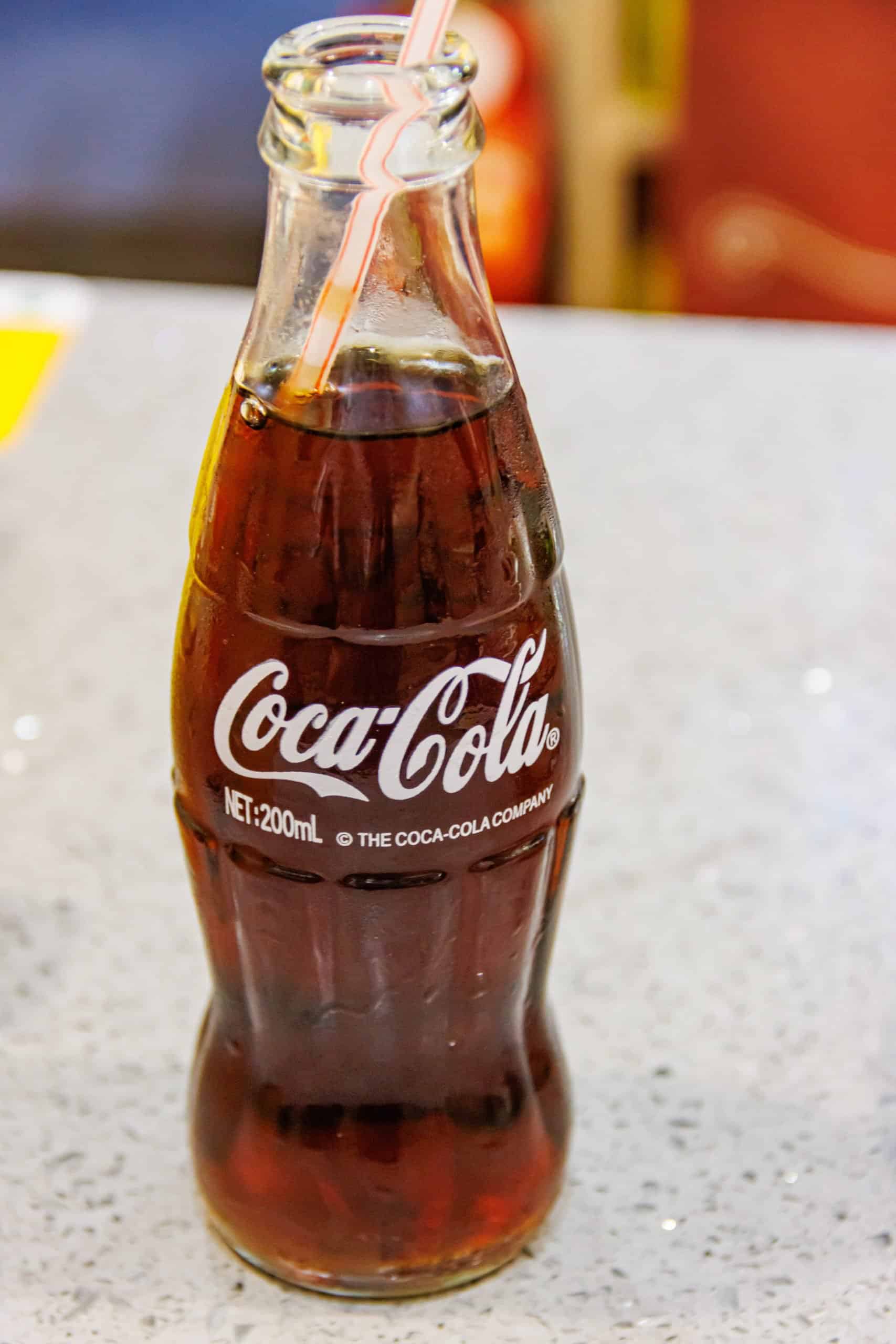
Among US brands, it’s hard to come up with one as universally recognized and sold around the globe as ubiquitously as Coca-Cola. With its 140th anniversary fast approaching in 2026, The Coca-Cola Company (NYSE: KO | KO Price Prediction) is not only a Dividend Aristocrat, but at 64 years of dividend increases, belongs to the even rarer Dividend Kings club.
While its current 3.11% dividend is solidly higher than the S&P 500 average but nothing earthshattering, the Coca-Cola brand and its beverage products have given the company clout in a variety of other arenas.
- 40% Global Market Share: Coca-Cola’s expansion of its high-growth brands across its beverage portfolio includes Fuze Tea, Minute Maid Zero Sugar, and Powerade, and introduced products like Coke Lemon and Reformulated Sprite. Expansion of its other flavors has led to Coca-Cola gaining a 40% global market share in the non-alcoholic beverage sector.
- Sports Presence: Seeing international markets as a market share territory ripe for further opportunity, Coca-Cola has raised its profile at major European events, such as promotional investments in the Euro 2024 Football Championship, the Paris Olympics, and various music festivals. Forming partnerships with local food service providers to promote combo meals also contributed further sales. Of course, Coca-Cola’s memorable Super Bowl ads have been perennially acclaimed, and have received several Clio Awatd nominations.
- Proprietary Technology: Marketing-wise, digital technology has given Coca-Cola another growth tool with its Studio X global network marketing platform, which measures real-time reactions to newly produced content, and e-commerce, which has grown in double digits in a number of countries.
In the wake of President Trump’s reciprocal tariff policies to level the international trade playing field and to protect US exporters, Coca-Cola may be an especially strong beneficiary. Coca-Cola’s business model licenses its formula to various local bottlers and manufacturers around the world. As a result, its domestic US production for US consumers will go unscathed, while the risks of any further tariff action against its overseas sales are mitigated by its local production in their respective foreign regions.
Realty Income Corporation

If one has ever visited the MGM Bellagio in Las Vegas or shopped at:
- Chipotle
- 7-Eleven
- CVS Pharmacies
- Walgreens
- Treasury Wine Estates
- Lowe’s
- Dollar General
- FedEx
- L.A. Fitness
- Sainsbury’s
- Dollar Tree
- Sam’s Club/Walmart
- BJ’s Wholesale Clubs
…then there are good odds that the visitor frequented premises owned by Realty Income Corporation (NYSE: O). Since its founding in 1969, Realty Income has become one of the largest publicly traded Real Estate Investment Trust (REIT) entities. The company’s staggeringly large real estate portfolio consists of a total of 15,600 properties with 1,600 tenant clients at 98.5% occupancy across all 50 states, as well as in the UK, Ireland, Germany, Italy, France, Spain, and Portugal. The net asset value of its portfolio is estimated at $39.6 billion.
Realty Income was founded with dividend remittance to shareholders as a priority, and the company has unflaggingly made monthly distributions since its inception in 1969 and continued the practice when it went public in 1994. It joined the Dividend Aristocrat club in February 2020.
The company’s 5.31% dividend continues to increase every year, and as a REIT, it is relatively unaffected by volatile gyrations in the stock market or interest rates, since its rent rolls are under long term lease contracts. Therefore its stability can help to mitigate the impact of other price sensitive assets in one’s portfolio.
Consolidated Edison

Consolidated Edison (NYSE: ED) is one of the oldest utility companies in the US. As the reason New York City became “The City That Never Sleeps” as referenced in Frank Sinatra’s “New York, New York”, Con Ed’s history played a key role in the development of New York as a global center for commerce, trade, and politics. Beginning as the New York Gas Light Company in 1823, it quickly went public on the NYSE and expanded under the infamous Boss Tweed’s Tammany Hall political machine. He subsequently consolidated six other gas companies (hence the source of “Consolidated”) and also acquired The New York Steam Company.
By 1882, Thomas Edison’s Edison Illuminating Company pioneered one of the earliest electricity utilities. It was the clear frontrunner following the historic “War of the Currents”, which was the subject of the 2017 film, The Current War, in which Edison, George Westinghouse, and Nikola Tesla competed against each others’ rival electric distribution systems for nationwide adoption by the US government. Edison Illuminating Company soon was also merged into Consolidated Gas, and was later renamed Consolidated Edison in 1936.
Today, Consolidated Edison supplies electricity, natural gas, and steam power (the largest steam power system in the US) throughout New York State and New Jersey. It is the fourth largest public US utility by revenue, and has withstood catastrophes like the 9-11 Twin Towers attack and Hurricane Sandy and continued to come back strongly.
At present, Con Ed supplies electricity, gas, and steam to roughly over 5 million customers across all five New York City boroughs, Westchester County, southeastern New York, and northern New Jersey.
Con Ed’s longevity and indispensability has also earned it Dividend King status. Its 3.41% yield is partially the result of a price pullback from concerns over escalating New York property taxes and their effect on affordability. This could result in further depopulation, as wealthy New York residents migrate to lower taxed states like Texas and Florida. Nevertheless, New York’s importance to global finance should ensure Con Ed’s place in its infrastructure for many more generations to come.
Verizon Communications
According to Statista, practically 70% of all US video content was viewed on mobile devices, as opposed to smart TVs, DVDs, or other hardwired mediums. In fact, over half of world wide web traffic is now consumed through mobile accounts.
Verizon Communications (NYSE: VZ) is presently the largest US wireless carrier, based on its extensive national network. With its top level optic fiber system powering its 5G network, Verizon is expanding its 5G and cutting edge AI technologies, including a recently announced deal to offer Meta Platforms’ new Ray Ban AI display spectacles.
Although not yet qualified for membership in the Dividend Aristocrats Club, Verizon has been going strong with its dividend increases for 19 consecutive years to date, giving it 6 years still to go. Unlike most other Dividend Aristocrats or Kings (50 consecutive increase years or more), the Verizon 6.33% yield stands out as abnormally high, rivalled only by companies like Altria and Franklin Resources.
The wireless industry is continuing to expand rapidly, especially as AI and greater digital content become more ubiquitous. AI, the Internet of Things (IoT) and other new demands on broadband 5G connections are certainly going to give Verizon upside boosts in the coming years. Although Verizon has the largest domestic US wireless network, the company acknowledges that with over half of its revenues derived from that sector, it has more vulnerabilities if there are issues with satellite signals or other wireless related service problems than its competitors. Therefore, Verizon is in the process of further developing its 5G and AI technologies.
Verizon’s FIOS optic fiber system is the core of its 5G network and they proudly advertise that it has been the recipient of the greatest number of consumer awards for customer satisfaction and internet speeds over the past decade. FIOS’ superior speed results in lower latency, a feature that has become a driving force behind the growth of the 5G IoT (Internet of Things) market.
On the AI front, Verizon is deploying human-assisted GenAI applications to streamline processes, better equip Verizon employees, and to enhance the customer service experience.
The AI tools guide human representatives, propose best solutions suggestions for customer problems, and subsequently generate a higher rate of customer satisfaction reports. Verizon states that its GenAI platform has improved accurate customer inquiry problem solving to 95%.
Verizon’s most recent AI innovation is to use AI machine learning to identify and analyze any risks to its underground fiber optic network. The 10 million annual 811 requests nationwide to dig underground for excavation, construction, electrical or sewage repair, or any other reason causes accidental damage to thousands of fiber optic lines. The new AI powered Verizon 811 system is expected to drastically reduce FIOS service outages and cut yearly repair costs by being proactive in preventing fiber optic infrastructure damage.
These four companies combine growth, dividend income stability and reliability, and household name association for risk mitigation. While other stocks might fly higher or deliver larger dividends, this is a collection that would help to anchor any portfolio. As a solid income machine with consistent growth and longevity, stocks in essential industries like telecom, utilities, real estate and food and beverage are never going to be eradicated. They may fluctuate, but the stalwarts will continue to deliver.
Contact [email protected] for any questions or corrections.
After 15 years on Wall Street with 7 of them as Director of Corporate and Municipal Bond Trading for a NYSE member firm, I started my own project and corporate finance consultancy. Much of the work involves writing business plans, presentations, white papers and marketing materials for companies seeking budgetary allocations for spinoffs and new initiatives or for raising capital for expansion or startup companies and entrepreneurs. On financial topics, I have been published under my own byline at The Motley Fool, 247wallst.com, DealFlow Events’ Healthcare Services Investment Newsletter and The Microcap Newsletter, among others. Additionally, I have done freelance ghostwriting writing and editing for several financial websites, such as Seeking Alpha and Shmoop Financial. I have also written and been published on a variety of other topics from music, audiophile sound and film to musical instrument history, martial arts, and current events. Publications include Copper Magazine, Fidelity (Germany), Blasting News, Inside Kung-Fu, and other periodicals.