$10,000 in XRP or Bitcoin for 2026? 3 AI Models Pick the Winner
If you had $10,000 to put into crypto today, would you choose XRP or Bitcoin? This XRP and Bitcoin comparison uses three AI models to find the answer. XRP (CRYPTO: XRP) trades near $1.50, down 60% from its $3.65 cycle…

This post may contain links from our sponsors and affiliates, and Flywheel Publishing may receive compensation for actions taken through them.
If you had $10,000 to put into crypto today, would you choose XRP or Bitcoin? This XRP and Bitcoin comparison uses three AI models to find the answer. XRP (CRYPTO: XRP) trades near $1.50, down 60% from its $3.65 cycle high while Bitcoin (CRYPTO: BTC) hovers around $68,000, down 45% from its peak. Both cryptos have crashed from their highs, but the road back looks different for each.
Three AI models—ChatGPT, Grok, and Claude— analyzed the same question: Which crypto is the better bet for $10,000 between XRP and Bitcoin in 2026? ChatGPT picked XRP for its upside, Grok picked Bitcoin for stability, while Claude refused to choose, saying it depends on what kind of investor you are. So who’s the winner?
What $10,000 Buys in XRP vs Bitcoin
At $1.50, a $10,000 investment in XRP buys roughly 6,667 tokens. XRP is down about 60% from its July 2025 high. Buying XRP means betting on a bigger bounce. The current drawdown leaves more room for the XRP price to run, and 6,667 tokens offers real exposure if momentum returns. But XRP falls harder and faster when markets turn south, which is how it got this cheap in the first place.
At $68,000 per Bitcoin, the same $10,000 buys about 0.147 BTC. Bitcoin is down 46% from its October 2025 peak of $126,000, and the smaller drawdown means less rebound potential—but Bitcoin has historically held value better during downturns. Buying Bitcoin means betting on resilience, a longer track record of recovering from crashes, and deeper liquidity to absorb volatility.
The cases for investing in both cryptos are valid—that’s why three AI models looked at the same $10,000 question and came back with three different answers.
Why ChatGPT Picks XRP
ChatGPT favors XRP for a $10,000 investment through 2026. The AI model projects the XRP price at $2.50 to $3.50, implying 56% to 119% upside from current levels. That would turn $10,000 into roughly $15,600 to $21,900.
By comparison, ChatGPT sees the Bitcoin price reaching $85,000 to $120,000—a 21% to 71% gain that would bring the same $10,000 to about $12,100 to $17,100. Still solid returns, but smaller than XRP’s ROI potential.
ChatGPT’s reasoning comes down to three catalysts. First, XRP has $1.3 billion in ETF inflows, while Bitcoin ETFs have seen outflows. Second, RLUSD’s market cap has grown to $1.52 billion, adding real usage to the XRP ecosystem. Third, Ripple’s acquisitions of over $3 billion are building institutional infrastructure that could drive demand over time.
Although XRP falls harder during market stress and still tracks broader crypto sentiment, ChatGPT sees XRP’s catalysts as already active, while Bitcoin’s recovery depends more on macro conditions improving.
Why Grok Chose Bitcoin
Grok favors Bitcoin for investors who want steadier returns. The model projects the Bitcoin price at $75,000 to $150,000 by late 2026—a 10% to 120% gain that would turn $10,000 into roughly $11,000 to $22,000. In a stronger cycle, Grok sees potential for the Bitcoin price to reach $200,000 or higher.
The logic is simple: Bitcoin is crypto’s defensive asset. Bitcoin ETFs now hold over $90 billion and offer deeper liquidity than XRP products. Bitcoin investors also tend to sell less aggressively during downturns, which creates smoother price action compared to XRP’s sharper swings.
Grok acknowledges XRP’s upside, especially if ETF approvals expand or RLUSD adoption accelerates, but those outcomes are less predictable. For most investors, Grok sees Bitcoin’s stability as the safer bet.
Claude Stays Neutral
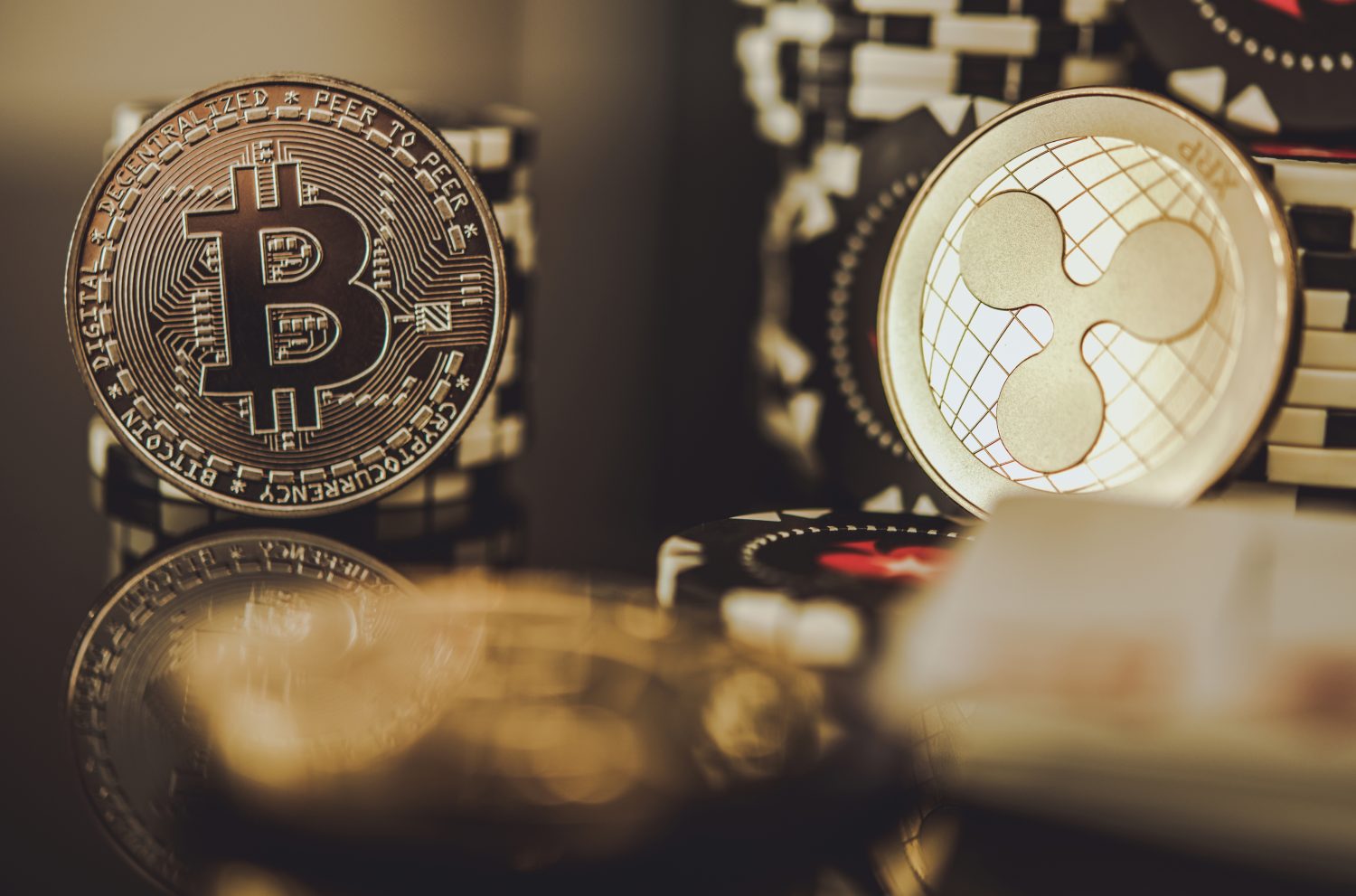
Claude doesn’t pick a winner in this XRP and Bitcoin comparison. Instead, its answer depends on what kind of investor you are.
If you want higher upside and can stomach volatility, Claude believes XRP is the right choice. The AI sees the XRP price ranging from $1.50 to $2.00 in weaker conditions, $2.50 to $4.00 in a moderate recovery, and above $5 in a strong cycle. It’s a significant upside, but one that comes with bigger swings.
On another note, if stability matters to you, Claude projects Bitcoin as the better fit. It forecasts Bitcoin will surge from $60,000 to $75,000 in bearish conditions and $100,000 to $150,000 in stronger markets. The prediction range is narrower as Bitcoin tends to attract holders who endure volatility more comfortably.
Claude’s key point is that many investors underestimate how hard it is to hold through steep declines. But if you’re unsure, a split allocation gives exposure to both upside and stability without betting everything on one outcome.
Where All Three AI Models Agree
The AI picks differ, but all three models share a few core conclusions on the XRP and Bitcoin investment question.
- ETF flows will drive 2026: Institutional money matters more than ever. XRP’s $1.3 billion in ETF inflows shows steady demand, while Bitcoin’s flows have swung between outflows and renewed buying. The AI models agree that capital entering regulated products shapes supply more than social sentiment does.
- Macro conditions create wide price ranges: All three models flag the same uncertainties: Fed policy, liquidity conditions, and geopolitical risk. These variables make precise predictions impossible, which is why forecasts range so widely. In some scenarios, XRP and Bitcoin double or triple from here. In others, they fall another 50%.
- Neither asset is safe: Every model agrees that crypto remains high risk. A $10,000 position can easily drop to $5,000 before any recovery.When markets panic, XRP and Bitcoin tend to fall together, and holding both doesn’t fully protect against downside.
XRP or Bitcoin: Which Should You Pick?
There is no obvious winner and the three AI models split for that exact reason. The right choice depends on what matters more: upside or stability. XRP offers a bigger potential payoff but demands tolerance for sharper drops. Bitcoin offers steadier ground but less room to run.
For investors still undecided, a split allocation avoids the need to pick one. Either way, the next two quarters will show which model read the market correctly.
Contact [email protected] for any questions or corrections.
Sam Daodu is a crypto analyst and the editor of 24/7 Wall St.'s Crypto Desk, where he covers Bitcoin, XRP, Ethereum, Solana and the altcoins investors search for most. His work focuses on price levels, spot ETF flows, on-chain data and the regulatory decisions that move crypto markets, written so a first-time buyer and a seasoned trader can both use it.
Sam has written about crypto professionally since 2019 and has published more than 2,000 articles. Before joining 24/7 Wall St., he wrote for crypto media outlets and Web3 companies and ghostwrote for crypto founders and token launches. His analysis is syndicated on Yahoo Finance, MSN and AOL and has been cited by other crypto news sites. He also founded MacLabs Marketing, a content and personal branding agency for crypto founders and executives.
When he isn't reading charts, Sam is usually at the gym or watching One Piece, a series he maintains has better tokenomics than most altcoins.