Live coverage has ended. The full story is below.
It’s ugly out there today.
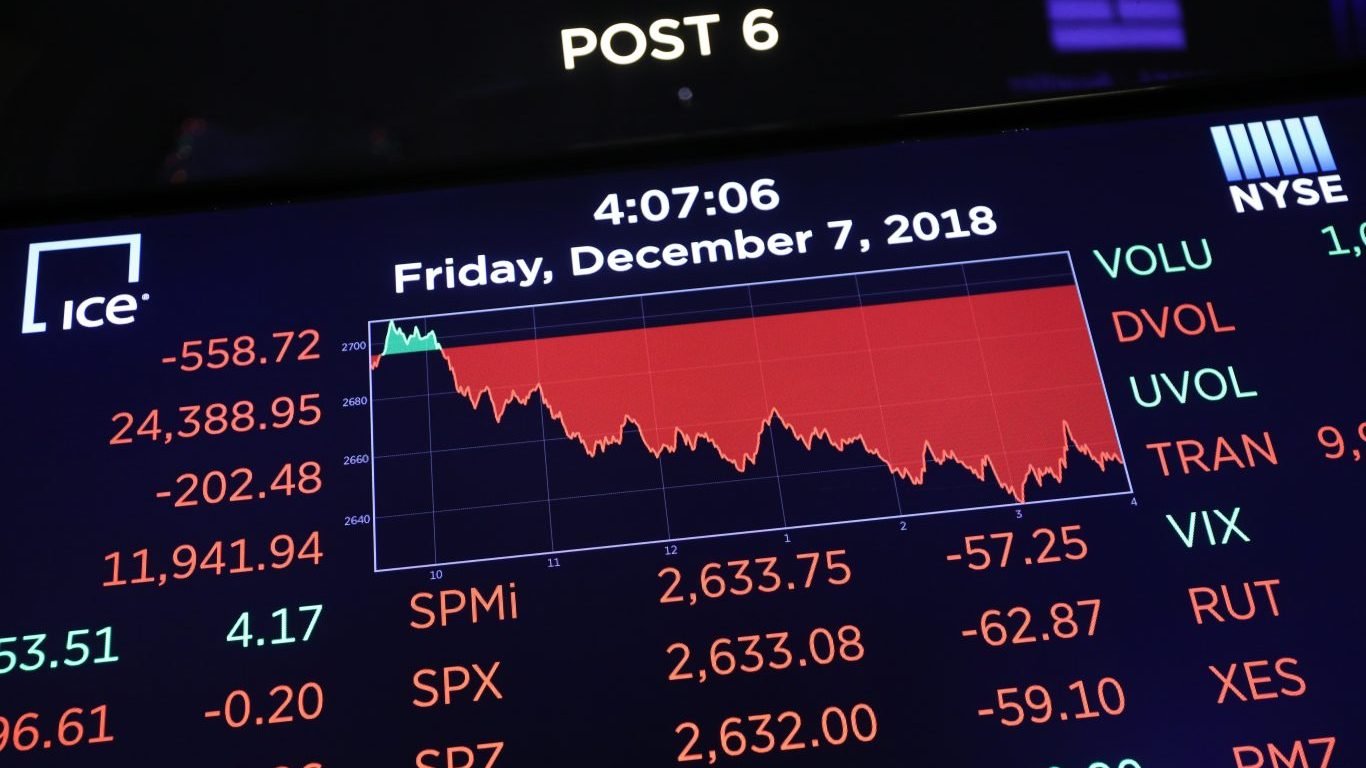
S&P 500 futures are down 1.62%, or by 111 points. The SPDR S&P 500 ETF (SPY) is down 1.64%, or by $11.23. The Dow is down 1.5%, or by 786 points. The Nasdaq is down 2.15%, or by 537 points. Meanwhile, oil is up $5 on ongoing Iranian war fears and potential threats to the Strait of Hormuz. The Volatility Index is up by $5.53 at 25.40.
Bitcoin is down 2.61%, or by $1,794, as gold slips by $150 to $5,148. Again, all thanks to uncertainty with Iranian war fears and potential threats to the Strait of Hormuz.
Unfortunately, there are signs the conflict is deepening.
Drones hit the U.S. embassy in Riyadh. The State Department ordered evacuations at facilities in Bahrain, Iraq, and Jordan. Hezbollah attacked Tel Aviv. And there are concerns about how long Gulf states can keep themselves safe from Iranian attacks. Plus, President Trump just said the conflict could continue for another four weeks, which raises uncertainty, which markets hate.
But hey, maybe we’ll get lucky again, and markets will recover like they did yesterday, on the idea of a quick war, with little impact on the economy.
However, “After initially taking the Middle East war in stride on Monday, market anxiety ratcheted higher overnight amid concerns that a decapitated and leaderless Iranian government and military will execute a prolonged retaliatory response aimed at sowing chaos throughout the region by targeting key economic and energy infrastructure for weeks to come,” said Adam Crisafulli of Vital Knowledge, as quoted by CNBC.
“While the US and Israeli militaries have complete dominance in the region, they can’t knock out every cheap missile and drone fired off by Iran, especially since interceptor stockpiles are rapidly depleting,” he added.
Plus, oil could gush to $100.
If the Strait of Hormuz is closed for an extended period, oil could rise to $100.
Right now, reportedly, the Strait of Hormuz is closed, and Iran will fire on any ship trying to pass, Iranian media reported, as noted by Reuters.
Remember, the Strait is a critical transit route for global oil, with about 13 million barrels of oil per day moving through that region. By disrupting that flow, we risk $100 oil.
If Iran were to close the Strait, the situation could worsen significantly. In fact, “This could present a scenario three times the severity of the Arab oil embargo and Iranian revolution in the 1970s, and drive oil prices into the triple digits, while LNG prices retest the record highs of 2022,” added Saul Kavonic, head of energy research at MST Marquee, as quoted by CNBC.
At this point, everything is a wait-and-see.
Contact [email protected] for any questions or corrections.