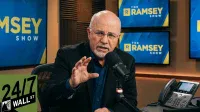
Ramsey Team Tells 22-Year-Old Who Blew $40K to Sell $76,000 Truck and Drive a Beater
Colin is 22 years old, a military veteran, and sitting inside a financial hole that gets deeper every month. A year and a half ago he received around $40,000 in a lump sum. Through a series of car trades and…


Colin is 22 years old, a military veteran, and sitting inside a financial hole that gets deeper every month. A year and a half ago he received around $40,000 in a lump sum. Through a series of car trades and a roommate dispute, he burned through most of it. Now he has about $11,000 in stocks, a truck payment of $1,200 a month on a $76,000 vehicle, and he is underwater by $16,000. He is moving from Florida to Texas and figures he can save $500 to $800 a month after bills. The question he brought to The Ramsey Show: what do I do now?
The answer from John Delony and Rachel Cruze was direct, and it was right.
What the Ramsey Team Actually Said
Delony told Colin: “I would sell that stock and I’d go take out a $5,000 loan from a credit union. I would sell that truck, or maybe a $7,000 loan from a credit union. I would take that stock, put the 11 grand towards it, get this truck sold, pay the difference, and then buy a $2,000 1988 Corolla with 400,000 miles on it that’s still driving.”
Cruze backed it up: “That’s exactly what I would do, which would be about a $7,000 loan and a crappy car versus a nice truck that is worth $76,000 and I’m underwater.”
The math behind this advice is what makes it compelling. Colin owes $16,000 more than the truck is worth. When he sells it, that gap has to be covered somewhere. The plan: liquidate the $11,000 in stocks, combine that with a credit union loan of around $7,000 to cover the shortfall, then attack the loan aggressively. The $1,200 monthly truck payment disappears, replaced by a far smaller obligation on a vehicle that costs almost nothing to own.
Why the Truck Is the Core Problem
A $1,200 monthly payment is crippling on Colin’s income. At $500 to $800 a month in potential savings, the truck payment alone wipes out his entire savings capacity. Every month he keeps it, he falls further behind. He cannot build an emergency fund, he cannot invest, and he cannot create any financial cushion before a crisis hits.
The $16,000 in negative equity has to go somewhere regardless. The credit union loan route converts an impossible situation into a manageable one. Credit unions currently average around 10.72% on three-year personal loans, according to National Credit Union Administration data, and federal credit unions are legally capped at 18%. That is a real cost, but it is still far cheaper than carrying a depreciating asset that bleeds $1,200 every month.
The broader economic picture makes this advice even more pressing. The Consumer Price Index for All Urban Consumers rose 3.5% year-over-year as of June 2026, reaching an index level of 333.952, per the Bureau of Labor Statistics. The Federal Reserve’s target rate remains in the 3.50%–3.75% range, and the Fed has signaled that rates could stay elevated or move higher if inflation proves persistent. Meanwhile, the University of Michigan Consumer Sentiment Index came in at just 49.5 in June 2026, rebounding from a record low of 44.8 in May, a reading the index’s director described as reflecting ongoing cost-of-living pressure on household finances. Carrying an underwater luxury vehicle in this environment is not just inefficient; it is a compounding mistake.
The Payoff Timeline That Changes Everything
Cruze encouraged Colin to set an aggressive goal of paying off the $7,000 loan in five to seven months. That timeline is achievable. If Colin saves $800 a month and directs every dollar at the loan, he clears it in roughly nine months. Add any extra income from his move or a side job and the five-to-seven-month target becomes realistic.
The psychological shift matters as much as the arithmetic. Delony framed it this way: “I want to reestablish trust again with Colin. Colin’s a guy that does the next right thing.” Paying off a $7,000 loan in five months is a concrete, winnable goal. It builds the kind of financial momentum that a $76,000 truck payment could never create.
Who This Advice Fits
This approach works for anyone whose monthly payment on a depreciating asset exceeds their ability to save. The specific trigger is straightforward: if your vehicle payment is larger than what you can put away each month, the vehicle is actively preventing financial recovery. Selling underwater and taking a small consolidation loan is painful once. Keeping the truck is painful every single month, with no end in sight.
Colin attributed some of the car-flipping decisions to mental health effects from traumatic military events and noted he is now getting help through the VA. Delony’s first question addressed exactly that: “Will you make that a top commitment when you get to Texas?” That framing matters. The financial plan only works if the underlying behavior changes. Colin has both pieces in motion now.
Sell the truck. Take the small loan. Pay it off fast. The beater gets you to work just as well, and it costs you almost nothing to own.
Editor’s note: This article updates the consumer sentiment figure from 56.4 to 49.5, reflecting the June 2026 University of Michigan final reading (up from a record low of 44.8 in May), refreshes the CPI reference to the June 2026 Bureau of Labor Statistics release showing a 3.5% annual increase and an index level of 333.952, corrects the federal funds rate reference to the current 3.50%–3.75% target range, and adds verified credit union personal loan rate context from NCUA data.
Contact [email protected] for any questions or corrections.
Austin Smith is a financial publisher with over two decades of experience as an investor, analyst, and advisor. He covers stocks, ETFs, Artificial intelligence and personal finance for 24/7 Wall St. Previously, he spent over a decade at The Motley Fool as a senior editor for Fool.com, portfolio advisor for Millionacres, and launched The Ascent to help reader take control of their personal finances.
His work has been featured on Fool.com, NPR, CNBC, USA Today, Yahoo Finance, MSN, AOL, Marketwatch, and many other publications. He is as an advisor to private companies, and co-hosts The AI Investor Podcast with Eric Bleeker.
When not looking for investment opportunities, he can be found skiing, running, or playing soccer with his children. Learn more about Austin's investment approach here.