What a $1K Investment in Qualcomm 15 Years Ago Is Worth Today (Hint: It’s More Than You Think)
From Smartphone King to Everything-Chip Contender Fifteen years ago, Qualcomm (NASDAQ:QCOM | QCOM Price Prediction) was a pure mobile play, collecting royalties on every 3G and 4G phone sold while Snapdragon chips powered the Android wave. The decade since has…

From Smartphone King to Everything-Chip Contender
Fifteen years ago, Qualcomm (NASDAQ:QCOM | QCOM Price Prediction) was a pure mobile play, collecting royalties on every 3G and 4G phone sold while Snapdragon chips powered the Android wave. The decade since has been messier than the price chart suggests. A bruising licensing fight with Apple in 2017 to 2019 capped the stock, the NXP acquisition fell apart in 2018, and Apple began designing out Qualcomm’s modem.
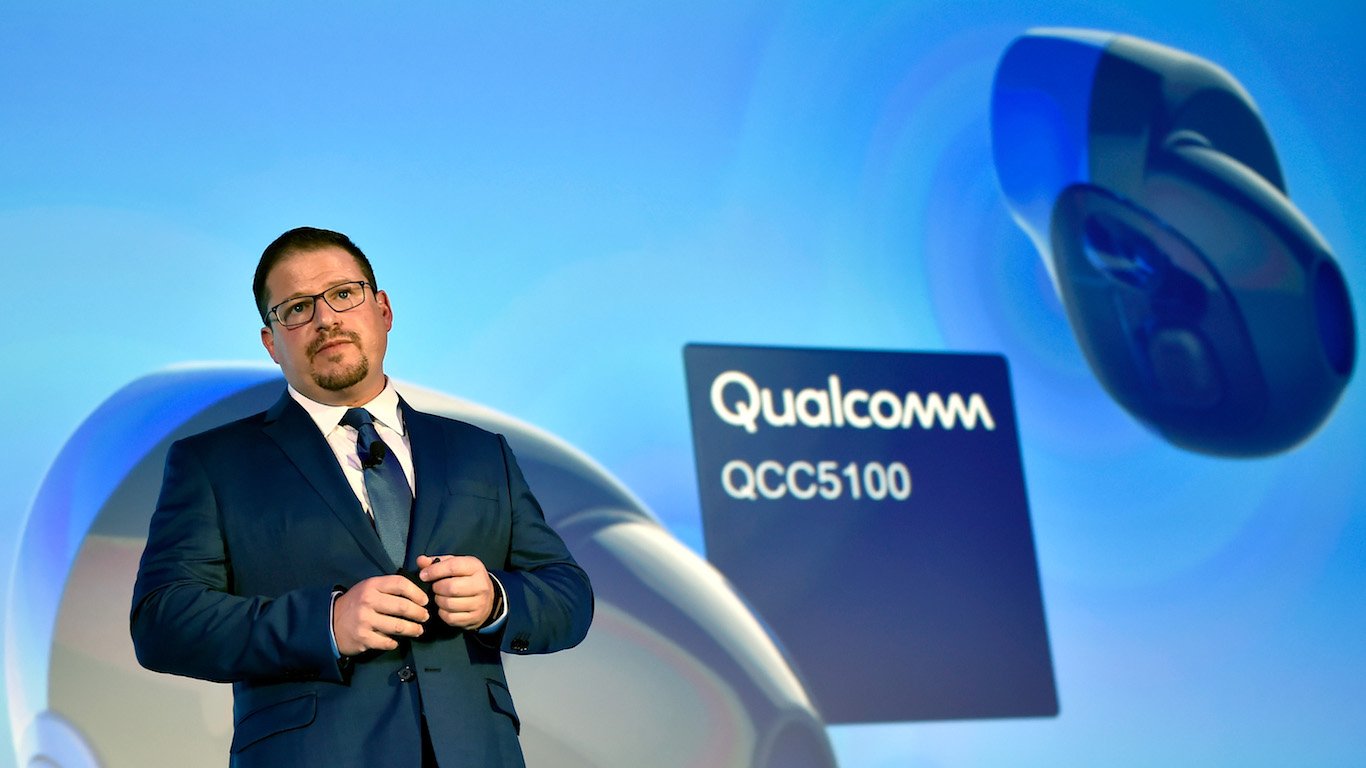
CEO Cristiano Amon spent the second half of that window rebuilding the story. Automotive became a real business, IoT grew into a real business, the Snapdragon X Elite pushed Qualcomm into ARM-based PCs, and the Alphawave Semi acquisition opened a door to data center custom silicon for a leading hyperscaler with initial shipments on track for later in calendar 2026.
Your $1,000 Compounded Into Roughly $6,200
1-Year Return (June 2025 to June 2026)
- Initial Investment: $1,000
- Current Value: $1,680.90
- Total Return: 68.09%
- S&P 500 (same period): $1,281.50 (28.15%)
5-Year Return
- Current Value: $2,028
- Total Return: 102.8%
- Annualized Return: 15.2%
- S&P 500: $1,813.80 (81.38%)
10-Year Return
- Current Value: $5,731.10
- Total Return: 473.11%
- Annualized Return: 19.1%
- S&P 500: $3,612.20 (261.22%)
15-Year Return (June 2011 to June 2026)
- Current Value: $6,190.80
- Total Return: 519.08%
- Annualized Return: 12.9%
- S&P 500: $5,824 (482.4%)
The 15-year picture is striking. Qualcomm essentially matched the S&P 500 over a decade and a half, edging it by a hair on price alone, before counting the dividend. Quarterly payouts grew from $0.19 in 2011 to $0.92 in June 2026, which would have meaningfully padded that figure for any reinvestor.
Most of the alpha is recent. The stock did very little from 2014 through 2019 during the Apple feud, then ripped through the 5G cycle, and the AI and data center narrative drove a 36.06% move in the past month alone. Timing mattered a lot.
The Bull and Bear Case from Here
The bull case for putting $1,000 into Qualcomm today rests on the data center custom silicon engagement actually shipping in volume and the automotive segment keeps printing records like the $1.33 billion, +38% YoY it just posted. At a forward P/E around 21x, the market is not pricing perfection.
I’d avoid it if I think Apple’s in-house modem fully displaces Qualcomm, Chinese OEM weakness lingers past the guided Q3 trough, or memory supply stays tight. Handset revenue already fell 13% to $6.02 billion last quarter.
On balance, the bull case looks more compelling. The diversification finally looks real, the buyback authorization is fresh, and the valuation is not demanding. Chasing the stock after a 36% month, however, carries obvious risk.
Contact [email protected] for any questions or corrections.
Alex Sirois is a financial writer with experience spanning both retail and institutional investing. He has written for InvestorPlace and held roles at BNY Mellon and Bernstein, giving him a perspective that bridges Main Street portfolios and Wall Street analysis.
Alex holds an MBA from George Washington University and has built his career across multiple industries, including e-commerce, education, and translation — a breadth of experience that informs how he breaks down complex financial topics for everyday investors. His writing is conversational, actionable, and grounded in long-term, buy-and-hold investing principles.
At 247 Wall St., Alex focuses on delivering analysis that is both accessible and useful, with a clear emphasis on helping readers make more informed decisions with their money.