If You’re 45 and Want Real Estate Income, Skip the Landlord Duties and Buy VNQ
You like the idea of owning real estate, but you don’t like the idea of fielding 2 a.m. plumbing calls, chasing rent checks, or sinking your down payment savings into a single zip code. You want the income, the inflation…

This post may contain links from our sponsors and affiliates, and Flywheel Publishing may receive compensation for actions taken through them.
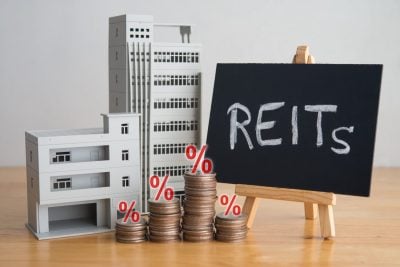
You like the idea of owning real estate, but you don’t like the idea of fielding 2 a.m. plumbing calls, chasing rent checks, or sinking your down payment savings into a single zip code. You want the income, the inflation hedge, and the diversification that property brings, without becoming a landlord. That is the reader this article is for, and the ticker you need to know is Vanguard Real Estate ETF (NYSEARCA:VNQ).
The Problem: You Want Real Estate Without the Headaches
Buying a rental property in 2026 is a brutal math problem. The 10-year Treasury yield sits at 4.49%, which means mortgage rates are punishing leverage. Existing home sales just printed 4.17M annualized in May 2026, still in the soft-to-healthy zone, and housing starts dropped to 1.18M (annualized) after a 15.4% monthly slide. Direct ownership ties up six figures, locks you into one market, and produces taxable income that requires its own spreadsheet. You need real estate exposure that trades like a stock, pays you quarterly, and spreads your risk across hundreds of properties.
The ETF as the Answer
VNQ is the largest, cheapest, most widely held way to own a slice of American real estate. The fund tracks a broad U.S. REIT index, holding apartment landlords, data centers, cell towers, industrial warehouses, healthcare facilities, self-storage operators, and shopping centers. One share, hundreds of properties, zero tenants who text you.
The expense ratio is 0.13%, which means for every $1,000 you invest, only $1.30 a year goes to Vanguard. The other $998.70 is working for you, collecting rent. That is the kind of cost structure that compounds quietly for decades.
Now the part that matters most for an income-focused real estate investor: VNQ has paid uninterrupted quarterly dividends going back two decades. In 2025, the four distributions totaled $0.9319, $0.8678, $0.8716, and $0.8005. The most recent payout, in March 2026, was $0.9457 per share. At a recent price of $95.56, that distribution stream produces a yield that few broad equity funds can match, and the payout history weathered 2008 and 2020 without skipping a beat.
The total-return picture has rewarded patience, too. VNQ is up 9.15% year-to-date and 10.55% over the past year, while the Case-Shiller home price index recovered to 329.9 in March 2026, reinforcing that the underlying assets still command real value. Over the past decade, the fund has returned 65.5% on price alone, before counting all those quarterly dividends.
What to Watch
REITs are interest-rate sensitive, full stop. The 10-year yield is currently in the 94.4th percentile of its 12-month range, and VNQ has slipped 2.1% in the past week. If long rates push higher from here, expect choppiness. Distributions also vary quarter to quarter, with Q4 historically the largest payment and Q1/Q3 typically lighter. Treat distributions as a variable income stream that fluctuates with the underlying REIT cash flows.
The Close
If you want to be a real estate investor without becoming a property manager, VNQ is the single fund that delivers the package: a 0.13% expense ratio, diversified exposure across every major REIT subsector, and a 20-plus-year quarterly dividend record that survived every recent crisis. You get the rent without the renters, the diversification without the down payment, and the liquidity to change your mind on any trading day. For the would-be landlord who would rather own a portfolio than a property, this is the one.
Contact [email protected] for any questions or corrections.
I am a long time investor and student of business, and believe finding good companies that can become great investments is the best game on earth. After 20 years of writing and researching the public markets it is clear that individuals have never had more tools and information to take control of their financial lives. From ETFs and $0 commissions to cryptos and prediction markets there has never been a greater democratization of access to investing.
I write to help people understand the investments available to them so they can make the best choice for their portfolio, whether they're starting out or looking for income in retirement.