




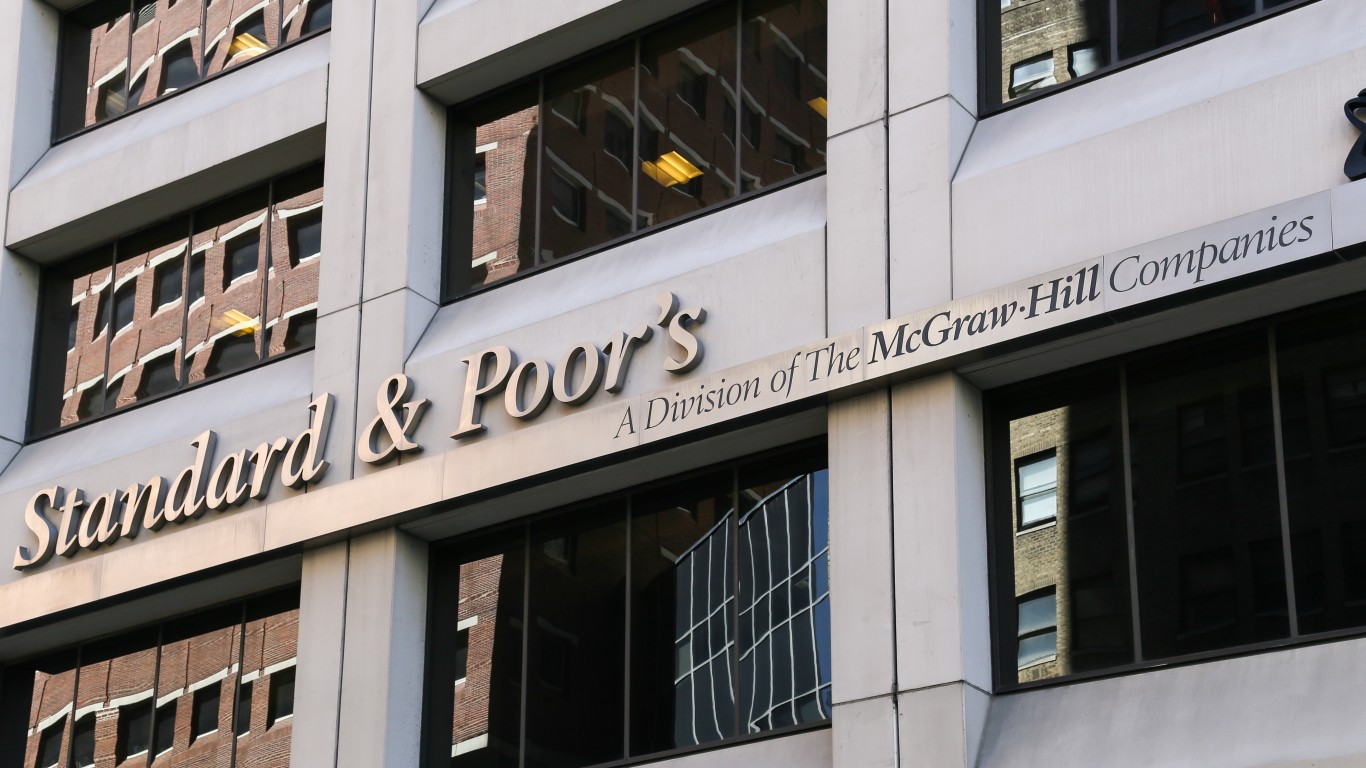
S&P Global (NYSE:SPGI | SPGI Price Prediction) screens as a multi-decade compounder candidate because it operates a legally protected toll booth on global capital markets that almost every borrower, asset manager, and index fund is structurally required to pay.
Recent price action is ugly: shares are down 23.08% year to date and trade at $400.16. For an investor in their 50s or 60s who has been chasing the wrong themes for a decade, that drawdown represents an entry point for long-horizon investors.
Pillar 1: Durability Backed by Regulation
S&P Global is one of the Big Three credit rating agencies designated as an NRSRO by the SEC, a status required for most debt issuance in U.S. capital markets. Whenever a corporation, municipality, or sovereign government wants to issue debt, they are practically forced to pay S&P Global to rate it. The company also owns the S&P 500 and S&P Dow Jones Indices, collecting asset-linked licensing fees from essentially every major ETF and passive fund that tracks them.
The financial signature of that moat is unmistakable. Q1 2026 revenue grew 10.43% to $4.171 billion, GAAP operating margin expanded 620 basis points to 48.0%, and the Indices segment alone ran a 72% GAAP operating margin. Forward P/E sits at 21.
Pillar 2: Income That Compounds Quietly
The Q4 2025 release marked the company’s 53rd consecutive year of dividend increases, putting it in Dividend King territory. The quarterly payout has climbed from $0.245 in 2001 to $0.97 today. Management plans to return 100% or more of adjusted free cash flow through dividends and buybacks in 2026, after returning $6.2 billion (113% of adjusted FCF) in 2025. Diluted shares are shrinking by roughly 3% a year.
Pillar 3: Built to Survive Market Cycles
Recurring revenue absorbs the shocks. Subscription revenue grew 6% in Q1 2026, asset-linked index fees rose 18%, and surveillance fees on the trillions of dollars of already-rated debt keep flowing whether or not new issuance is hot. CEO Martina Cheung said the company delivered “strong revenue growth and margin expansion in every division” in “an incredibly volatile and challenging operating environment.”
The Scenario Where It Underperforms
The Ratings business is cyclical. When credit markets freeze, transaction revenue drops fast, as it did in Q2 2025 when Ratings transaction revenue fell 4% and the segment grew just 1%. In a sustained issuance drought, SPGI will lag faster-growing software peers for several quarters. That does not break the forever thesis. Debt eventually gets refinanced, the NRSRO designation is not going away, and the S&P 500 brand is not displaceable by a competitor. Subscriptions, surveillance fees, and index licensing carry the company through the trough.
For a retirement-focused investor who is tired of watching screens, S&P Global fits the profile of a long-duration compounder rather than a short-term trade.
Contact [email protected] for any questions or corrections.








 Top Gaining Stocks
 Top Losing Stocks