





CJ Muse went on CNBC this morning and made the case that the memory cycle most investors are watching does not actually peak where they think it peaks. “The real takeaway for memory is that supply is going to be even tighter in 27 than 26,” the Cantor Fitzgerald semiconductor analyst said, “and because of that you can actually think about earnings growth and not only 27 but also 28.” That is the bullish framing investors will be testing against tonight’s fiscal Q3 numbers from Micron Technology (NASDAQ:MU | MU Price Prediction), which the company has confirmed will land after the close on June 24, 2026.
Why Muse is anchoring on 2028
The Cantor argument is essentially a duration trade dressed up as a memory call. If hyperscaler compute demand keeps growing through 2029 and 2030, then DRAM and HBM supply, which takes years and tens of billions of dollars to add, simply cannot catch up in the window analysts currently model. Muse pointed to the gap between compute and memory multiples as the giveaway. “If you look at compute multiples memory multiples there’s still significant upside,” he said, “as long as you underwrite the demand for compute, not peaking in 28, but extending into 2930 and beyond.”
The number doing the heavy work in Muse’s framework is $200. “I think the bulls are thinking about $200 of earnings for micron next calendar year. And if that’s right, you’re talking about a stock trading at five times,” he told CNBC, calling that a multiple he does not believe represents the right peak for the name. Micron closed Monday at $1,051.77. The stock is up 229% year to date and 717% over the past year. The VanEck Semiconductor ETF (NYSEARCA:SMH), for what it is worth, is on pace for its best first half since inception in 2000.
What the last quarter already told us

Last quarter is the reason Muse can talk about this with a straight face. Micron’s fiscal Q2 2026, reported March 18, 2026, delivered revenue of $23.86 billion against an $19.51 billion estimate, with non-GAAP EPS of $12.20 versus $9.31 expected. GAAP gross margin reached 74.4%, up from 36.8% a year earlier, and the company guided fiscal Q3 to $33.5 billion in revenue plus or minus $750 million with non-GAAP gross margin near 81%. You can read the full 8-K press release on the SEC’s site.
CEO Sanjay Mehrotra framed the demand picture more soberly than the numbers might suggest. “In the AI era, memory has become a strategic asset for our customers, and we are investing in our global manufacturing footprint to support their growing demand,” he said in the release. The capex line is what makes Muse’s thesis interesting. New fabs ordered today come online in 2028 at the earliest, which leaves 2027 supply largely fixed.
SanDisk is telling you the same story
If you want a second data point, look at SanDisk (NASDAQ:SNDK), the NAND-focused spinoff trading at $1,930 after a 601% year-to-date move. Its most recent quarter posted revenue of $5.95 billion, up 251% year over year.
Datacenter revenue alone grew 645%. CEO David Goeckeler flagged what he called “a structural memory shortage unlikely to ease before 2028” in earlier commentary, language that lines up almost exactly with Muse’s framing.
What to actually watch tonight

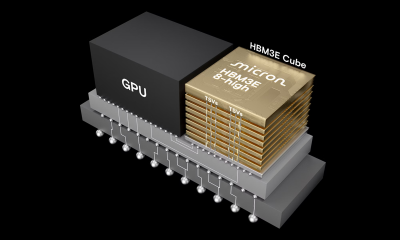
Polymarket has the crowd pricing a 96.7% probability that Micron beats on the bottom line tonight, against a consensus EPS estimate of $19.66. The beat itself matters less than whether management’s guide and any commentary about HBM3E allocations through 2027 validate the $200 EPS bull case Muse is using.
Analyst consensus targets sit below the current price, with 39 buys, 4 holds, and 1 sell. Sell side has been chasing the move.

The risk Muse himself flags is whether AI workload growth genuinely extends into 2029 and 2030, or whether new capacity arrives faster than the bulls expect. Tonight will not settle that. The order book commentary on the call might.
Contact [email protected] for any questions or corrections.












 Top Gaining Stocks
 Top Losing Stocks