This Under-the-Radar 4.4% Yielding Stock Is a Top Defensive Refuge for Retirees
With the 10-year Treasury at 4.46% and core PCE still grinding higher, retirees are hunting for income that holds up. Donegal Group (NASDAQ:DGICA), a Pennsylvania-based regional property & casualty insurer, fits that brief. Insurance is non-discretionary, the book is sticky,…


With the 10-year Treasury at 4.46% and core PCE still grinding higher, retirees are hunting for income that holds up. Donegal Group (NASDAQ:DGICA), a Pennsylvania-based regional property & casualty insurer, fits that brief. Insurance is non-discretionary, the book is sticky, and the Class A dividend just got another raise. The headline question: is that 4.4% yield safe?
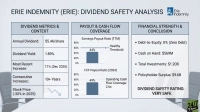
Dividend Snapshot
| Metric | Value |
|---|---|
| Annual Dividend (Class A) | $0.77 |
| Dividend Yield | 4.16% (≈4.4% on recent rate) |
| Most Recent Increase | 5.5% (April 2026) |
| Uninterrupted Payment History | 25+ years, no cuts |
| Aristocrat/King Status | No (regional insurer, not in index) |
Payout Ratios Leave Enormous Room
Donegal earned $2.17 per Class A share in 2025 against roughly $0.73 in dividends paid that year. That is a 33.6% earnings payout ratio. Even at the new $0.77 run rate, the buffer is wide.
| Metric | Value | Assessment |
|---|---|---|
| Earnings Payout Ratio (FY25) | 33.6% | Healthy |
| TTM EPS | $1.78 | Pressured by Q1 weather |
| Q1 2026 Combined Ratio | 99.8% | Storm-driven, one-quarter event |
P&C insurers run on combined ratios and investment income rather than free cash flow ratios, and that data is not cleanly broken out here. What I can verify: net investment income rose 19.2% in Q1 2026 to $14.3 million, more than covering the quarterly dividend outlay on its own.
A Quiet Fortress Balance Sheet
Donegal carries $649.1 million in shareholders’ equity (up 11.01% YoY) against $2.45 billion in assets. The stock trades at a price-to-book of 0.999, essentially at liquidation value. Beta is -0.007, which is why this name barely flinched during the March 2026 VIX spike to 31.05.
The Streak Is Real
Alpha Vantage data shows quarterly Class A payments rising from $0.10 in 2001 to $0.1925 today, with no cuts across 25 years. The five-year annualized growth rate works out to roughly 3.8%, slow but reliable.
Insiders Are Voting With Cash
CEO Kevin G. Burke said on the Q1 call, “We remain committed to maintaining underwriting and pricing discipline as we pursue new, high-quality accounts.” Backing that up: the 10% owner has executed near-daily Class A purchases since early May 2026, and on May 15 the CEO, CFO, Chief Accounting Officer, CIO and Chief Investment Officer all bought shares around $17.25. Synchronized executive buying is a meaningful signal.
The Verdict: Safe
Dividend Safety Rating: Safe. A 33.6% earnings payout ratio, a clean balance sheet, investment income alone covering the payout, and 25 years without a cut add up to a sturdy income holding. The setup looks durable provided commercial-lines pricing discipline holds and weather losses normalize. I would get cautious if combined ratios stay above 100% for multiple quarters, which would pressure the underwriting cushion that funds future raises. For now, this under-the-radar 4.4% yielder earns a defensive slot.
Contact [email protected] for any questions or corrections.
Alex Sirois is a financial writer with experience spanning both retail and institutional investing. He has written for InvestorPlace and held roles at BNY Mellon and Bernstein, giving him a perspective that bridges Main Street portfolios and Wall Street analysis.
Alex holds an MBA from George Washington University and has built his career across multiple industries, including e-commerce, education, and translation — a breadth of experience that informs how he breaks down complex financial topics for everyday investors. His writing is conversational, actionable, and grounded in long-term, buy-and-hold investing principles.
At 247 Wall St., Alex focuses on delivering analysis that is both accessible and useful, with a clear emphasis on helping readers make more informed decisions with their money.