Coinbase Bet On a $22 Billion Prediction Market Business Based on ‘Truth Seeking.’ Its AI Just Got Caught in an Obvious Lie.
Coinbase built a $22 billion prediction market business on the promise that money on the line produces truth. Then its AI sent millions of users a final score for a World Cup match still sitting under a weather delay.

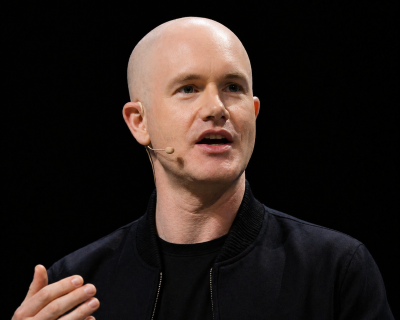
Brian Armstrong has a favorite phrase for prediction markets: “the ultimate form of truth seeking.” The Coinbase CEO argues that when real money is on the line, people dig for better information and produce forecasts more reliable than pundits, polls, or the press. During the 2026 FIFA World Cup, Coinbase (NASDAQ:COIN | COIN Price Prediction) pushed an AI-generated notification to millions of users announcing that Norway had beaten Brazil 3-2, with Erling Haaland scoring twice. The match hadn’t started.
Coinbase Proved Its Own Lie
The Norway-Brazil fixture was listed on Coinbase’s own market page under a weather delay at the exact moment the “final score” alert went out. The platform told users the game hadn’t kicked off and that Norway had already won it. Screenshots spread across X. “This is what happens when a crypto company uses AI to generate sports prediction markets,” one user wrote. “Coinbase is hallucinating results for a World Cup game that hasn’t even been played yet and sending factually incorrect notifications to its millions of users as ‘breaking news.'” Armstrong confirmed on X that his team is looking into it. Coinbase has yet to explain how the alert cleared its checks.
The Twist That Makes It Perfect
The match was later played. Norway actually beat Brazil, 2-1. Haaland actually scored twice. Coinbase’s AI got the winner right, the scorer right, and only the scoreline wrong. It invented a version, sent it to millions as fact, and reality largely agreed.
What the Business Actually Is
Coinbase offers event contracts through its Everything Exchange, with market flow supplied by Kalshi, the prediction-market operator valued at $22 billion. The product has rolled out across all 50 US states. Prediction markets scaled to $100M+ annualized revenue in the first two full months live, part of a reinvention that included 10 acquisitions in 2025. The pitch rests on truth seeking. The Norway-Brazil notification refutes it cleanly.
Why the Timing Is Genuinely Bad
New York recently sued Coinbase and Gemini over their prediction market offerings, and the fight over whether these products are protected derivatives or illegal gambling remains unresolved. Coinbase’s regulatory argument is that prediction markets belong under the existing CFTC derivatives framework with no new oversight. That gets harder the week your AI invents a World Cup result and blasts it out as breaking news.
A Sector-Wide Credibility Problem
Polymarket’s World Cup winner market alone has topped $3.9 billion in volume, the largest single prediction-market contract in history, with France the favorite around 35% implied probability. Bloomberg’s Matt Levine warned that prediction markets risk becoming “increasingly falsehood machines.” Coinbase’s failure is a cousin: pure fabrication.
What It Means for Investors
Coinbase shares are down 59.34% over the past year and off 6.81% in the past week, closing at $157.37. The incident alone is unlikely to move the stock. The regulatory timing is the real issue, handing New York’s active lawsuit a tidy example of AI-generated misinformation distributed as fact. Kalshi shares the reputational exposure. Polymarket, the roughly $15 billion market leader, wasn’t involved but absorbs the same credibility hit.
If the financial incentive supposed to manufacture “truth seeking” manufactured a fake score instead and beamed it to millions as breaking news, how sure should anyone be that prediction markets finally replace polling, punditry, and the press?
Contact [email protected] for any questions or corrections.
I've spent more than 15 years inside enterprise software, working alongside the finance, sales operations, and HR leaders who run the revenue engines at some of the largest tech companies in the country.
My day job is helping enterprise executives make smarter decisions about retention, compensation, and growth. These are the same operational levers that show up in every earnings report investors actually read. That perspective shapes my writing for 24/7 Wall St.
The headline numbers are easy. The interesting stuff is underneath: how companies make money, what executives are worried about, and what any of it means for the person checking their 401(k) on a Sunday afternoon. I write about personal finance and business as someone who has spent her career inside the rooms where these decisions get made.