




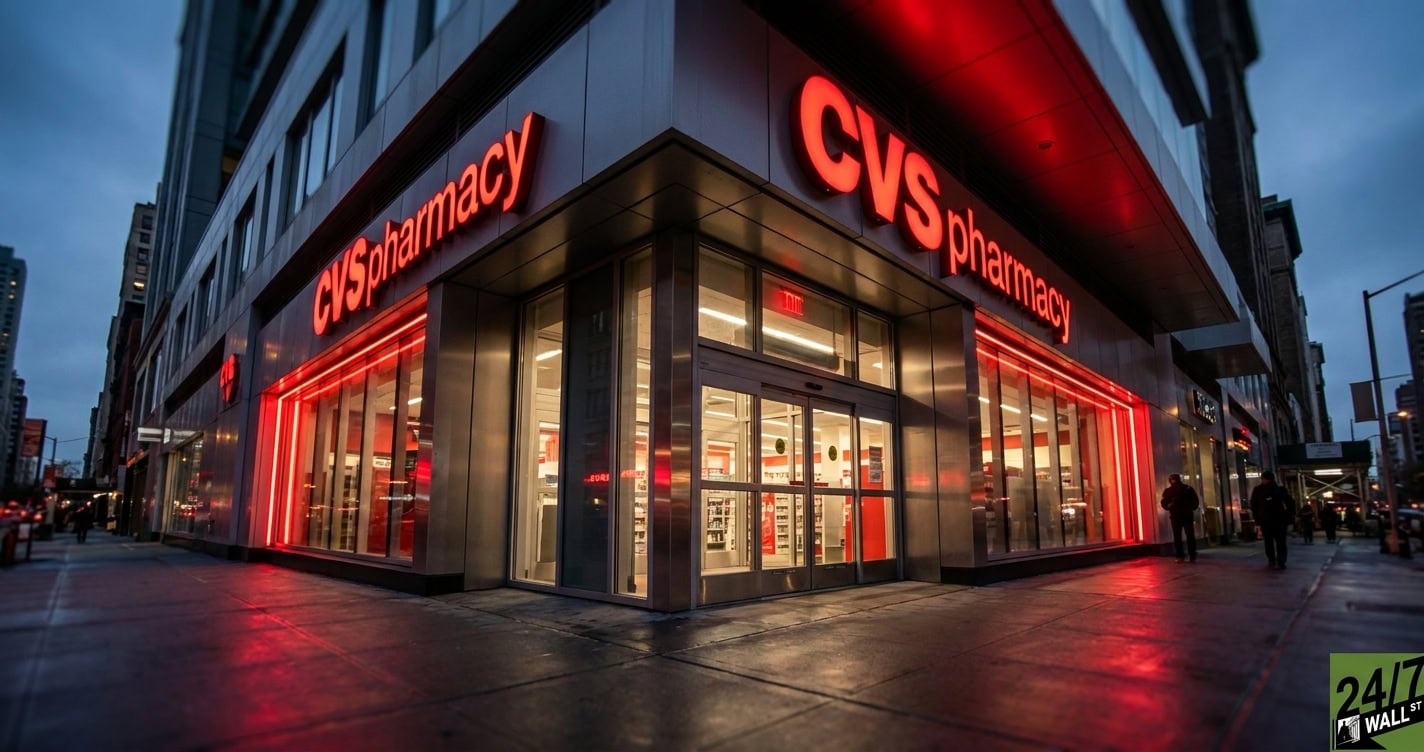
CVS Health (NYSE:CVS | CVS Price Prediction) shares closed at $106.89 on July 23, 2026, up 78.2% over the past year. The rally has compressed the yield, but income investors still want to know how safe the payout is.
The Dividend at a Glance
CVS pays a quarterly dividend of $0.665, or $2.66 annualized, translating to a forward yield of roughly 2.5%. The next payment lands August 3, 2026. Notably, the quarterly rate has been held at $0.665 for 10 consecutive quarters, meaning the company has paused raises while working through its turnaround. Yet there have been no dividend cuts in the company’s 27-year history.
Cash Flow Coverage: The Core Test
Coverage looks comfortable. In FY 2025, operating cash flow was $10.64 billion, against $3.40 billion in common dividends, a payout ratio of 31.9%. After $2.83 billion in capital spending, free cash flow of roughly $7.8 billion covered the dividend more than 2.3x. Management raised its 2026 operating cash flow guidance to at least $9.5 billion, and adjusted EPS guidance to $7.30 to $7.50, well above the annualized $2.66 payout.
Earnings Momentum Is Building

Q1 2026 reinforced the recovery. Adjusted EPS came in at $2.57 versus a $2.21 consensus, a 16.3% beat and the fifth consecutive quarterly beat. Revenue reached $100.43 billion, up 6.2% year over year, and Aetna’s medical benefit ratio improved to 84.6% from 87.3%. CEO David Joyner said, “Our positive performance is driven by strong execution across our enterprise.”

The Risks That Could Pressure the Payout
The balance sheet still bears scars from the Aetna acquisition. Total liabilities stand at $175.34 billion against $77.64 billion in shareholder equity, and net interest expense of $3.12 billion in FY 2025 remains a material drag. FY 2025 also absorbed a $5.7 billion goodwill impairment tied to Health Care Delivery, approximately $1.2 billion in legacy litigation charges, and the Chapter 11 filing of Omnicare in September 2025. Q3 2025 alone produced operating losses of $3.2 billion, a reminder that volatility persists. Insider selling has also topped $323.7 million over the past three months.
The Verdict
Coverage metrics point to a well-funded dividend: a payout ratio near 32% of operating cash flow, free cash flow of nearly $7.8 billion, and rising 2026 guidance. The frozen quarterly rate signals caution rather than distress. Investors should monitor Aetna’s medical cost trend, PBM regulation, and interest expense as the variables most likely to test that safety cushion.


Contact [email protected] for any questions or corrections.










 Top Gaining Stocks
 Top Losing Stocks