What to Watch: TSCZ
T. Rowe Price just launched an actively managed securitized credit ETF into one of the most punishing rate environments of the past decade, and the signals that will make or break it are already visible to anyone watching the right…

This post may contain links from our sponsors and affiliates, and Flywheel Publishing may receive compensation for actions taken through them.

The T. Rowe Price Securitized Income ETF (NYSEARCA:TSCZ) arrives at a difficult moment for securitized credit. The 10-year Treasury yield closed at 5.00% on September 15, 2026, its highest reading in the past year and in the 99.6th percentile of the trailing 12-month range, while the Fed’s target upper bound has held at 3.75% since earlier in 2026. That combination, a stubbornly high long end paired with a paused Fed, is precisely the backdrop that determines whether TSCZ’s active securitized strategy earns its keep. With only nine trading days of history and a closing price of $49.79 on September 16, 2026, TSCZ is too new to judge on returns. The right lens is what to monitor from here.
Fund Positioning and What It Actually Does
TSCZ is an actively managed fixed-income ETF from T. Rowe Price focused on securitized credit, the market that spans agency mortgage-backed securities, non-agency MBS, commercial MBS, asset-backed securities, and collateralized loan obligations. The prospectus dated August 3, 2026 lists a gross and net expense ratio of 0.20%, competitive for an active bond ETF. The investor problem it solves is access to a professionally managed slice of the roughly multi-trillion-dollar securitized market, where sector rotation between agency MBS, CLOs, and consumer ABS can drive meaningful yield pickup over plain-vanilla aggregate bond funds.
Macro Watch: The 10-Year Treasury and MBS Convexity
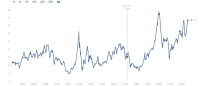
The single most important macro factor for TSCZ over the next 12 months is the direction of the 10-year Treasury yield, because it drives both agency MBS pricing and prepayment behavior across the entire securitized stack. The 10-year has climbed from 3.97% on February 27, 2026 to 5.00% on September 15, 2026, a move of roughly 100 basis points that has already pressured mortgage-heavy strategies. If the 10-year pushes decisively above 5%, agency MBS extension risk intensifies as mortgage refinancing incentives collapse and duration lengthens into the selloff. If it retraces toward 4.5%, prepayments accelerate and premium coupon MBS underperform.
Watch two data points weekly: the daily 10-year yield from the Treasury or FRED (series DGS10), and the CME FedWatch tool for shifts in rate-cut probabilities. Also watch the 10Y minus 2Y spread, which sits at 0.27% as of September 16, 2026, down from 0.74% on February 9, 2026. That flattening back toward the cycle low compresses the roll-down return securitized managers rely on and typically signals slower growth ahead, which can widen consumer ABS and lower-tier CLO spreads.
Fund-Specific Watch: The First NPORT Filing
Because TSCZ launched recently and its holdings snapshots have not yet been reported, the single most important fund-specific factor is the mix disclosed in its first full NPORT-P filing on SEC EDGAR. Active securitized funds vary enormously: an agency MBS-heavy book behaves like a duration play, while a CLO and non-agency-heavy book behaves like credit. The disclosed weights across agency MBS, non-agency RMBS, CMBS, consumer ABS, and CLOs, plus the average credit rating and effective duration, will tell holders exactly what kind of risk they own.
Monitor the T. Rowe Price fund page and EDGAR filings for the series S000106918 quarterly. Also track the on-screen bid-ask spread and premium/discount to NAV. A new, thinly traded active bond ETF can carry wider spreads than the 0.20% expense ratio itself, and that trading cost is a real drag until assets scale.
Bottom Line
Watch the 10-year Treasury yield weekly: a sustained break above 5% is the macro signal that will most directly pressure TSCZ’s mortgage exposure, while a move back below 4.5% would reward it. The fund-specific signal is the first NPORT holdings disclosure, which will reveal whether TSCZ is running a duration book, a credit book, or a balanced securitized allocation, and everything about the risk holders are actually taking flows from there.
Contact [email protected] for any questions or corrections.
Jake has been been working in financial media for almost 15 years. He focuses on all things personal finance for 24/7 Wall St. with high hopes to educate and entertain. Most recently, Jake spent 12 years working various roles at The Motley Fool. He started copy editing fool.com content, worked on premium and marketing campaigns, and helped launch The Ascent, a personal finance brand.
His work has been featured on platforms like MSN, Yahoo Finance, USA Today, and more. He's written about credit cards, social security, ETFs, savings accounts, and just about anything else you can imagine when thinking about money. Jake love to cook, play golf, and tell people he's never had a cavity. (It's true!)