Wall Street Cut Its Delta Air Estimates Below the Company’s Own Guidance and Kept Its Buy Ratings
Analysts slashed their Delta Air Lines earnings estimates below the airline's own guidance, yet nearly all 25 analysts kept their Buy ratings intact. Something has to give when Delta reports Friday morning, and the gap between Wall Street's math and…

This post may contain links from our sponsors and affiliates, and Flywheel Publishing may receive compensation for actions taken through them.
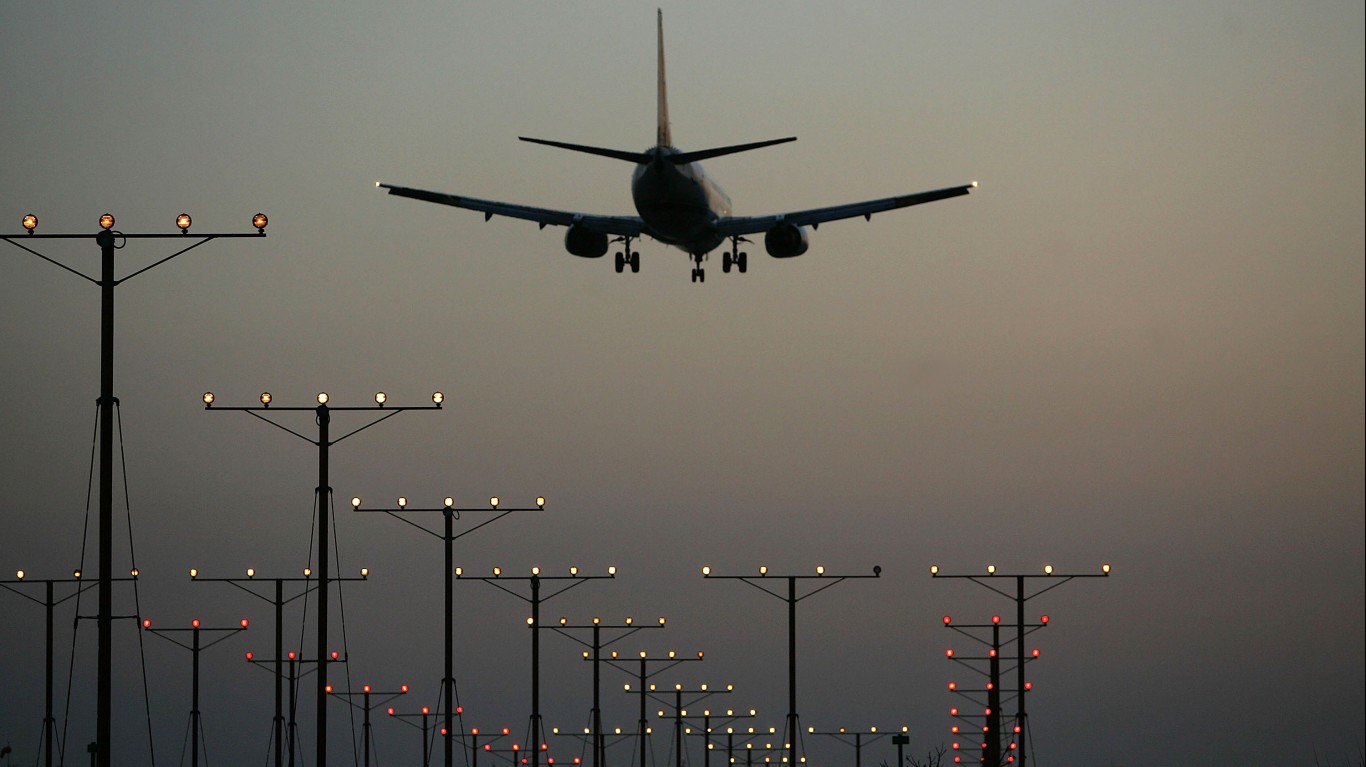
Wall Street has cut its numbers for Delta Air Lines (NYSE: DAL | DAL Price Prediction) below the airline’s own guidance, but the Buy ratings remain in place. Delta reports third-quarter results before the opening bell on Friday, October 9. For the shareholders, this gap is the story.
Analysts Lowered the Number but Kept the Recommendation
Last quarter, adjusted EPS of $1.56 beat estimates, while revenue of $17.67 billion came in below them. Delta’s results release said the company “delivered $1.4 billion in pre-tax profit while absorbing the highest quarterly fuel expense in our history.” Fuel averaged $3.93 per gallon.

AlphaStreet reports that the consensus has dropped 10.9% in a month, from $2.11 to $1.88. That puts it under the $2.00 low end of the guidance range topped at $2.50. The ratings point the other way: nearly all the 25 ratings are Buy or better. The average price target is $101.85, against a recent price of $82.97. Shares are up 20.1% year to date. Either Delta will reset expectations lower, or analysts have cut too far. The ratings suggest Wall Street leans toward the latter.


Revenue Still Grows While Earnings Estimates Shrink
| Metric | Consensus | Prior Year | Implied Growth |
|---|---|---|---|
| Q3 EPS | $1.88 | $1.71 | 9.9% |
| Q3 Revenue | $18.92B | $16.67B | 13.5% |
| FY 2026 EPS | $5.87 | $5.82 | 0.8% |
| FY 2026 Revenue | $73.56B | $63.36B | 16.1% |
The full-year EPS consensus also trails Delta’s confirmed $6.50 to $7.50 range. With revenue still expected to grow, the pressure on earnings is coming from costs.
Fuel Recovery and Flight Reliability Decide This Quarter
Fuel hedging means locking in future fuel prices with financial contracts. It works when prices spike and backfires when they fall. On the Odd Lots episode How Airlines Actually Hedge Higher Fuel Prices, guest David Kang, a former group treasurer at Qatar Airways, said that “a lot of airlines in 2020 lost a lot of money fuel hedging. Delta dropped over $1 billion.” Many carriers now skip hedging and pass costs on through fares. Delta’s partial offset is its own refinery. Its guidance assumes fuel at $3.15 per gallon.
Consumer advocate Clark Howard said on his September 18 podcast that “Delta is having the worst cancellation rate in the industry, I think.” That is one commentator’s view, and Delta does not report it as a metric. Still, cancellations cost money through rebooking, crew repositioning, hotel vouchers, and compensation, and they wear down the premium brand that supports Delta’s higher fares. Listen for completion factor (the share of scheduled flights actually flown) and any comments on staffing.
Friday Tests Whether Delta Earns a Growth Multiple
On Mad Money in July, Jim Cramer said that if airlines are “becoming secular growth winners and not just boom and bust cyclical stocks, you’re going to start to see these stocks get re-rated higher.” Cyclical stocks trade at low multiples because their profits rise and fall with the economy. If Delta protects its margin while costs rise, that supports the growth case. In September, Cramer took the bear side, warning that with Treasuries at 5.3%, airlines “can’t expand, they can’t grow.”
Here is what to watch for, in order:
- EPS inside or below guidance
- Unit revenue (revenue per seat mile) and premium demand
- Fuel cost per gallon
- Reliability
An operating margin that holds inside the 11% to 13% forecast range matters most.
Contact [email protected] for any questions or corrections.
Trey has been an editor and author at 24/7 Wall St. for more than a decade, where he has published thousands of articles analyzing corporate earnings, dividend stocks, short interest, insider buying, private equity, and market trends. His comprehensive coverage spans the full spectrum of financial markets, from blue-chip stalwarts to emerging growth companies.
Beyond 24/7 Wall St., Trey has created and edited financial content for Benzinga and AOL's BloggingStocks, contributing additional hundreds of articles to the investment community.
Trey's editorial expertise extends across multiple publishing environments. He served as production editor at Dearborn Financial Publishing and development editor at Kaplan, where he helped shape financial education materials. Earlier in his career, he worked as a writer-producer at SVE. His freelance editing portfolio includes work for prestigious clients such as Sage Publications, Rand McNally, the Institute for Supply Management, the American Library Association, Eggplant Literary Productions, and Spiegel.
Outside of financial journalism, Trey writes fiction and has been an active member of the writing community for years, moderating workshop sessions at regional conventions.