Anthropic Will Be The Last AI IPO Of 2026, As Industry Collapses
AI funding is drying up faster than anyone expected, and the race to go public before the window slams shut has turned desperate. One company stands between a potential $2 trillion valuation and a collapsing market, but a secretive trust…

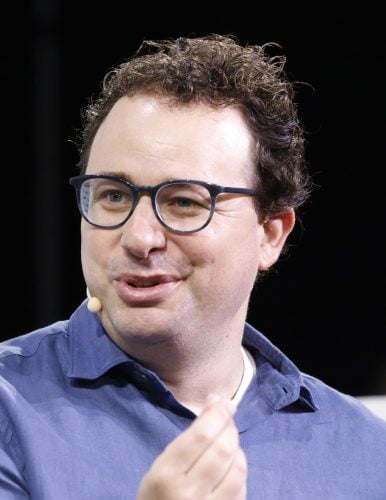
Henry Blodget, founder of Business Insider, pointed out that Anthropic’s month-over-month revenue growth flattened last month. Neocloud company CoreWeave (NASDAQ: CRWV) is paying as much as 13% on new debt, if it can raise the money. Trading in its credit default swaps on the debt has ballooned. SoftBank, which owns several large AI companies, also has debt problems. Additionally, as many as 1,000 communities are trying to block AI data centers. Borrowing for these data centers could reach $1 trillion each year through 2030. Even the largest publicly traded tech companies cannot fund this. They have turned to Wall St. for funding. Shares in AI data center Elice dropped 33% as it launched its IPO. “That was the worst-ever opening day for a sizable Korean IPO, according to data compiled by Bloomberg.”
Finally, and perhaps most desperately, Reuters reported that “OpenAI seeks to accelerate fundraising ahead of Anthropic’s IPO.”
Together, this paints a picture of an industry trying to raise money that is no longer there, or at least is in short supply. Even Nvidia’s (NASDAQ: NVDA | NVDA Price Prediction) feverish investing across the industry seems to have slowed.
Over and over again, experienced investors have said this is not the year 2000. The dot-com bubble collapsed because too many startups ran out of money and could not make enough to stay in business. As more and more AI companies raise money at junk bond rates, this year looks more like the one a quarter of a century ago.
Optimists continue to argue that AI technology is far more important than the invention of the internet. Some argue it is even more important than building the railroads, which, in its era, required tremendous amounts of capital. Or perhaps a better example is the auto industry, where 564 companies failed.
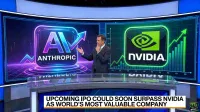
Anthropic is probably the most valuable private AI company. Some speculate it will be worth $2 trillion on IPO day. That will make it more valuable than SpaceX (NASDAQ: SPCX) or Meta (NASDAQ: META). The thesis is that Anthropic’s revenue growth is the fastest among big AI companies, and management says the company is profitable. However, under traditional GAAP (Generally Accepted Accounting Principles), it is not, because of extraordinary model-training and infrastructure costs. It is part of the fuzzy math that surrounds AI. For example, Nvidia invests in an AI company, which then uses the money to buy its chips.
The pessimism that has set in about AI funding happened in days. Industry stocks have sold off but made a modest recovery. Their movement may determine whether any AI company will have an IPO this year.
Anthropic, with its large revenue base from business-to-business customers, can claim it is the most successful private AI company and the one most likely to thrive. It does appear to have one potential problem: going public. And odd trust which is set up for the company to benefit the world and not just make money apparently controls the Anthropic board. Disclosures about the arrangement are incomplete.
In this environment, the Anthropic IPO may make it to market, perhaps not at a $2 trillion valuation. No other AI firm is likely to make it out the IPO door this year.
Contact [email protected] for any questions or corrections.
Douglas A. McIntyre is the co-founder, chief executive officer and editor in chief of 24/7 Wall St. and 24/7 Tempo. He has held these jobs since 2006.
McIntyre has written thousands of articles for 24/7 Wall St. He is an expert on corporate finance, the automotive industry, media companies and international finance. He has edited articles on national demographics, sports, personal income and travel.
His work has been quoted or mentioned in The New York Times, The Wall Street Journal, Los Angeles Times, The Washington Post, NBC News, Time, The New Yorker, HuffPost USA Today, Business Insider, Yahoo, AOL, MarketWatch, The Atlantic, Bloomberg, New York Post, Chicago Tribune, Forbes, The Guardian and many other major publications. McIntyre has been a guest on CNBC, the BBC and television and radio stations across the country.
A magna cum laude graduate of Harvard College, McIntyre also was president of The Harvard Advocate. Founded in 1866, the Advocate is the oldest college publication in the United States.
TheStreet.com, Comps.com and Edgar Online are some of the public companies for which McIntyre served on the board of directors. He was a Vicinity Corporation board member when the company was sold to Microsoft in 2002. He served on the audit committees of some of these companies.
McIntyre has been the CEO of FutureSource, a provider of trading terminals and news to commodities and futures traders. He was president of Switchboard, the online phone directory company. He served as chairman and CEO of On2 Technologies, the video compression company that provided video compression software for Adobe’s Flash. Google bought On2 in 2009.