4 Consumer Staples Dividend Kings That Have Raised Shareholder Payouts for Decades
Some companies have raised their dividends every single year for half a century through recessions, pandemics, and financial crises, but the reasons one keeps paying while another quietly cuts reveal what truly separates durable income from a streak waiting to…

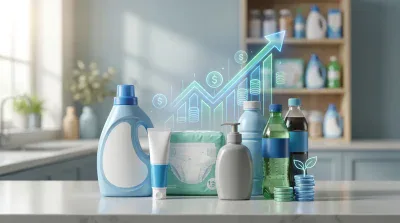
People buy toothpaste, laundry detergent, diapers, and soda in good economies and bad ones. That steady demand turns into steady cash, and steady cash is what lets a board raise a dividend year after year for half a century. Companies that have raised their payouts for at least 50 straight years are called Dividend Kings, and consumer staples companies hold a large share of that list.
The best example is Procter & Gamble (NYSE: PG | PG Price Prediction), whose latest increase marked its 70th consecutive year of dividend increases. A long streak signals a durable business, but it doesn’t guarantee the next raise. Several former Kings have cut or frozen their payouts. All four names below also face the same pressures: store brands competing on price, sales growth that leans on price hikes while unit volumes slip, and changing consumer habits. Their yields are mostly modest, so think of them first as income growers and second as high payers.
Procter & Gamble: Seven Decades of Raises With Room to Spare
Procter & Gamble sells household and personal care staples under brands including Tide, Pampers, Gillette, Crest, Dawn, Olay and Pantene, and it recently added the supplement maker Thorne. The company describes its record as 70 consecutive years of dividend increases and 136 consecutive years of dividend payments. The quarterly dividend is now $1.0885, up from $1.0568 a year earlier. At a share price of $159.92, the stock yields 2.61%.
Dividend safety: The forward annual dividend of $4.354 uses about 62% of the midpoint of fiscal 2027 core EPS guidance, which is $7.00. Free cash flow reached $15.835 billion in fiscal 2026, and management plans to “pay over $10 billion in dividends” this fiscal year. Cash stood at $15.365 billion at the end of the latest quarter. The company has kept raising through hard times, too: in 2020 the quarterly payout rose to $0.7907 from $0.7459 as the pandemic upended the economy.
Bull case: Sales growth is coming mostly from people buying more. Organic sales rose 4.0% last quarter, with volume contributing 2.4 points and pricing only 0.4 points, and all 10 product categories grew. The stock trades at a trailing P/E of 24 and a forward P/E of 21.
Risk: Rising costs. Management expects an after-tax cost headwind of about $1.4 billion this fiscal year, and the finance chief warned, “We expect these headwinds to increase in the next few quarters.”
Coca-Cola: 64 Straight Raises and Growing Free Cash Flow
Coca-Cola (NYSE: KO) owns Coca-Cola, Sprite, Fanta, Powerade, Dasani, Smartwater, Fairlife, and Costa. Its most recent annual increase, which lifted the quarterly dividend from 51 cents to 53 cents, marked its 64th consecutive year of raises. Its dividend history shows the quarterly payout rising from $0.16 in 1999 to $0.53 today. At $92.29, the stock yields 2.24%. That yield is lower than a year ago because shares have risen 34.59% so far this year.
Dividend safety: The $2.12 annualized dividend uses about 64% of trailing EPS of $3.33. Management raised its 2026 free cash flow guidance to at least $13.0 billion, well above the roughly $9.1 billion the current dividend costs per year. One trailing measure looks weaker: free cash flow yield is just 1.33%. Debt is modest, with net debt at 1.4x EBITDA, below the company’s own target of 2 to 2.5x. Coca-Cola also rose through the financial crisis, lifting the quarterly payout from $0.38 in 2008 to $0.41 in 2009.
Bull case: Third-quarter adjusted EPS of $0.91 beat the $0.88 consensus estimate, revenue rose 7.4%, and global unit case volume grew 5%. Management now expects comparable EPS growth of at least 11% this year. The finance chief said the company has “increased flexibility and optionality to continue to both reinvest in our business and return capital to shareowners.”
Risk: Coca-Cola is fighting an IRS tax case that could have a “potentially significant impact if the company does not prevail.”
PepsiCo: Highest Yield in the Group, Smallest Cushion
PepsiCo (NASDAQ: PEP) sells Lay’s, Doritos, Cheetos, Gatorade, Pepsi-Cola, Mountain Dew, Quaker, and SodaStream. The company says it has paid consecutive quarterly cash dividends since 1965, and that 2026 marked its 54th consecutive annual dividend increase, which raised the annualized dividend to $5.92 per share from $5.69. At $134.51, the stock yields 4.28%, the only high yield in this group. Part of that is that shares are down 7.65% over the past year.
Dividend safety: The dividend uses about 74% of trailing EPS of $7.95. PepsiCo plans to pay $7.9 billion in dividends this year. Its free cash flow yield of 4.16% is about the same as its dividend yield, leaving less spare cash than the other three companies. Debt-to is 2.45, and operating earnings cover interest expense 10.26x. PepsiCo kept raising during the pandemic, lifting the quarterly payout to $1.0225 in 2020 from $0.955.
Bull case: The stock is the cheapest of the four, at a trailing P/E of 17 and a forward P/E of 15. Third-quarter adjusted EPS of $2.34 beat the $2.30 estimate, and the CEO noted that “international is already 45% of our profit.”
Risk: U.S. consumers are changing what they buy. Core operating profit at the North American snacks business fell 12% last quarter, management cut its 2026 core EPS growth guidance to +2.5% to +3.5%, and the CEO said plainly, “We do not feel good about the beverage business.”
Colgate-Palmolive: Paying Since 1895, With Thin Equity
Colgate-Palmolive (NYSE: CL) sells Colgate, Palmolive, elmex, Irish Spring, Softsoap, Speed Stick, Tom’s of Maine, Fabuloso, and Hill’s Science Diet and Prescription Diet pet food. It has paid uninterrupted dividends on its common stock since 1895. In 2022, Barron’s reported that Colgate planned to raise its annual dividend for the 60th straight year. The company has raised it every year since, with the quarterly payout going to $0.48, then $0.50, then $0.52, and now $0.53. That streak includes the 2008-2009 financial crisis and the 2020 pandemic. At $93.10, the stock yields 2.22%.
Dividend safety: The $2.12 annualized dividend uses about 84% of trailing GAAP EPS of $2.51. That share is high partly because restructuring charges, including $129M last quarter, lowered reported earnings. Cash generation is strong: first-quarter free cash flow rose 27.9% to $609M, and the company returned $1.4 billion to shareholders in the first half. The weak spot is the balance sheet. Shareholders’ equity is only $236M, against $16.224B of total liabilities.
Bull case: Base Business EPS of $0.99 beat the $0.95 estimate, gross margin widened to 61.5%, and Latin America grew 13.7%. The stock trades at a forward P/E of 23.
Risk: Sales volume is falling at home. North American organic sales fell 3.0% last quarter as volume dropped 3.9%. This kind of weakness can hide behind price increases only for so long.
Who These Dividend Kings Suit Best
These four stocks suit retirees and near-retirees who want income that rises every year more than a big payout today. Procter & Gamble and Coca-Cola have the most cash left over after paying their dividends. PepsiCo offers the most income now but the smallest margin for error. Colgate-Palmolive has the longest record of uninterrupted payments, but its balance sheet needs watching. For readers building a Dividend Kings sleeve, we ranked ten of them by today’s valuation in a free report you can grab here.
Contact [email protected] for any questions or corrections.
Lee Jackson has covered Wall Street analysts' equity and debt research and equity strategy daily for 24/7 Wall St. since 2012. His broad, diverse career, including a stint as creative services director at an NBC affiliate in Austin, Texas, gives him unique insight into the financial industry.
Lee Jackson's journey in the financial industry spans more than 30 years, including nearly two decades as an institutional equity salesperson at Bear Stearns, Lehman Brothers, and Morgan Stanley. His career spanned pivotal sell-side Wall Street events, from the dot-com rise and bubble to the Long-Term Capital Management debacle, 9/11, and the Great Recession of 2008. This reflects his resilience and adaptability amid market volatility.
Lee Jackson’s practical financial industry experience, gained through a career at some of the biggest banks and brokerage firms, is complemented by a lifetime of writing across various platforms. This unique combination allows him to shed light on the intricacies of Wall Street in a way only someone with deep insider experience and knowledge can. Moreover, his extensive network across Wall Street continues to provide direct access for him and 24/7 Wall St., a privilege few firms enjoy.
Since 2012, Jackson’s work for 24/7 Wall St. has been featured in Barron’s, Yahoo Finance, MarketWatch, Business Insider, TradingView, Real Money, The Street, Seeking Alpha, Benzinga, and other media outlets. He attended the prestigious Cranbrook Schools in Bloomfield Hills, Michigan, and has a degree in broadcasting from the Specs Howard School of Media Arts.