Lockheed Will Pay $29.5 Million Over Claims It Discriminated Against White Employees
A whistleblower lawsuit, a federal contractor certification, and a compensation program that allegedly used race to clear statistical flags pushed Lockheed Martin into a settlement that stretches far beyond a simple discrimination case.

This post may contain links from our sponsors and affiliates, and Flywheel Publishing may receive compensation for actions taken through them.
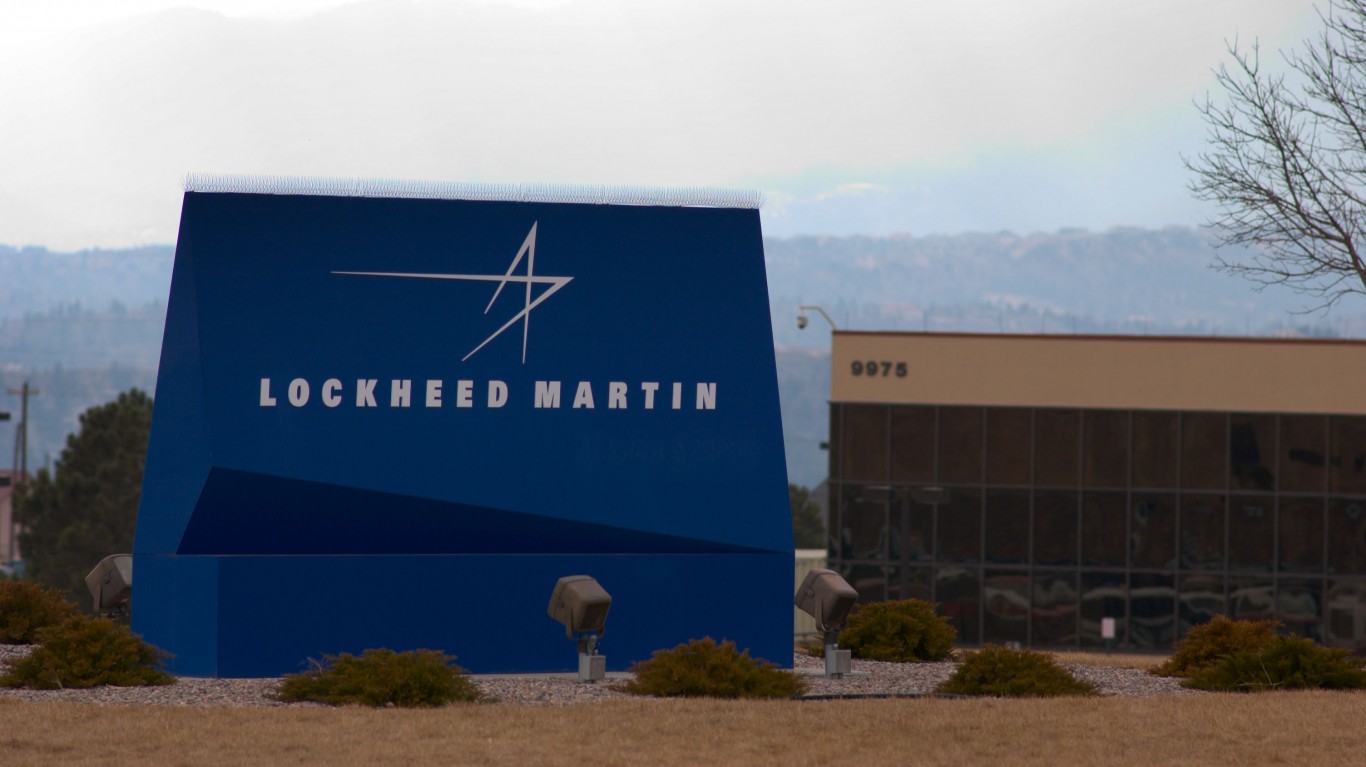
On November 3, 2026, the Justice Department and the EEOC announced that Lockheed Martin (NYSE:LMT | LMT Price Prediction) agreed to pay $29.5 million. The payment settles allegations of employment discrimination and allegations that Lockheed falsely certified, as a federal contractor, that it complied with federal civil rights laws.
The money is split two ways. $22 million goes to the United States under the False Claims Act, a law that lets the government recover money from contractors over false claims. That part covers alleged race- and sex-based employment practices from 2019 to the present.
About $7.5 million goes to more than a thousand employees through the EEOC. It settles a 2025 Commissioner’s Charge filed by EEOC Chair Andrea Lucas, which alleged race discrimination against white employees in performance reviews, bonuses and other pay.
The DOJ said the claims are “allegations only and there has been no determination of liability” and that “Lockheed cooperated in the resolution of these matters.” The stock fell 0.59% in the regular session and traded at $639.33 at 7:58 p.m. ET. No public source has tied that move to the settlement.

What the Justice Department Alleges
The False Claims Act portion settles a whistleblower suit that former Lockheed Vice President Tim Booher filed in the Northern District of Texas. “Under this resolution, Mr. Booher will receive $4,400,000,” the DOJ said.
The central allegation concerns a “Compensation Adder” program. Starting in 2021, it gave an extra annual raise to the top 20% of employees in each business area. The DOJ says HR staff pushed leaders to add or remove employees based on race until statistical “flags” cleared.
The DOJ also says non-public workforce goals based on race and sex, a management bonus metric tied to preferred demographics, and 2023 hiring goals described as “aspirational plus.” Under the EEOC terms, Lockheed must keep a merit-based workplace, and the EEOC may review its compliance while the agreement is in force.
Why the Payment Barely Dents Earnings
On October 22, Lockheed reported third-quarter sales of $20.7 billion, up 11%. Net earnings were $1.8 billion, and diluted EPS was $7.97, up from $6.95 a year earlier.
The settlement equals about 1.6% of that quarter’s net earnings. The EEOC money comes to at most about $7,500 per worker on average. That matters to the employees but very little to shareholders.
Backlog reached a record $292.0 billion. Management raised 2026 guidance to sales of $80 billion to $82 billion and EPS of $30.35 to $30.75.

Contractor Cases Keep Coming
Associate Attorney General Stanley E. Woodward Jr. called this the Department’s “fourth False Claims Act settlement resolving allegations of racial discrimination” against employees. He said, “Companies, especially those that do business with the federal government, should not make DEI compensation decisions that prioritize an employee’s race over the merit of their work.”
Earlier cases include IBM (NYSE:IBM) at about $17 million on April 10, 2026, and Deloitte at $21.5 million on August 25, 2026. Accenture Federal Services, a unit of Accenture (NYSE:ACN), followed at $25 million on September 14, 2026. Each one denied the allegations or admitted no liability.
Lockheed’s total is larger than Accenture’s, although its False Claims Act portion alone is smaller. The DOJ called the EEOC portion “the largest class of workers to publicly recover under an EEOC settlement” tied to alleged Title VII violations involving DEI practices.
This case is separate from Lockheed’s $29.74 million False Claims Act settlement over alleged F-35 defective pricing, announced February 6, 2025. Having two such resolutions on record raises the compliance risk for a company that depends this heavily on Washington.
What Could Change the Outlook for Lockheed Stock
The settlement costs a small share of one quarter’s earnings. Meanwhile, a record backlog and guidance raised for a second straight quarter give Lockheed years of revenue it can already see.
The main concern is valuation. The stock sits in a 52-week range of $437.25 to $692.00, much closer to the top after a 26.5% gain over the past month. That leaves less room for near-term gains.
Watch Lockheed’s fourth-quarter filings early in 2027. A similar 8-K arrived on January 29, 2026. If the legal disclosures in that report show new federal DEI probes, the stock outlook gets weaker.
Contact [email protected] for any questions or corrections.
Omor Ibne Ehsan is a writer at 24/7 Wall St. He is a self-taught investor with a focus on growth, cyclical, and dividend equities that have strong fundamentals, value, and long-term potential. He also has an interest in high-risk, high-reward investments such as penny stocks.