Best Buy’s Dividend Is Barely Growing. Should Income Investors Be Worried?
Best Buy once boosted its payout by more than 25% a year. Now the raises barely register, a new CEO is spending on other priorities, and the next dividend declaration could reveal where income investors rank.

This post may contain links from our sponsors and affiliates, and Flywheel Publishing may receive compensation for actions taken through them.
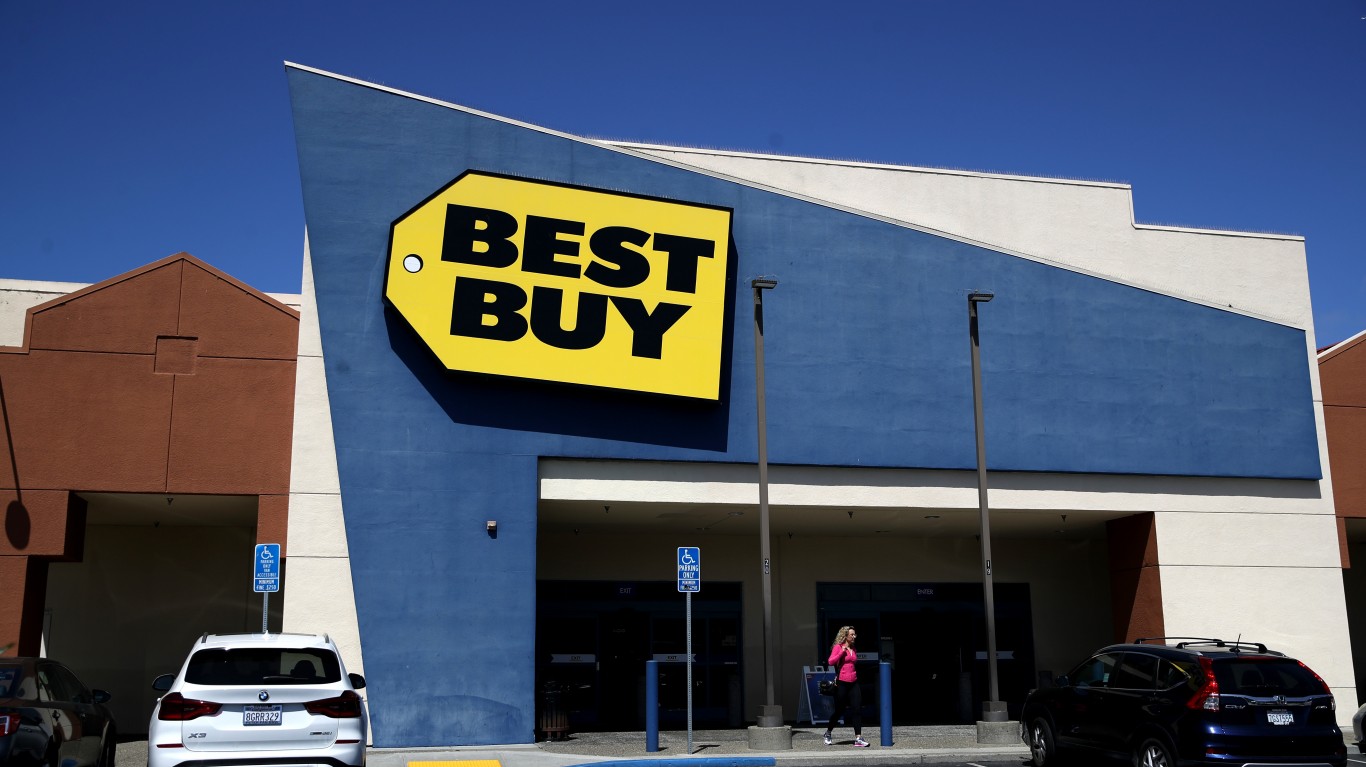
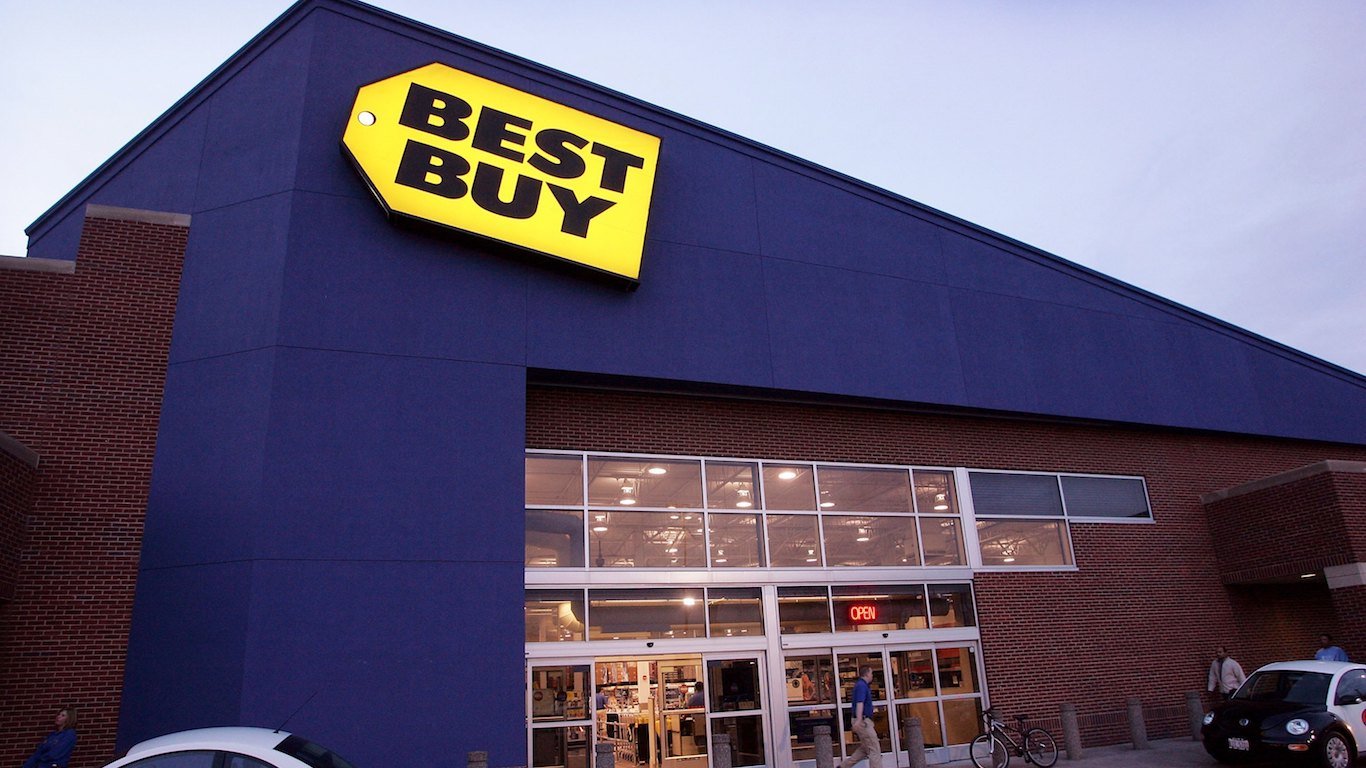
Best Buy (NYSE:BBY | BBY Price Prediction) has become a high-yield retailer with almost no dividend growth. The quarterly payout is $0.96, and it reached that level through a 1.1% raise in 2026, the same size as the 1.1% raise in 2025. Best Buy usually declares its December-quarter dividend with its fiscal third-quarter results. Last year that came on Nov 25, 2025. That makes the upcoming report the next dividend decision point.

From 27% Raises to Token Bumps
Best Buy raised its quarterly rate by 27.3% in 2021 and 25.7% in 2022. Growth then fell to 4.5% in 2023 and 2.2% in 2024. Cash flow explains most of the slowdown. In fiscal 2022, operating cash flow was $3.252 billion and net income was $2.454 billion. By fiscal 2026, those figures had fallen to $1.962 billion and $1.069 billion. Over the same stretch, annual dividend spending rose from $688 million to $801 million. The board kept paying more while the company earned less, so it held back on raises.
Payout Coverage Still Holds Up
Fiscal 2026 free cash flow came to $1.258 billion, and dividends used about 64% of it. On earnings, the $3.84 annualized dividend is about 56% of the middle of raised fiscal 2027 adjusted EPS guidance of $6.70 to $6.90. Cash reached $2.255 billion. Buybacks now play a smaller role: management expects about $300 million in fiscal 2027, compared with $3.502 billion in fiscal 2022.
Results are getting better. Former CEO Corie Barry said in August:
“We are very pleased to report we outperformed expectations in the second quarter with comparable sales growth of 4.1% and a higher-than-expected adjusted operating income rate.”
That quarter did include a $34 million benefit from tariff refunds.

Target and Walmart Are Raising Faster
Target (NYSE:TGT) raised its quarterly dividend 1.8% to $1.16. That is also a modest increase, but it is larger than Best Buy’s. Walmart (NASDAQ:WMT) raised its annual dividend from $0.94 to $0.99, an increase of about 5.3%. Walmart yields only 0.73%, while Best Buy yields 3.97%. Best Buy gives investors more income today in exchange for slower growth.
A New CEO Faces the Next Declaration
Jason Bonfig became CEO on November 1, 2026. He describes his plan as investing in core categories while growing ads and marketplace:
“It isn’t one or the other. It is both.”
Spending on appliances, stores, and incentive pay competes with dividend growth for the same cash. Incentive compensation alone is expected to rise about $130 million this year. The stock is up 54.61% year to date to $99.59. That is above the average analyst target of $87.85, and 19 analysts rate it a hold.

What Income Investors Should Watch Next
Best Buy’s dividend looks safe. Forecast earnings and fiscal 2026 free cash flow cover it, with cash on hand as a backup. The raises have stalled, though, and the stock’s price gain has already reduced the yield. Last November, the company kept the rate unchanged, and the increase came in March. In the coming report, watch for:
- Whether the declared rate stays at $0.96
- Any comments from new CFO Anne Braman on capital allocation
- Free cash flow through the holiday quarter
- Whether buybacks reach the $300 million plan
Contact [email protected] for any questions or corrections.
Chris Lange is a financial and geopolitical writer with more than a decade of experience covering a myriad of topics. He has published thousands of articles for 24/7 Wall St., with past coverage focused heavily on stocks, IPOs, healthcare, defense, global affairs, and technology.
His work has been quoted, or referenced by a number of outlets including Business Insider, USA Today, Yahoo Finance, MSN, The Motley Fool, and many other publications. A graduate of Southwestern University, he studied business with a focus on investments and has previous experience in banking and startups.
When not reading or writing the news, he is following his passion for Lacrosse, playing chess, or building solar projects with his dad.