Gilead Pays a $3.28 Annual Dividend Despite Negative Earnings. Is It Safe?
A red ink EPS figure usually spells trouble for retirees counting on a payout. Gilead's loss traces back to one strange quarter, and a single cash metric reveals whether the dividend checks are really at risk.

This post may contain links from our sponsors and affiliates, and Flywheel Publishing may receive compensation for actions taken through them.
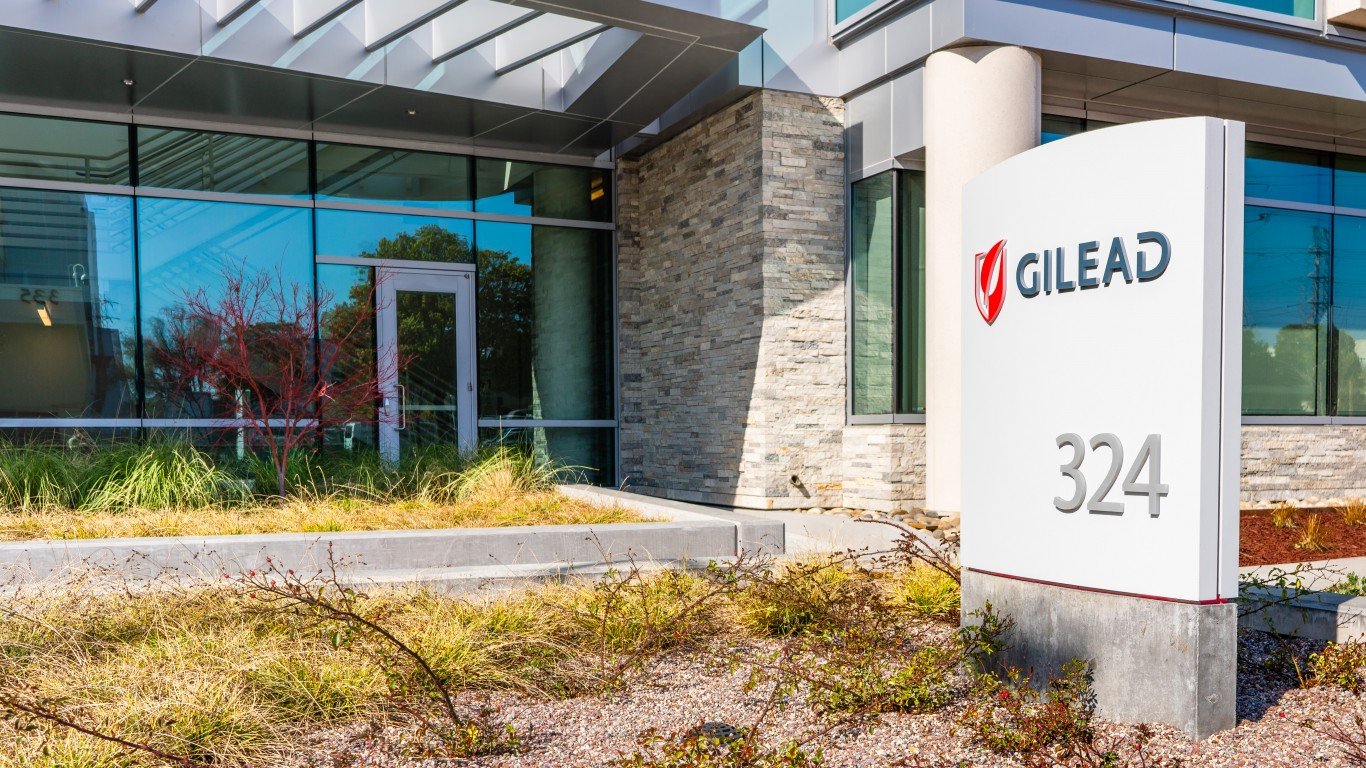
Gilead Sciences (NASDAQ:GILD | GILD Price Prediction) raised its quarterly dividend to $0.82 from $0.79. It has also declared another $0.82 payout for the fourth quarter, payable December 30, 2026. Meanwhile, Gilead’s trailing twelve-month EPS is -$3.13. If you’re an income investor at or near retirement, that combination looks like a warning sign. One measure explains what’s going on: how many times free cash flow covers the dividend.
Why Free Cash Flow Coverage Matters More Than EPS
EPS includes accounting charges that may not repeat. Dividends get paid in cash. Free cash flow coverage measures how many times the cash a business generates after capital spending can pay its dividend bill. That number determines whether a payout holds up.
One Quarter Created Almost the Entire Loss
Most of the negative trailing EPS comes from the quarter ended June 30, 2026, when Gilead reported EPS of -$6.75. Operating expenses that quarter rose to $16.618 billion, up from $2.929 billion in the March quarter. Cash spent on investing reached $10.347 billion in the same period. Gilead’s full-year outlook includes roughly $12.4 billion of acquired in-process R&D charges, about $9.88 per share. Those charges are linked to the Arcellx, Tubulis, Ouro Medicines and PepStar deals.
The core business kept growing. Third-quarter revenue reached $8.30B, and non-GAAP EPS of $2.55 beat the $2.21 consensus. HIV sales rose 18%. Yeztugo, Gilead’s twice-yearly HIV prevention shot, sold $305 million in the quarter, up from $232M in Q2 and $166M in Q1. Management expects about $1 billion in Yeztugo sales for the full year.

Cash Covers the Dividend More Than Four Times Over
Third-quarter free cash flow was $4.798 billion, up 21.13% year over year. Dividend payments in the quarter were $1.039 billion, so free cash flow covered the dividend about 4.6x. Even in the June loss quarter, operating cash flow was $3.573 billion against $1.029 billion in dividends.
Adjusted earnings point the same way. CFO Andrew Dickinson said full-year non-GAAP EPS would be $8.75 to $9.10 if you remove acquired IPR&D, acquisition financing costs, and nonrecurring other revenue. Measured against the $3.28 annualized dividend, that’s a payout ratio of roughly 36% to 37%. Investors seem to agree: the stock trades at $168.38, up 39.65% year to date.
Risks Income Investors Should Track
Starting Jan. 1, 2028, Biktarvy faces a Medicare Maximum Fair Price, with a preliminary net revenue hit of about $1.5 billion that year. Cash and equivalents fell 12.18% to $6,437,000,000 after the acquisitions.
A bullish sign would be Yeztugo holding quarterly sales above $300 million and continuing to grow. Management’s outlook also calls for total HIV revenue, product sales, and EPS to grow in 2028 compared with 2027. A bearish sign would be a stall in the Yeztugo ramp, pushback from insurers, or another round of large acquired IPR&D charges (there are seven classic warning signs a big yield is about to be cut, and we listed all of them in a free report here).
Verdict: Gilead’s Dividend Is Safe
Free cash flow covers the payout about 4.6 times, and adjusted earnings indicate a payout ratio under 40%, so Gilead’s dividend is safe. The negative trailing EPS comes from deal accounting in a single quarter.
Contact [email protected] for any questions or corrections.
Chris Lange is a financial and geopolitical writer with more than a decade of experience covering a myriad of topics. He has published thousands of articles for 24/7 Wall St., with past coverage focused heavily on stocks, IPOs, healthcare, defense, global affairs, and technology.
His work has been quoted, or referenced by a number of outlets including Business Insider, USA Today, Yahoo Finance, MSN, The Motley Fool, and many other publications. A graduate of Southwestern University, he studied business with a focus on investments and has previous experience in banking and startups.
When not reading or writing the news, he is following his passion for Lacrosse, playing chess, or building solar projects with his dad.