Cisco Stock Fell 15.5% Despite Its Strongest Growth in 15 Years. Is the Dividend Safe?

This post may contain links from our sponsors and affiliates, and Flywheel Publishing may receive compensation for actions taken through them.
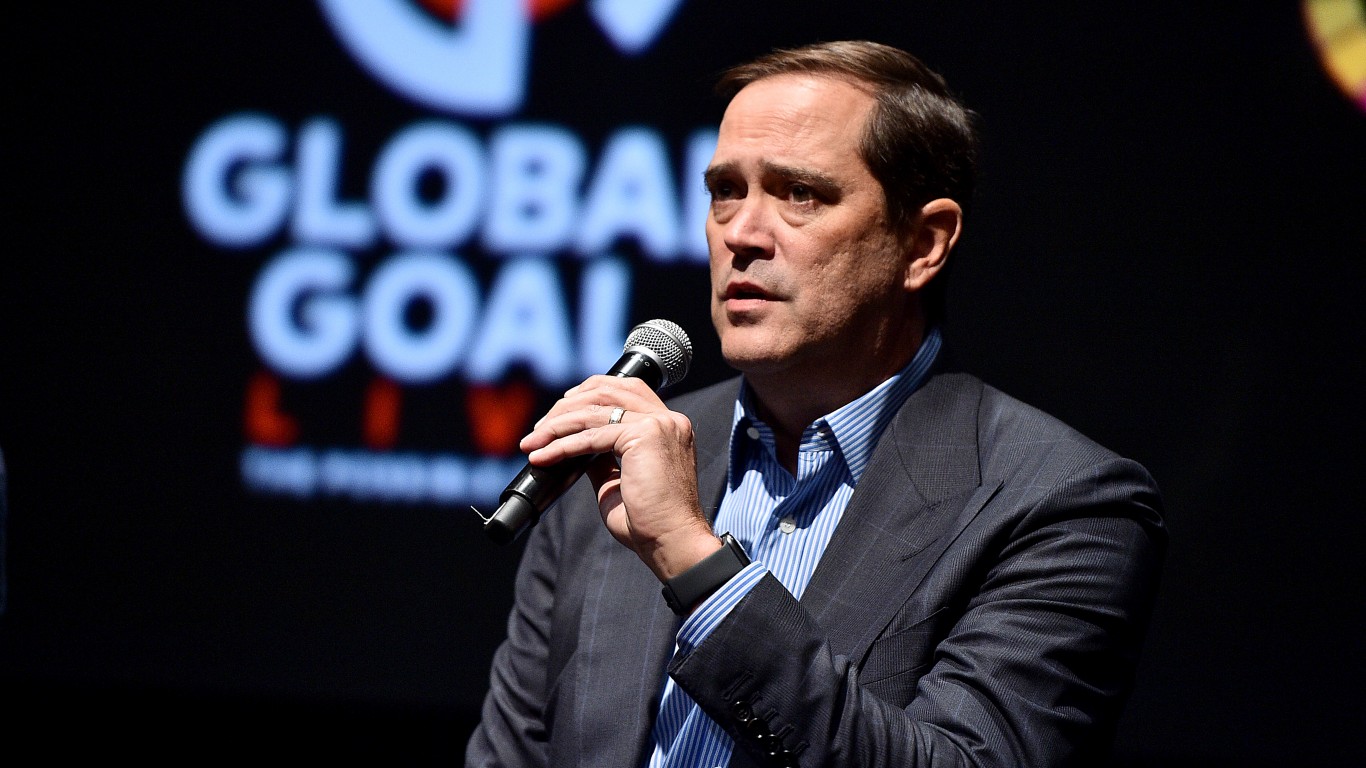
Cisco Systems (NASDAQ:CSCO | CSCO Price Prediction) just reported what CEO Chuck Robbins called “the strongest revenue and non-GAAP earnings per share growth rates for Cisco in over 15 years.”[1] The stock still fell 15.5% over the past month to $90.64. That drop drives the forward yield to about 1.85% on an annualized payout of $1.68. Retirees who own Cisco for income need to know whether that check holds up.

A Raise Already Locked In for January
Cisco raised its quarterly dividend to $0.42 from $0.41 in February 2026, a 2% increase. It has declared the new rate every quarter since. The next payment goes out January 20, 2027, to holders of record on January 4, 2027. The raises follow a steady pattern: $0.39 in 2023, $0.40 in 2024, $0.41 in 2025 and $0.42 in 2026. When the payments began in 2011, the quarterly amount was $0.06.
Coverage Leaves Plenty of Room
In fiscal 2026, Cisco paid $6.553 billion in dividends against net income of $13.267 billion. That is a payout ratio near 49%. Operating cash flow of $14.177 billion minus $1.410 billion of capex left $12.767 billion of free cash flow, and dividends used about 51% of it. Fiscal 2027 non-GAAP EPS guidance is $5.47 to $5.53[1]. Even at the low end, the dividend takes about 31% of earnings.
“Our profitable growth generates strong cash flows and fuels consistent capital returns to our shareholders.” Chuck Robbins, Q1 FY2027 earnings call[2]
In the first quarter of fiscal 2027, revenue rose 24.4%[1] to $18.517 billion, and operating cash flow rose 35.65%.

Recurring Revenue Cushions a Hardware Boom
Subscriptions made up 44%[2] of total revenue. ARR (annual recurring revenue) reached $32.7 billion[2], and remaining performance obligations, the value of signed revenue not yet booked, hit $46.2 billion[1]. That contracted base gives the dividend a steady foundation. Most of today’s growth, though, comes from one-time hardware sales.
Networking jumped 43%[1] while services rose 1%. Non-GAAP product gross margin fell 350 basis points[2]. Cisco expects AI revenue from hyperscalers (the largest cloud companies) to reach 12%[2] of total revenue in fiscal 2027, up from 6%. That puts more sales in a small group of buyers.
Buybacks Are the Pressure Point to Watch
Cisco returned $3.7 billion[2] in the first quarter of fiscal 2027, or 95% of free cash flow. Buybacks made up $2 billion[2] of that total. The company held $15.8 billion[2] in cash and investments, with $6.1 billion[1] left on its repurchase authorization. A restructuring plan carrying up to $1B[3] in pre-tax charges and tuck-in deals such as WideField Security also uses cash. If networking demand cools, buybacks are the first tool management can pull, which protects the dividend.
How Cisco Stacks Up Against Arista and HPE
Arista Networks (NYSE:ANET) grew third-quarter revenue 58.45% but pays no dividend. It trades at 60 times earnings. Hewlett Packard Enterprise (NYSE:HPE) pays $0.1425 a quarter for a 1.47% yield. It runs net debt of about 4.2 times EBITDA after the $13.4 billion Juniper deal. Cisco offers a higher yield than HPE, with far more free cash flow to fund it.
Verdict: Built to Last, With Slow Raises
Cisco’s dividend is built to last. It uses about half of earnings and free cash flow, recurring revenue makes up a large share of sales, and buybacks give management room to cut back before the payout feels any strain. Retirees should expect raises of about a penny per share each year. For the second quarter of fiscal 2027, Cisco guided revenue to $18.0B-$18.2B[1]. In that report, watch product margins and hyperscaler orders.
Contact [email protected] for any questions or corrections.
Chris Lange is a financial and geopolitical writer with more than a decade of experience covering a myriad of topics. He has published thousands of articles for 24/7 Wall St., with past coverage focused heavily on stocks, IPOs, healthcare, defense, global affairs, and technology.
His work has been quoted, or referenced by a number of outlets including Business Insider, USA Today, Yahoo Finance, MSN, The Motley Fool, and many other publications. A graduate of Southwestern University, he studied business with a focus on investments and has previous experience in banking and startups.
When not reading or writing the news, he is following his passion for Lacrosse, playing chess, or building solar projects with his dad.