The Crypto Market Surpasses $3 Trillion. What Drove This Milestone and What Could Keep It There?
A Treasury buyback, an SEC ruling, and nearly a billion dollars in forced buying all converged on a single day to push the crypto market past a major threshold. But with four of the five top coins still in the…

This post may contain links from our sponsors and affiliates, and Flywheel Publishing may receive compensation for actions taken through them.

The total value of the cryptocurrency market has surpassed $3 trillion for the first time since January. Bitcoin (CRYPTO:BTC) is trading at $86,276, which is 32% lower than its all-time high of $126,000 reached in October 2025. This surge can be attributed to key factors influencing market dynamics.
Investors have contributed over $740 billion to the market after the U.S. Treasury announced an expanded bond buyback program in late August. Additionally, on September 21, exchanges liquidated around $920 million in short positions, creating notable upward pressure on prices.
A Treasury Buyback Plan and an SEC Ruling Moved the Crypto Market

Bloomberg reported that the market regained over $740 billion in value after the U.S. Treasury announced an expansion of its long-term bond buybacks in late August. A buyback occurs when the Treasury buys back its own older bonds from investors. This process gives investors cash and lowers borrowing costs across markets.
Investors redirected this cash into cryptocurrency, even with attractive bond yields. The 10-year Treasury yield closed at 4.96% on September 21, close to its one-year peak of 5.01% on September 18. Despite the prospect of nearly 5% returns without any price risk from bonds, investors still chose to invest in Bitcoin.
The second significant development came from the Securities and Exchange Commission (SEC), which granted temporary conditional approval for venues to trade tokenized U.S. stocks on public blockchains. This change allows a broader range of assets to trade in the crypto space, with approximately $465 million in tokenized stocks already trading on Solana.
$920 Million of Forced Buying Is Not the Same as $999 Million of ETF Inflows

On September 21, exchanges were forced to close about $920 million in short positions, according to CoinGlass. When a trader shorts a coin, they borrow it, sell it, and aim to buy it back at a lower price. If the price rises instead and the trader runs out of collateral, the exchange purchases the coin at the current market price to cover the position. Each forced buy raises the price until the last short position is closed.
This kind of buying pressure acts similarly to a willing buyer and continues until all trapped shorts are resolved. Currently, traders hold around $160 billion in perpetual futures, marking the highest level since late October 2025. Consequently, the borrowed funds that helped elevate the crypto market to this milestone represent the largest amount seen in eleven months.
In contrast, U.S. spot Bitcoin funds experienced significant inflows, totaling $999 million on September 21. This marked their most substantial day in nearly a year, with BlackRock’s fund attracting $381.4 million, ARK’s fund bringing in $289.1 million, and Fidelity’s fund receiving $238.8 million—accounting for 91% of the inflows. Funds like these typically invest in coins held in custody, making it impossible for exchanges to close out these positions for investors.
Four of These Five Coins Are Still Down for 2026
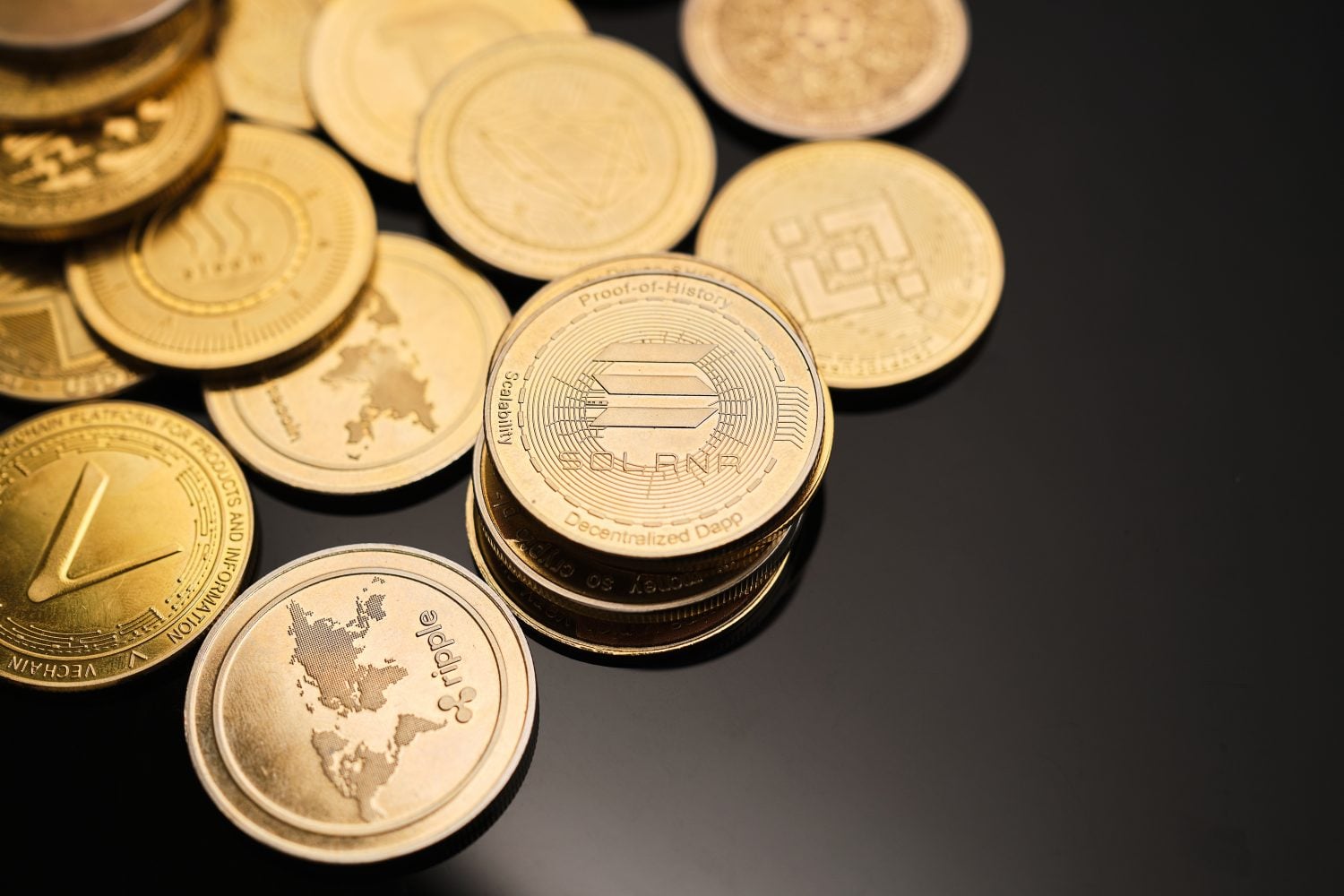
While the total market capitalization might be impressive, it conceals different performances among major coins. Bitcoin gained 14.4% over the past week and 11.2% month-on-month, but it is still down 1.2% for the year. Ethereum (CRYPTO:ETH) is trading at $2,750, up 15.8% for the week and 12.7% for the month, yet down 6.5% year-to-date.
XRP (CRYPTO:XRP) is at $1.57, up 19.8% for the week and 1% for the month, but down 16.5% year-to-date. Solana (CRYPTO:SOL) posted the strongest performance among the four, up 23.1% for the week and 24.9% for the month, but is still down 4.2% for 2026.
Amid all this, Zcash (CRYPTO:ZEC) stands out at $1,520, showing the biggest gains with a 32.3% increase for the week, 71.6% for the month, and an impressive 187.5% gain for the year. While Zcash ranks as the ninth-largest coin, it is the only one among the top cryptos to show positive growth for the year. So, while the $3 trillion milestone sounds significant, it could mislead those who assume all coins are performing well.
Can the Crypto Market Hold $3 Trillion?
The Treasury’s actions in late August, combined with regulatory changes from the SEC in September and forced buying pressures, played a bigger role in this achievement than organic growth in the crypto market. With four of the five major coins still down for 2026, the market has already slipped back under the $3 trillion mark once since crossing it.
Labeling this milestone a positive signal carries risks because $160 billion in borrowed positions underpins it. The same leverage that pushed the market through $3 trillion could just as easily translate into selling pressure if prices fall.
Two factors could clarify the situation. If U.S. spot Bitcoin funds continue to see consistent inflows over the next ten sessions, rather than just a single spike, it would indicate that buyers are investing cash instead of covering their bets.
Additionally, if Ethereum, XRP, and Solana manage to recover from their respective declines of 6.5%, 16.5%, and 4.2% in 2026, it would validate the market’s growth. If not, the $3 trillion level may simply be a fleeting number rather than a genuine market achievement.
Contact [email protected] for any questions or corrections.
Sam Daodu is a crypto analyst who's spent nearly a decade making blockchain understandable—no easy task when most whitepapers read like fever dreams. He writes for 24/7 Wall St., covering Bitcoin, altcoins, and crypto market analysis for investors. Before crypto, he was a tech writer (back when explaining "the cloud" was peak innovation). Since 2018, he's written for CoinTelegraph, Yahoo Finance, The Block, Cryptonews, Zypto, Rain, and more—basically anywhere people want crypto news without the headache. Sam runs MacLabs Marketing, a content agency for crypto brands tired of sounding like AI wrote their website. He also publishes free crypto education on his site for Web3 enthusiasts who think "gas fees" is a typo. When he's not writing or staring at charts, Sam's either: - Watching anime (currently convinced One Piece has better tokenomics than most altcoins) - At the gym sculpting himself into a Greek god - Listening to the music your mum warned you only bad boys listen to Connect: LinkedIn | Email | MacLabs Marketing