How Much Crypto Is Too Much for Retirement?
A Ramsey Show caller revealed her husband keeps $600,000 in Bitcoin and just $5,000 in cash, with no other retirement savings. Financial advisors draw a clear line on crypto concentration, and this couple sits far on the wrong side of…

This post may contain links from our sponsors and affiliates, and Flywheel Publishing may receive compensation for actions taken through them.

A Ramsey Show caller recently shared a concerning story: her husband holds about $600,000 in Bitcoin (CRYPTO: BTC) and only $5,000 in cash. Given that the couple owes $20,000 on a car and considers their Bitcoin the sole retirement savings beyond her pension, this raises the question: how much crypto is too much?
On October 5, 2026, the caller mentioned their substantial Bitcoin holdings, which could pay off their mortgage and still leave some funds left over. However, her husband refuses to sell, believing the value will keep growing. Without knowing the initial investment amount, the financial implications remain unclear.
One of the co-hosts of the show, who doesn’t own any Bitcoin, offered an insightful perspective: “It could go up 5 trillion%, and it could go to zero.” As of October 10, Bitcoin trades at $82,747, down 2.2% over the past week and about 34% from its all-time high of $126,080. So, how should a household like this one approach the risks of crypto investment?
How Much of a Portfolio Advisors Put in Crypto
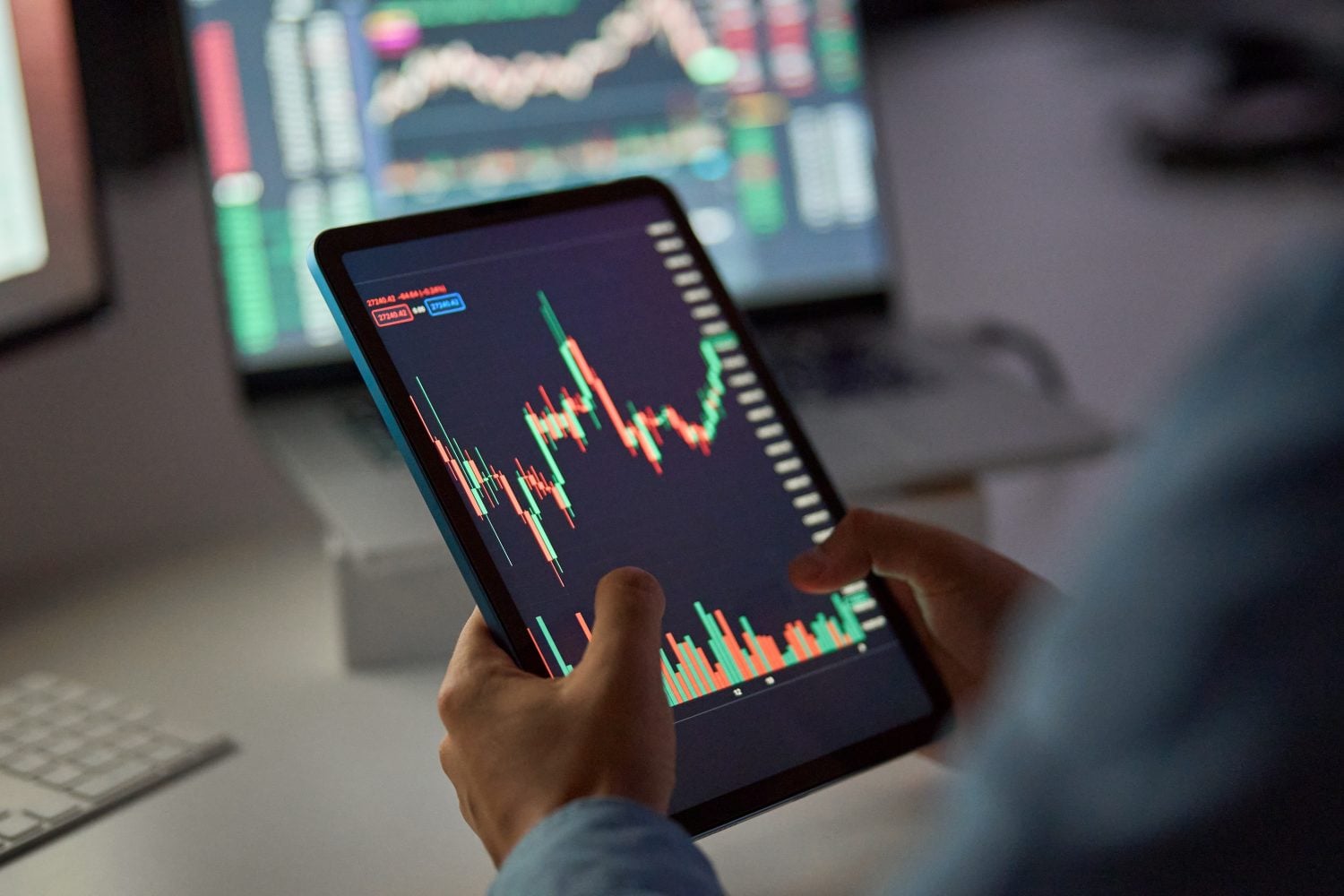
When financial advisors talk about portfolio allocations, they mean the percentage of a portfolio dedicated to a specific asset. Generally, experts recommend allocating between 1% and 5% of total investments to cryptocurrencies like Bitcoin. For instance, BlackRock (NYSE: BLK | BLK Price Prediction) suggests a maximum Bitcoin position of around 2%.
These recommendations aim to keep the investment small enough that losing it would be a setback but not catastrophic for retirement plans. In other words, even if an investor strongly believes in Bitcoin’s growth, it should remain a minor part of their overall portfolio.
Some Bitcoin advocates view crypto as a hedge against potential risks in other investments. For them, if they believe there’s a 5% chance that artificial intelligence could disrupt their other assets, they might allocate 5% of their funds to Bitcoin. Ultimately, both cautious advisors and believers agree that Bitcoin should make up a small share of the portfolio, with most funds invested elsewhere.
Why This Couple’s Bitcoin Holding Is Too Concentrated

Concentration refers to having a large portion of wealth tied to a single asset. Advisors typically recommend allocating only 1% to 5% to a single asset. However, in this case, the couple has tied all of their retirement savings outside of the pension to Bitcoin.
The caller’s lack of details about the pension size, mortgage balance, and their ages limits further analysis. A large pension could mitigate the concentration risk, while a small one could amplify it.
A Thin Cash Buffer and Unknown Cost Basis Raise the Couple’s Risk

Liquidity is essential to access cash quickly without selling assets at unfavorable prices. With only $5,000 in cash against $20,000 in car debt, this couple lacks a financial safety net. If they lose their jobs, face unexpected repair costs, or incur medical bills, the husband may be forced to sell Bitcoin at a less-than-ideal price.
Bitcoin’s history demonstrates how drastically values can drop. In June 2026, when Bitcoin fell to about $58,000, their investment could have been worth around $420,000—$180,000 less than its current value. Selling during such a dip would result in a permanent loss, which is why having a cash cushion is vital. A down market early in retirement can lead to long-lasting damage.
Additionally, the husband’s unfamiliarity with their cost basis—the original purchase price of their Bitcoin—complicates matters. Without this information, he cannot accurately assess the potential tax implications or determine how much of their Bitcoin holdings represents unrealized profit.
How Much Crypto Is Too Much for a Retirement Portfolio?
A prudent guideline for determining whether you have too much crypto in your retirement plan is to consider the impact of losing it on your future. By that gauge, the commonly suggested 1% to 5% allocation and BlackRock’s 2% guidance are solid benchmarks for many nearing retirement. In this case, a position that constitutes the entirety of a couple’s retirement savings, paired with just $5,000 in cash, clearly falls outside these recommendations.
This holds true regardless of Bitcoin’s next move. Even if the price rebounds toward $126,080, the couple remains overexposed. The fundamental risk depends on the size of their investment. The co-host’s remarks capture the essence of the situation: an asset that can either soar or plummet should make up only as much of a retirement strategy as individuals can afford to lose, ensuring that market downturns don’t force sales to cover necessary expenses.
Contact [email protected] for any questions or corrections.
Sam Daodu is a crypto analyst who's spent nearly a decade making blockchain understandable—no easy task when most whitepapers read like fever dreams. He writes for 24/7 Wall St., covering Bitcoin, altcoins, and crypto market analysis for investors. Before crypto, he was a tech writer (back when explaining "the cloud" was peak innovation). Since 2018, he's written for CoinTelegraph, Yahoo Finance, The Block, Cryptonews, Zypto, Rain, and more—basically anywhere people want crypto news without the headache. Sam runs MacLabs Marketing, a content agency for crypto brands tired of sounding like AI wrote their website. He also publishes free crypto education on his site for Web3 enthusiasts who think "gas fees" is a typo. When he's not writing or staring at charts, Sam's either: - Watching anime (currently convinced One Piece has better tokenomics than most altcoins) - At the gym sculpting himself into a Greek god - Listening to the music your mum warned you only bad boys listen to Connect: LinkedIn | Email | MacLabs Marketing