Litecoin Just Turned 15. Has It Kept Up With Bitcoin?
Fifteen years after launching as Bitcoin's faster, cheaper sibling, Litecoin faces a hard question about whether it has grown into its own or simply fallen behind. The 2027 halving looms as a potential turning point, but history suggests the answer…

This post may contain links from our sponsors and affiliates, and Flywheel Publishing may receive compensation for actions taken through them.

Litecoin (CRYPTO: LTC) celebrated its 15th anniversary in October 2026, reigniting the ongoing conversation about Litecoin vs. Bitcoin (CRYPTO: BTC). Lite Strategy (NASDAQ: LITS), a public company that holds Litecoin as its primary treasury asset, acknowledged this milestone on October 13 with a public archive called “Proof of Time.”
The comparison is understandable since Litecoin was created using Bitcoin’s code. As of October 17, Litecoin is trading around $60 after peaking at $80.25 in September, but it has lost most of that momentum. So, fifteen years later, has Litecoin kept up with its counterpart?
Litecoin Was Built as Bitcoin’s Lighter, Faster Sibling
Charlie Lee launched Litecoin on October 13, 2011, to create a faster, cheaper alternative to Bitcoin for everyday transactions. With a supply cap of 84 million LTC, Litecoin has four times Bitcoin’s 21 million BTC supply limit.
“When I launched Litecoin in 2011, I wanted to build a faster, cheaper network for everyday transactions,” Lee said in the anniversary release, in which he is recognized as Litecoin’s creator and a board member of Lite Strategy. “Fifteen years later, that’s still the job.”
The release highlights that Litecoin supports over one million weekly transactions as of 2026, with average transaction fees ranging from $0.003 to $0.01. Despite this, Litecoin’s market value is approximately $4.6 billion, placing it 24th among cryptocurrencies, while Bitcoin’s market cap stands around $1.64 trillion.
Bitcoin Has Significantly Outperformed Litecoin Since 2013
Both Litecoin and Bitcoin’s price records began on April 28, 2013. At that time, Litecoin opened at roughly $4.30, and Bitcoin started at $135. Since then, Litecoin’s value has risen about 1,290%, while Bitcoin, priced at around $81,497, has surged approximately 60,100%. This indicates that while early Litecoin investors profited, Bitcoin investors enjoyed far greater returns.
The LTC/BTC ratio, which shows how much Bitcoin one Litecoin can buy, illustrates this disparity. In April 2013, one Litecoin could buy about 0.0318 BTC, but as of October 17, it can only buy about 0.00073 BTC.
Looking at the last five years, Litecoin hasn’t fared well compared to Bitcoin. Over the five years through mid-October 2026, Litecoin’s value has dropped about 68%, while Bitcoin has risen about 31.6%.
Litecoin Trades 85% Below Its All-Time High, Bitcoin 35% Below
The gap between the two coins becomes clearer when we look at their distances from all-time highs. Bitcoin reached a record $126,080 on October 6, 2025, and is currently trading around 35% below that peak. In contrast, Litecoin hit a high of $410 in May 2021 and now trades about 85% below that mark. This shows that while Bitcoin has reached new heights in the latest market cycle, Litecoin has not.
Moreover, Litecoin’s increased supply complicates its chances of recovering previous highs. Currently, about 77.7 million LTC are in circulation, more than in 2021. For Litecoin to return to $410, it would need a much larger market cap than at its initial peak, along with significant new investment.
In the short term, Litecoin often sees more volatility than Bitcoin. For instance, it dropped 6.6% in the week leading up to October 17, while Bitcoin fell by just 1.5%. However, over the 30 days leading up to October 16, Litecoin rose 17%, compared with Bitcoin’s 7% gain. This suggests that while Litecoin can stage strong short-term rallies, it still lags significantly behind Bitcoin over the long term.
Litecoin’s 2027 Halving Has a Rise-Then-Fall History
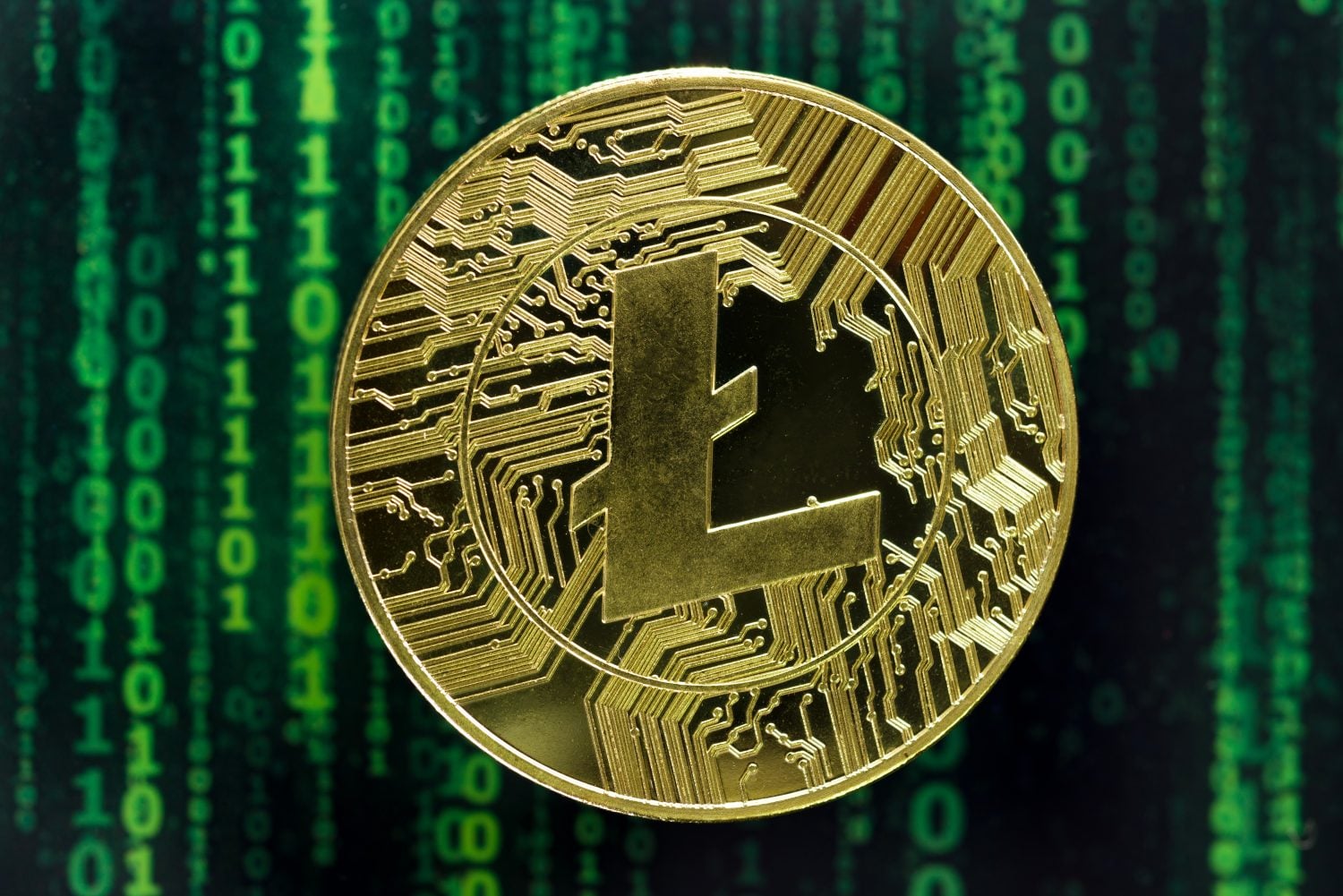
Litecoin’s next halving, a scheduled event that reduces the mining reward, is expected around mid-2027 at block 3,360,000. This will cut the mining reward from 6.25 LTC to 3.125 LTC per block, similar to Bitcoin’s halving events.
Historically, Litecoin has shown a consistent pattern around past halving events. Before the halving on August 5, 2019, Litecoin peaked at around $145 in June of that year, only to close at about $41 by December.
The August 2, 2023 halving followed a similar trajectory, with Litecoin reaching approximately $114 in July 2023 before dropping to around $57 in August. In both cases, traders tended to buy ahead of the halving and then sell when it arrived.
Litecoin vs. Bitcoin After 15 Years: Has Litecoin Kept Up?
The answer is no. Across every long-term measurement period, Litecoin still trails Bitcoin significantly. Its all-time high is more than five years old, and the likelihood of closing the gap before the 2027 halving seems low. For Litecoin holders, 15 years of ownership hasn’t yielded the same gains as Bitcoin ownership over the same period.
However, the upcoming halving could trigger another Litecoin rally relative to Bitcoin. A critical first step would be a monthly close above the September peak of $80.25 before block 3,360,000, aligning with the typical pre-halving run-ups seen in 2019 and 2023. Conversely, if Litecoin dips below its June low of $39.21, the halving may come and go without generating a rally, potentially extending its lag behind Bitcoin into a 16th year.
Contact [email protected] for any questions or corrections.
Sam Daodu is a crypto analyst who's spent nearly a decade making blockchain understandable—no easy task when most whitepapers read like fever dreams. He writes for 24/7 Wall St., covering Bitcoin, altcoins, and crypto market analysis for investors. Before crypto, he was a tech writer (back when explaining "the cloud" was peak innovation). Since 2018, he's written for CoinTelegraph, Yahoo Finance, The Block, Cryptonews, Zypto, Rain, and more—basically anywhere people want crypto news without the headache. Sam runs MacLabs Marketing, a content agency for crypto brands tired of sounding like AI wrote their website. He also publishes free crypto education on his site for Web3 enthusiasts who think "gas fees" is a typo. When he's not writing or staring at charts, Sam's either: - Watching anime (currently convinced One Piece has better tokenomics than most altcoins) - At the gym sculpting himself into a Greek god - Listening to the music your mum warned you only bad boys listen to Connect: LinkedIn | Email | MacLabs Marketing