Can Bitcoin Reach Standard Chartered’s $500,000 Target by 2030?

This post may contain links from our sponsors and affiliates, and Flywheel Publishing may receive compensation for actions taken through them.

Standard Chartered’s Bitcoin (CRYPTO: BTC) target of $500,000 by 2030 is one of Wall Street’s boldest forecasts. However, a significant drop in November has put that target further out of reach. The bank’s analyst Geoffrey Kendrick confirmed this ambitious goal in April, but Bitcoin fell 11.8% in just a week, closing at a 90-day low of $62,997 on November 18.
Currently, Bitcoin trades around $62,685, down 50.3% from its all-time high of $126,080 set on October 6, 2025. Given ETF outflows and tightening Federal Reserve policies, how realistic is Standard Chartered’s Bitcoin target?
Bitcoin Needs a 698% Increase to Hit $500,000

To reach $500,000 from its current price, Bitcoin needs to appreciate about 698%, nearly an eightfold increase. Bitcoin’s market value, or market cap, is calculated by multiplying the price of a single coin by the total number of coins in circulation, and it stands at about $1.26 trillion. If Bitcoin reached $500,000 with 20,113,584 coins in circulation, its market value would be around $10.06 trillion.
The potential supply could push that figure even higher. Bitcoin’s design limits the total supply to 21 million coins. Miners continue to add new coins until this cap is reached, so more coins may be circulating by 2030. At the same $500,000 price, that could imply a market value exceeding $10.06 trillion. This also applies to its previous high, as $126,080 now represents a larger market value than in October 2025.
Many advocates view gold as a standard for Bitcoin’s value retention over time. However, gold is currently trading around $3,689 per ounce, down 30% from $5,279 at the end of February. Therefore, the benchmark that many forecasts, including the $500,000 call, rely on has also diminished.
Standard Chartered Already Pushed Its $500,000 Target to 2030
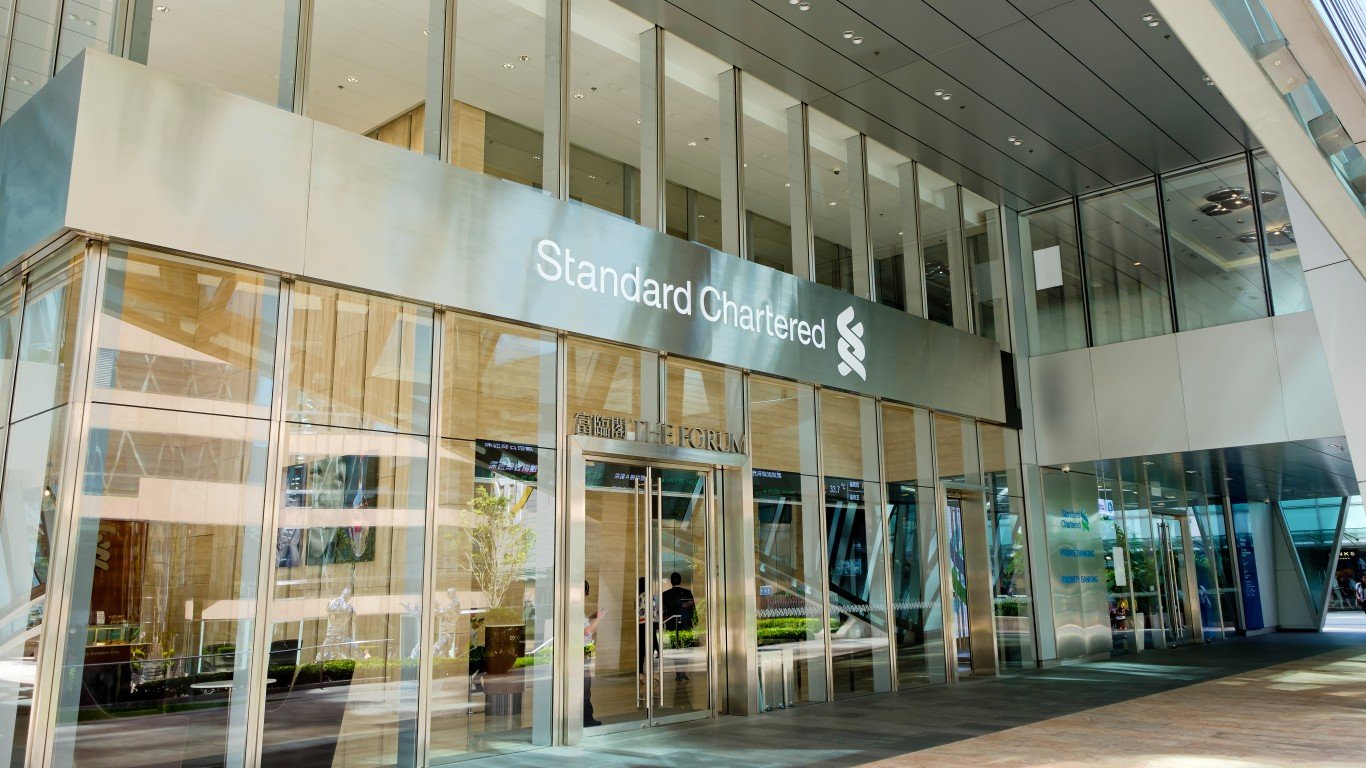
In December 2025, Standard Chartered revised its Bitcoin projections, moving the $500,000 target from 2028 to 2030. Its updated forecast includes interim targets of $225,000 for 2027, $300,000 for 2028, and $400,000 for 2029.
Kendrick confirmed again in April that the $500,000 target remains for 2030 and set a checkpoint of $100,000 for the end of 2026. However, he cautioned that Bitcoin could drop to around $50,000, a decrease of about 20%, if the Federal Reserve continues its tightening.
Reaching that initial checkpoint seems increasingly unlikely since Bitcoin needs a 60% surge to hit $100,000, and time is running out. Our analysis of Bitcoin’s potential year-end position and its most plausible scenario for 2028 explores these nearer targets. Even Citigroup‘s (NYSE: C | C Price Prediction) relatively conservative target of $113,000, which ChatGPT, Claude and Grok each assessed in October, has a deadline of October 2027.
Spot Bitcoin ETFs Recorded $3.3 Billion of Outflows in 30 Days
Standard Chartered indicates that long-term ETF investors are central to its outlook. Spot Bitcoin ETFs, exchange-traded funds that hold Bitcoin, purchase coins to back the shares sold to investors.
According to SoSoValue, U.S. spot Bitcoin funds reported $306 million in outflows on November 18 and $3.3 billion over 30 days. The funds still hold $77.7 billion in net assets, but the investors the bank relies on are more focused on selling than buying.
Additionally, many current holders face losses, with about half of the circulating Bitcoin acquired at prices above the current value, as per Glassnode data from November 17. These holders may sell during any potential recovery to cut their losses.
A Possible December Fed Hike Could Add Pressure on Bitcoin

The federal funds rate, which the Federal Reserve sets for overnight lending, directly affects borrowing costs. Higher rates tend to drive investors away from riskier assets like Bitcoin. In September, the Fed raised the upper limit from 3.75% to 4.00%.
Bitcoin reached a 90-day high of $86,597 on September 21, just days after the rate hike, but has since plunged 28%. Markets are bracing for another rate hike at the December 9 meeting, reinforcing Kendrick’s warning of a potential drop to $50,000.
Is Bitcoin on Track to Meet Standard Chartered’s $500,000 Target by 2030?
We believe Bitcoin has a low chance of reaching $500,000 by 2030. For this to happen, outflows from ETFs must reverse into steady inflows, and the Fed would have to halt its rate hikes. Bitcoin would also need to reclaim $100,000, surpass its all-time high of $126,080 (about 101% above its current level), and hit the bank’s 2027 target of $225,000. That path requires an eightfold increase within four years.
If the Fed carries through with a rate hike on December 9 and outflows persist, Kendrick’s $50,000 forecast could become a more likely near-term outcome. A close above the 50-day average of $78,600, an increase of about 25%, along with weekly ETF inflows after the decision, could revive hopes for the 2030 target. Conversely, closing the year below $100,000 would signal that the bank’s initial checkpoint has already slipped out of reach.
Contact [email protected] for any questions or corrections.
Sam Daodu is a crypto analyst and the editor of 24/7 Wall St.'s Crypto Desk, where he covers Bitcoin, XRP, Ethereum, Solana and the altcoins investors search for most. His work focuses on price levels, spot ETF flows, on-chain data and the regulatory decisions that move crypto markets, written so a first-time buyer and a seasoned trader can both use it.
Sam has written about crypto professionally since 2019 and has published more than 2,000 articles. Before joining 24/7 Wall St., he wrote for crypto media outlets and Web3 companies and ghostwrote for crypto founders and token launches. His analysis is syndicated on Yahoo Finance, MSN and AOL and has been cited by other crypto news sites. He also founded MacLabs Marketing, a content and personal branding agency for crypto founders and executives.
When he isn't reading charts, Sam is usually at the gym or watching One Piece, a series he maintains has better tokenomics than most altcoins.