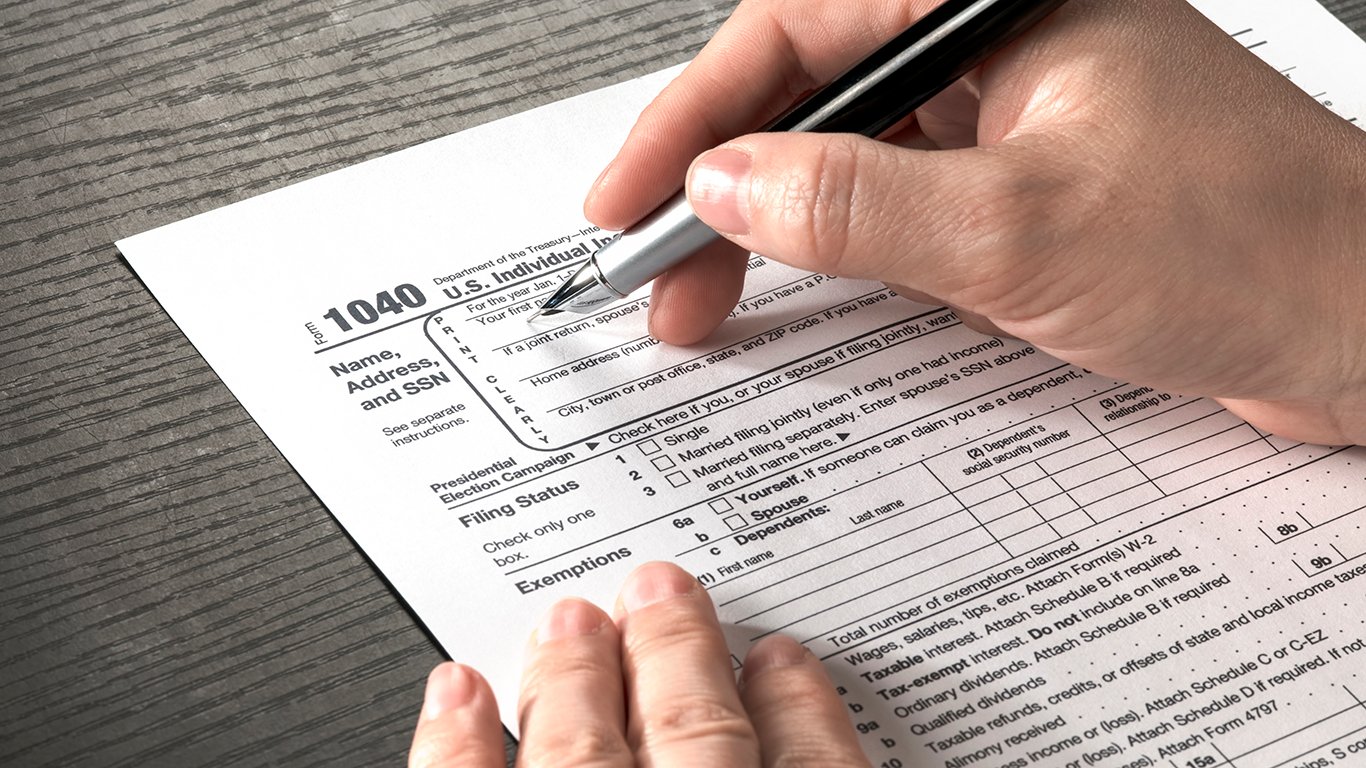
Does The IRS Owe You Money? Here’s How to Find Out and Get it Back
While the standard April 15 tax deadline has passed, a significant new window has opened for millions of Americans. Tens of millions of taxpayers may be eligible for refunds or abatements of penalties and interest from the COVID-19 disaster period,…

This post may contain links from our sponsors and affiliates, and Flywheel Publishing may receive compensation for actions taken through them.

The standard April 15 filing deadline has passed, but a separate and equally important window is now open for millions of Americans. Tens of millions of taxpayers may be entitled to refunds or abatements of penalties and interest that the IRS assessed during the nearly 3.5-year COVID-19 federal disaster period. Most must act by July 10, 2026. That protective claim window runs independently of the normal filing calendar and represents one of the largest mass-refund opportunities in recent tax history.
Unclaimed funds also accumulate from unfiled returns where withholdings or refundable credits, such as the Earned Income Tax Credit (EITC) or the Child Tax Credit, were never claimed. The IRS confirmed that approximately $1.2 billion in refunds remained unclaimed for the roughly 1.3 million taxpayers who did not file a 2022 Form 1040, with a median unclaimed refund of $686. The April 15, 2026 window for those 2022 returns has now closed, but the same pattern applies to 2023 returns, where the deadline runs to April 15, 2027. If you suspect the IRS holds money belonging to you, the steps below explain how to find out and how to act.
The New July Deadline: Protective Claims
In Kwong v. United States, 179 Fed. Cl. 382 (Nov. 25, 2025), Judge Molly Silfen of the U.S. Court of Federal Claims interpreted the pre-2025 version of IRC Section 7508A(d) and held that the COVID-19 disaster declaration triggered an automatic suspension of filing and payment deadlines. That suspension ran the full length of the declared disaster period, from January 20, 2020 through July 10, 2023. If the ruling holds, penalties charged for late filing, late payment, and estimated-tax underpayments during that window may be refundable. The IRS has rejected that reading, and on May 15, 2026, the Department of Justice filed a Notice of Appeal to the Federal Circuit. The issue remains unsettled and could take years to resolve.
To preserve your rights in the meantime, you may need to file Form 843, Claim for Refund and Request for Abatement, by July 10, 2026. The IRS redesigned Form 843 in December 2024, so the current version is Form 843 (Rev. 12-2024), with different line numbers and checkboxes than older copies found online. Taxpayers should write “Protective Refund Claim Pursuant to Kwong Case” or similar language across the top of the form and fill in as much detail as possible. Practitioners also recommend citing P.L. 119-64 (the Disaster Related Extension of Deadlines Act, enacted December 26, 2025), which independently requires the IRS to treat disaster-period postponements as extensions of return deadlines for refund-lookback purposes. Citing both gives the IRS two separate legal grounds to grant relief.
National Taxpayer Advocate Erin Collins has been explicit that relief is not automatic and that most taxpayers must file claims by the July 10 deadline to protect their rights. In a four-part blog series and a separate public alert issued in April 2026, Collins noted that Kwong’s implications could reach beyond penalties and interest to cover refund opportunities for tax years 2019 through 2022 for taxpayers who never filed original returns. Her office recommends sending the form by certified mail with return receipt requested as proof of the filing date.
What Happens to Unclaimed Refunds?
The law gives taxpayers three years to file and claim their refunds. Miss that window, and the money transfers permanently to the U.S. Treasury with no appeals available. For 2023 returns, that three-year window closes April 15, 2027. The same rule governs COVID-era penalty claims under Kwong: because the court measured the three-year lookback from the extended deadline of July 10, 2023, the window for those claims closes July 10, 2026. As Collins put it directly in her July 2026 blog, missing the deadline may permanently prevent taxpayers from receiving a refund to which they may ultimately be entitled. Tracking down missing forms and records early is worth the effort precisely because the deadlines are firm.
Does the IRS Owe You Money?
Several tools and steps can help you determine whether the IRS is holding a refund on your behalf.
- Check IRS tools. Visit the IRS website and use the “Where’s My Refund?” tool at irs.gov/refunds. You will need your Social Security Number, filing status, and exact refund amount to look up your status.
- New for 2026: The Tax Debt Help Tool. Launched on April 16, 2026, the IRS Tax Debt Help Tool is a free, anonymous self-service guide that walks you through payment resolution options, including installment agreements, temporary collection delays, and offers in compromise. It requires no Social Security Number and no account login. The IRS released the tool the day after the April 15 deadline, specifically to reach filers who discovered an unexpected balance due.
- Review Past Returns. Check your W-2s or 1099s to confirm whether taxes were withheld. For 2024, single filers with incomes under $14,600 (or $29,200 for joint filers) are not required to file, but they could still claim refunds for withheld taxes by submitting a return voluntarily.
- Verify Interest on Overpayments. The IRS overpayment rate for individuals is 7% per year, compounded daily, for both the third quarter (July through September 2026) and the fourth quarter (October through December 2026). That rate dipped to 6% in the second quarter before rebounding. If the IRS has held your refund beyond the standard 45-day processing window, it owes you interest at the current 7% rate from the day that window expired. Interest income from the IRS is taxable, so keep records of any payment you receive.
How to Claim Your Refund
Once you confirm the IRS owes you money, file a return if you have not already done so. For a return already filed with errors, submit Form 1040-X (Amended U.S. Individual Income Tax Return) within three years of the original filing date. If a refund check came back undeliverable, submit Form 8822 (Change of Address) so any reissued payment reaches you. For checks that were lost or never arrived, Form 3911 (Taxpayer Statement Regarding Refund) starts the replacement process.
Claiming Refunds for a Deceased Relative
Heirs may claim a deceased relative’s unclaimed tax refund under specific IRS rules. Form 1310 was recently revised to reduce paperwork: a court-appointed representative filing an original return no longer needs to submit it. Form 1310 remains strictly required, however, when claiming a refund on an amended return (Form 1040-X) for a decedent. Heirs navigating this process should gather the decedent’s prior-year W-2s and 1099s early, since locating those records typically takes the most time.
Conclusion
Unclaimed tax refunds represent a genuine opportunity to recover money you are legitimately owed, and 2026 has brought new deadlines and updated tools that reward prompt action. The Kwong protective claim window closes July 10, 2026. The 2023 unclaimed-refund deadline arrives April 15, 2027. IRS overpayment interest holds at 7% through the end of the year. Whether the issue involves COVID-era penalties, withheld wages, or refundable credits never claimed, acting now prevents permanently forfeiting those funds.
Editor’s note: This pass adds context from National Taxpayer Advocate Erin Collins’s four-part blog series and April 2026 public alert, clarifies that Kwong’s potential reach extends to original-return refunds for tax years 2019 through 2022, and expands the overpayment interest bullet to note that the rate dipped to 6% in Q2 2026 before returning to 7% for both Q3 and Q4, per the IRS’s August 2026 announcement.
Contact [email protected] for any questions or corrections.
After two decades of patrolling the dark corners of suburbia as a police officer, Rich Duprey hung up his badge and gun to begin writing full time about stocks and investing. For the past 20 years, he’s been cruising the markets looking for companies to lock up as long-term holdings in a portfolio while writing extensively on the broad sectors of consumer goods, technology, and industrials. Because his experience isn’t from the typical financial analyst track, Rich is able to break down complex topics into understandable and useful action points for the average investor. His writings have appeared on The Motley Fool, InvestorPlace, Yahoo! Finance, Money Morning, and, of course, 24/7 Wall St. He has been featured in both U.S. and international publications, including MarketWatch, Financial Times, Forbes, Fast Company, and USA Today.