Suze Orman Warns Retirees About Claiming Benefits at 62
If you really want to retire at 62 and collect Social Security, go for it. You've worked hard enough. You've paid your dues. Now it's your time to relax and collect what's rightfully yours, right? According to finance expert Suze…

This post may contain links from our sponsors and affiliates, and Flywheel Publishing may receive compensation for actions taken through them.

If you really want to retire at 62 and collect Social Security, go for it.
You’ve worked hard enough. You’ve paid your dues. Now it’s your time to relax and collect what’s rightfully yours, right?
Finance expert Suze Orman has a clear answer: not so fast. Claiming benefits early is, in her view, one of the costliest mistakes a retiree can make. Her consistent advice is to wait until you reach your Full Retirement Age (FRA) before filing, and ideally delay all the way to 70 if you’re in good health and financially stable. For most workers born in 1960 or later, FRA is 67.
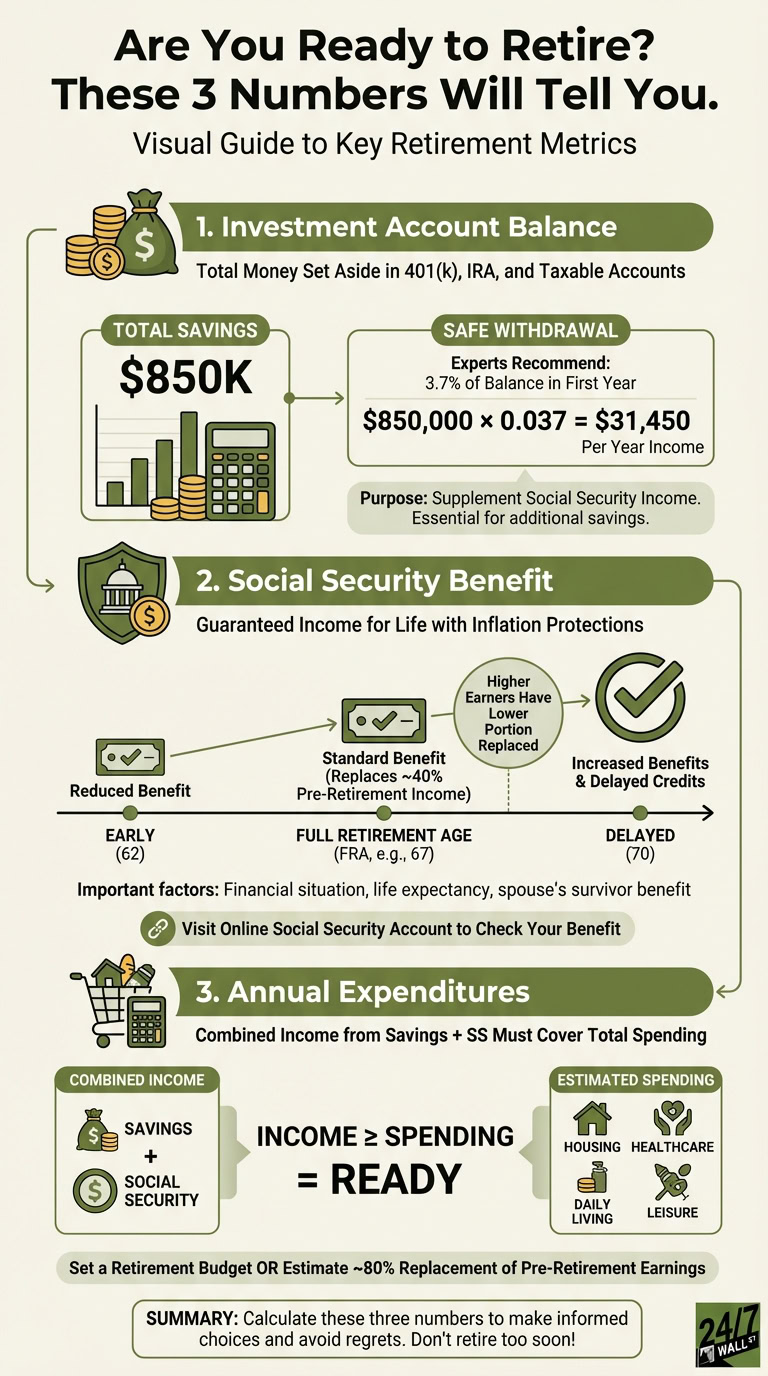
The numbers behind Orman’s warning are stark. Claiming at 62 permanently reduces your benefit by 30% compared to what you would receive at FRA. Claim at FRA and you collect 100% of your earned benefit. Delay to 70, and your monthly payment grows by 8% for every year you wait past FRA. Orman has put the total difference plainly: the benefit at 70 is more than 75% higher than the benefit at 62.
Trending Now: How Many Americans Have Managed to Save $5 Million for Retirement?
To put concrete numbers on it: a worker entitled to $2,000 a month at 67 collects only $1,400 a month by filing at 62, and $2,480 a month by waiting until 70. That larger payment continues for life, and over a 25- or 30-year retirement the cumulative difference can run into the hundreds of thousands of dollars. In a June 2026 post, Orman described the early check as “the smallest check you will ever cash, locked in for life.”
Why Waiting Often Makes Sense
Americans are living longer, and a smaller monthly check that barely registers at first can become a genuine financial strain two or three decades into retirement. Delaying Social Security locks in higher income, provides stronger protection against outliving your savings, and builds a larger cushion against inflation through annual cost-of-living adjustments. The 2026 COLA came in at 2.8%, and those adjustments compound on a bigger base when you claim later. Early estimates already peg the 2027 COLA at 3.6% to 3.8%, with the official SSA announcement scheduled for October 14, 2026, meaning every dollar of base benefit you build now carries more weight going forward.
The math favors patience for those with longevity on their side. Delaying from 67 to 70 increases monthly benefits by 24%, with the break-even point typically arriving in a retiree’s late seventies to early eighties. For the person entitled to $2,000 per month at 67, waiting until 70 means collecting $2,480 instead, an extra $5,760 per year for life.
Orman has also highlighted the value of delaying for married couples. In her view, the highest earner in the household should wait until 70, because the surviving spouse keeps whichever benefit is larger. Making that number as big as possible is one of the most meaningful financial protections a couple can put in place.
If you’ve done the math and still want to retire at 62, the next step is a serious conversation with a financial advisor. Before pulling the trigger, make sure you:
- Have little to no high-interest debt
- Have sufficient retirement savings to last 30 or more years
- Can cover healthcare costs until Medicare begins at 65
- Have factored in inflation and taxes
- Have budgeted for lifestyle expenses like travel or hobbies
Consider This: Dave Ramsey: “You Make $140K. Stay Out of Restaurants, Don’t Go on Vacation, And Get Rid of the Ferrari Bike”
Most people underestimate how much they will need in retirement and overestimate how prepared they already are. A realistic retirement budget has to account for vacations, home maintenance, family support, and the unpredictable emergency expenses that appear without warning. Getting those numbers right now prevents real financial stress later.
The core of Orman’s argument: retiring at 62 is not impossible, but claiming Social Security at that age imposes a permanent cost that compounds over decades.
One More Thing: Here’s What Bill Gates Can Collect from Social Security
You’ll Also Want a Plan B in Place
The long-term finances of Social Security make a strong case for building personal retirement wealth alongside whatever you expect to collect from the government. The 2026 Social Security Trustees Report, released on June 9, 2026, projects that the Old-Age and Survivors Insurance (OASI) Trust Fund will be depleted in the fourth quarter of 2032, one quarter earlier than the prior estimate. The primary driver of the accelerated timeline is the 2025 “One Big Beautiful Bill Act,” which reduced tax liability for Social Security beneficiaries and thereby lowered the projected tax revenues flowing back into the trust fund.
If depletion happens on schedule without congressional action, the program will be able to pay only 78% of scheduled benefits, an automatic 22% cut for every recipient. For someone collecting the current average retirement benefit of approximately $2,083 a month, that translates to roughly $459 less per month. A married couple made up of two average beneficiaries could see their combined annual income fall by around $11,000.
Orman has also pushed back on a popular argument that claiming at 62 is a smart hedge against future trust fund cuts. Her response: even in a worst case where Congress does nothing, benefits would drop to roughly 80% of scheduled amounts, about a 20% cut. Filing early simply means absorbing that cut from a smaller starting point. It is also worth noting that Social Security navigated a similar funding crisis in the early 1980s without forcing beneficiaries to absorb the full cost.
None of this means Social Security will vanish. The program has never missed a payment, and Congress has a strong political incentive to act before the deadline. The uncertainty is real enough, though, to justify treating Social Security as one piece of a larger retirement plan rather than its entire foundation. Building personal savings, reducing reliance on a single income source, and keeping expenses flexible all become more important the closer that 2032 window gets.
Editor’s note: This article was updated to reflect the May 2026 SSA Monthly Statistical Snapshot average retirement benefit of approximately $2,083 (revised from $2,084), and to include early estimates that the 2027 COLA will likely fall between 3.6% and 3.8%, with the official SSA announcement expected October 14, 2026. Language describing the “One Big Beautiful Bill” trust fund mechanism was also clarified to note that the bill reduced tax liability for beneficiaries, thereby lowering revenues flowing back to the trust fund.
Contact [email protected] for any questions or corrections.
Ian Cooper is a veteran market analyst and investment strategist with more than 20 years of experience covering stocks, commodities, and macro trends. Since 1999, he has helped investors identify market opportunities using a blend of technical analysis, fundamental research, and market sentiment.
He is the creator of the ADD News Flow Strategy, which focuses on trading market reactions to major news events and investor psychology. Cooper was also among the analysts who warned about the 2008 financial crisis and major financial institution collapses ahead of the broader market.
Before joining 247 Wall St., Cooper wrote extensively for InvestorPlace and other financial publications, covering market trends, trading strategies, and investment opportunities.