A $720,000 Income Portfolio That Quietly Pays Like a Cash-Flowing Indianapolis Duplex Without the Tenant Calls
A $720,000 retirement portfolio presents many 65-year-old retirees with a choice between two very different income strategies. One option is purchasing a duplex in a stable rental market such as Indianapolis and collecting rental income. The other is investing in a…

This post may contain links from our sponsors and affiliates, and Flywheel Publishing may receive compensation for actions taken through them.
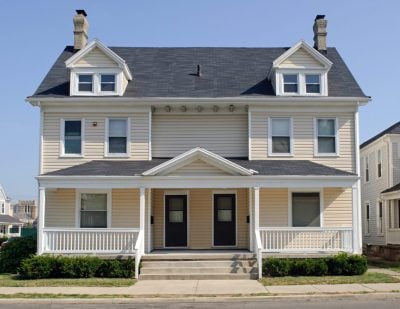
A $720,000 retirement portfolio presents many 65-year-old retirees with a choice between two very different income strategies. One option is purchasing a duplex in a stable rental market such as Indianapolis and collecting rental income. The other is investing in a diversified portfolio of dividend-producing securities that generates income without the responsibilities of property ownership. Comparing the two approaches requires looking beyond headline yields and examining the actual cash flow each can produce.
The Indianapolis Duplex Benchmark
Real estate provides a useful benchmark because it is often viewed as a tangible alternative to income investing. A $720,000 duplex purchased at a 5% gross capitalization rate would generate approximately $36,000 in annual gross rental income. However, gross rent is only the starting point.
After accounting for ownership costs, the income picture changes considerably. Property taxes of approximately $8,500, insurance expenses of about $2,400, maintenance reserves of $4,000, property management fees equal to roughly 8% of rent ($2,880), and a vacancy reserve of about $1,800 reduce annual cash flow substantially. After these expenses, the property produces approximately $16,420 in net annual income, or about $1,368 per month.
Those figures also assume favorable operating conditions. The property remains occupied for most of the year, avoids major unexpected expenses, and does not require significant capital projects such as roof replacement or HVAC system replacement. The analysis also assumes the owner is comfortable with the ongoing responsibilities that come with being a landlord, either directly or through a property manager.
What the Same $720,000 Pays in Yield Tiers
Income portfolios get measured the same way. Capital times yield equals annual distribution. Three tiers frame the choices.
Conservative tier (3% to 4% yield). Broad dividend growth ETFs sit here. Schwab U.S. Dividend Equity ETF (NYSEARCA:SCHD) is the household name, joined by Vanguard Dividend Appreciation and iShares Core Dividend Growth. On $720,000, a 3.5% yield produces about $25,200 a year. That is roughly $8,800 more than the duplex nets, with no tenants and full liquidity. SCHD has compounded total return of about 236% over the past ten years, the kind of price appreciation a duplex would need a hot decade to match.
Moderate tier (5% to 7% yield). Net lease REITs, preferred share funds, and covered call equity ETFs cluster here. Realty Income (NYSE:O) yields 5.1% and pays monthly, with 670 consecutive monthly dividends declared and 114 consecutive quarterly increases. iShares Preferred and Income Securities (NYSEARCA:PFF) sits near 6.5% on a portfolio anchored by JPMorgan, Bank of America, Morgan Stanley, and AT&T preferred shares. JPMorgan Equity Premium Income (NYSEARCA:JEPI), with a roughly 0.4% expense ratio, sells covered calls for a roughly 7.5% distribution.
Blend those four. The SCHD at 3.5%, JEPI at 7.5%, PFF at 6.5%, and O at 5.5% mix produces a 6.5% blended yield, or $46,800 a year, which works out to $3,900 a month, nearly triple the duplex’s net cash flow.
The Aggressive Tier and Its Catch
Push into 10% to 12% yield territory and the menu shifts to business development companies like Ares Capital (NASDAQ:ARCC | ARCC Price Prediction), mortgage REITs, leveraged covered call funds, and high-yield bond ETFs. At 10%, $720,000 throws off $72,000 a year. At 12%, it generates $86,400. Both numbers crush the duplex.
The catch is durability. These vehicles often distribute return of capital, cut payouts during credit stress, and watch principal erode over time. Compare that to the 131% growth in Realty Income’s monthly dividend over the last 20 years or the steady raises that lifted O’s payout to about $0.27 a month, or roughly $3.25 annualized.
Why the Lower Yield Often Wins
Dividend growth quietly beats raw yield over a retirement horizon. A 3.5% yielder that raises distributions 8% a year doubles its income in nine years. A 12% yielder that grows zero stays flat or fades. With the 10-year Treasury near 4.5% and CPI running near a 2% annual pace, a portfolio that pairs growing dividends with current income protects purchasing power in a way a flat duplex rent roll rarely matches.
Three Moves for the Retiree Weighing the Trade
- Compare net to net. Stack the duplex’s $16,420 against portfolio distributions after fund expense ratios and your tax bracket, not against the gross rent number a broker quotes.
- Stress test the aggressive tier. Pull the 10-year price chart of any 10%-plus yielder you are considering. If the share price has drifted lower while paying, you are spending principal, not living off yield.
- Decide whether you want a real asset. If inflation hedging through hard property matters to you, keep a smaller rental and pair it with a $400,000 income portfolio. The hybrid often beats either pure path.
Contact [email protected] for any questions or corrections.
Drew Wood has edited or ghostwritten nine books and published more than 1,500 articles on investing, business, politics, travel, world cultures, wildlife, and earth science. He holds a doctorate and four master's degrees and has nearly 30 years of college teaching experience. His travels have taken him to 25 countries, including three years living in Ukraine.