‘The Terms of the Deal Made It Suicidal’: Dave Ramsey on the $10 Million Order He Killed
A $10 million order from a household-name retailer sounds like a company-making deal, but Dave Ramsey killed it after reading the contract. The clause that changed everything reveals a trap hiding inside almost every large retail partnership.

This post may contain links from our sponsors and affiliates, and Flywheel Publishing may receive compensation for actions taken through them.
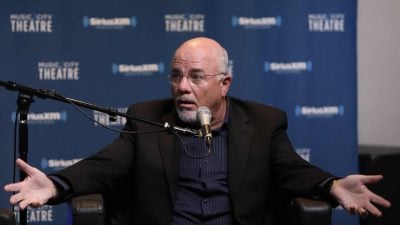
About 15 years ago, by Dave Ramsey’s telling, a “large household name retailer” asked his company to build a custom white label package of Ramsey products. The order was worth $10 million, and his company was “about a 30 or $40 million business” at the time. Then the contracts arrived with full return rights, and he walked away. Here’s how he summed it up on the October 14 episode of The Ramsey Show: “The terms of the deal made it suicidal.”
He told the story to Jay, a Canadian builder whose construction and development company grew from about $128,000 in revenue in 2021 to a forecast $30 million this fiscal year with little debt. Jay’s advisors wanted him to open an operating line of credit. Ramsey told him “You’re way smarter than they are” and said to be “defiant, not compliant.”
On paper, that order looked like a growth year. It was 25% to 33% of annual revenue from one buyer. The contract turned it into a free option for the retailer, paid for with Ramsey’s cash.
One Return Clause Turns a $10 Million Sale Into a Loss
Ramsey made the right call, and one clause shows why. He described what full returns would have meant: the retailer stocks the shelves, “Nobody buys it. And they send it all back to us and want all of their money refunded.” Because the packaging carried the retailer’s name, returned goods were worth “Nothing. It goes into a dumpster.”
Run it with example numbers. Say producing the custom goods costs $5 million against the $10 million order. The seller spends that cash up front.
Now suppose shoppers buy only 40% of it. The retailer sends back the rest and demands a $6 million refund. The seller keeps $4 million against $5 million in costs, a $1 million loss on what was recorded as a $10 million sale.
If shoppers buy 80%, the deal makes $3 million. That’s a fine result. The trouble is that the seller carries all the downside while the retailer controls the factor that determines it: how well the product gets marketed.
At zero sell-through, the entire production cost is gone and every dollar paid gets clawed back. For a company Ramsey’s size then, that hole could drain cash reserves fast.
Who Owns Unsold Inventory Decides the Outcome
The variable that matters most is return rights. Here is the same order at the same 40% sell-through under two contracts:
| Contract | Revenue Kept | Production Cost | Result |
|---|---|---|---|
| No returns (retailer owns unsold stock) | $10 million | $5 million | $5 million profit |
| Full returns (seller eats unsold stock) | $4 million | $5 million | $1 million loss |
That single clause creates a $6 million swing. Without returns, the retailer profits only by selling the goods, so its incentives match yours. With full returns, the retailer risks nothing, and your profit rides on its effort.
Customer concentration amplifies it. On the October 7 show, Ramsey warned a software entrepreneur whose income was about to depend on a Bank of America (NYSE:BAC | BAC Price Prediction) licensing deal: “A person who has one customer is called an employee. Whether it’s contract or otherwise. So you want multiple customers. If one customer can put you out of business, that’s a problem.” The retailer order was that rule with a price tag attached.
Jay’s Credit Line Carries the Same Hidden Claim on Cash
Ramsey linked both risks to cash flow. He told Jay that 80% of small businesses in America fail, with cash flow shortage the top cause, driven by tax planning mistakes and debt. Construction and development firms, he said, “die like flies as soon as the economy shifts.”
A bank line and a full-return contract share a structure: someone else can claim your cash exactly when sales slow. Ramsey said his company started on a card table 38 years ago, has never borrowed, and will do $300 million in revenue this year.
Stress-Test Your Next Big Contract Before You Sign
- Divide your largest customer’s annual revenue by your total revenue. If losing that customer would leave you unable to cover payroll and fixed costs, treat any expansion with them as a risk you need to price.
- Find every return, refund, consignment, guaranteed-sale, and markdown-allowance clause. Each one shifts unsold inventory risk back onto you.
- Model a bad, middle, and strong sell-through rate. If the bad case burns more cash than you hold in reserve, one weak season can go under the company.
- Ask what returned goods are worth. Product branded for one retailer has no resale market; generic inventory can be sold elsewhere.
- Negotiate a no-return term, a cap on returns, or a non-refundable deposit that covers production. If the buyer refuses, remember Ramsey’s line: “all business is not good business.”
Price every large order by what happens when nothing sells, because that worst case determines whether your business makes it.
Contact [email protected] for any questions or corrections.
Jake has been been working in financial media for almost 15 years. He focuses on all things personal finance for 24/7 Wall St. with high hopes to educate and entertain. Most recently, Jake spent 12 years working various roles at The Motley Fool. He started copy editing fool.com content, worked on premium and marketing campaigns, and helped launch The Ascent, a personal finance brand.
His work has been featured on platforms like MSN, Yahoo Finance, USA Today, and more. He's written about credit cards, social security, ETFs, savings accounts, and just about anything else you can imagine when thinking about money. Jake love to cook, play golf, and tell people he's never had a cavity. (It's true!)