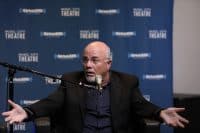
George Kamel Calls Out Advisors Who Profit From Your Portfolio: “Who Gets a Pay Cut? The Advisors.”
A 70-year-old widow trusted her advisors to protect her retirement, but George Kamel spotted a conflict baked into their advice that she never saw coming and the fee math behind it is damning.

This post may contain links from our sponsors and affiliates, and Flywheel Publishing may receive compensation for actions taken through them.

A 70-year-old widow called The Ramsey Show with a seemingly simple question. Her advisors wanted her to take out a $200,000 loan at 6% interest for 2027 instead of selling any of her investments.
George Kamel, a Ramsey Solutions personality and co-host, heard the details in the episode “Don’t Let Shame Keep You Stuck” (October 22) and went straight to the incentive:
“They likely make a percentage of your portfolio. If you take money out of your investments, who gets a pay cut? The advisors.”
The caller confirmed it: “Absolutely.” If she follows the advice, she pays $12,000 a year in interest to protect a balance that pays her advisors.
Kamel Is Right, and the Fee Math Proves It
The caller inherited a lot of money about three years ago. Her father’s money sat at a private, well-known bank with an investment section heavy on bonds. The loan idea came up at her annual meeting in August. In her words: “I don’t have any financial background. You know, I’m trusting.”
Here is how an assets-under-management fee works. The advisor charges a fixed percentage of your balance every year, usually taken straight from the account. When the portfolio grows, the advisor gets a raise. When you take out money, whether for living expenses, a paid-off mortgage, or gifts to your kids, the advisor’s pay drops.
Run an example using a 1% fee on a hypothetical $2 million portfolio. The advisor takes $20,000 a year.
Pull out $200,000, and the fee drops to $18,000. The advisor loses $2,000 a year.
Now look at the client’s side. The loan costs her $12,000 in interest a year. She would spend six times what the advisor saves. And if the same bank that manages her money also writes the loan, the institution collects on both ends.
For borrowing to make sense, the $200,000 left invested has to earn more than the 6% loan rate after fees. With a 1% fee, that means a gross return of at least 7% before taxes. A bond-heavy portfolio is built for stability, which typically means lower expected returns than a stock-heavy mix. Clearing that hurdle every year is a tall order.
Most investors never run this math because they don’t see the fee. A FINRA Foundation survey found 20% of investors don’t think they pay fees of any kind. Another 18% don’t know how much they pay.
Your Net Return Versus the Loan Rate Decides Everything
One variable settles this decision: what your invested money earns after fees, compared with what the loan costs. Two hypothetical examples on the same $200,000 show how fast the outcome changes.
Say the portfolio earns 5% a year. Subtract the 1% fee and you net 4%.
The loan charges 6%, so you fall behind by $4,000 a year.
Now say it earns 9%. After the fee, you net 8%, beating the loan by 2 points. You come out ahead by $4,000 a year.
The catch is that the 6% interest is guaranteed and the 9% return is a hope. A 70-year-old in a conservative, bond-heavy account is living in the first example. The advisor takes either way.
Questions to Ask Before You Borrow Against Your Own Money
A fee tied to your balance can work fine while you’re saving. It turns into a conflict when you start spending, so put these questions to any advisor in writing:
- How exactly are you paid? Ask whether the advisor charges a percentage of assets, commissions, or a flat fee. Then ask for last year’s total cost in dollars, since a percentage hides how much you actually paid.
- Does anyone here earn money from this loan? If the firm or an affiliated bank issues the loan, it profits from your interest on top of your advisory fee. Make them say so.
- Show me the break-even. Ask for a written projection of the after-fee return the portfolio needs to beat the loan rate. If they can’t show a realistic path above that number, the loan loses money.
- What is the tax cost of taking out instead? Ask for the estimated tax on the sale in dollars. Then line it up against a full year of loan interest, so you’re comparing two real numbers.
- Get a second opinion from someone with no stake in your balance. An hourly or flat-fee planner earns the same whether you borrow or take out, so their math has no thumb on the scale.
When an advisor tells you to borrow your own money back at interest, find out who gets paid under each option before you sign anything.
Contact [email protected] for any questions or corrections.
Chris Lange is a financial and geopolitical writer with more than a decade of experience covering a myriad of topics. He has published thousands of articles for 24/7 Wall St., with past coverage focused heavily on stocks, IPOs, healthcare, defense, global affairs, and technology.
His work has been quoted, or referenced by a number of outlets including Business Insider, USA Today, Yahoo Finance, MSN, The Motley Fool, and many other publications. A graduate of Southwestern University, he studied business with a focus on investments and has previous experience in banking and startups.
When not reading or writing the news, he is following his passion for Lacrosse, playing chess, or building solar projects with his dad.