Buc-ee’s Posts Its Wages on a Sign by the Door: $20 an Hour, Three Weeks Off, 6% Match. Here’s Why No Other Chain Copies It
Buc-ee's tells job seekers what they will earn before they ever talk to a manager, and rivals refuse to follow. The reasons come down to store size, franchise ownership, and one promise that is very hard to take back.

This post may contain links from our sponsors and affiliates, and Flywheel Publishing may receive compensation for actions taken through them.

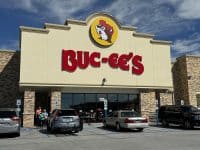
At Buc-ee’s, the job offer is posted by the door. Buc-ee’s in-store signs list a starting wage of $20 an hour for cashiers, warehouse workers, maintenance staff and stockers. Mashed reported that Buc-ee’s employees get three weeks of paid time off a year and a 401(k) match of up to 6%. The sign has also changed this year. Earlier 2026 reporting from Mashed put Buc-ee’s starting pay at $17 or $18 an hour depending on location. Pay varies by store, and it has gone up.
Most retailers wait until the interview to talk about pay. Buc-ee’s puts it on a sign. Few rivals copy the idea, and the reason is the economics of running a convenience store.
How Buc-ee’s $20 an Hour Stacks Up Against the Gas Station Down the Road
Indeed puts the average US gas station worker at about $15 an hour. Buc-ee’s posted figure is a starting rate, so a new hire walks in above what the typical worker in the industry makes, and that industry average includes people who have been on the job for years.
To compare with the match Mashed reported, Vanguard found the average promised employer match was 4.6% of pay in 2024 among plans with match formulas. The median at Vanguard was 4.0%. Mashed’s reported 6% would beat both if it is a true 6% match, but Buc-ee’s has not disclosed its formula.
A match formula and a match’s value are two separate things. The formula is the rule. Unlike the figure Mashed reported, the most common one in Vanguard plans pays 50 cents per dollar on the first 6% of pay. The value is the most that rule can pay you, and that formula tops out at 3% of pay. So Mashed’s “up to 6%” could mean the company adds 6% of your pay, or it could mean the company matches part of what you put in on the first 6%. Ask which one it is.
Why Buc-ee’s Can Afford to Put Its Pay on Display
Buc-ee’s runs a small number of huge, crowded stores. Mashed reported about 250 employees per location. Heavy traffic means each paid hour produces a lot of sales, so a higher wage takes a smaller share out of revenue. When a store needs hundreds of workers, the sign does the recruiting for free and cuts the turnover that is expensive to train around. A posted wage can offset part of its own cost by speeding up hiring.
Why Rival Chains Keep Their Wages Off the Wall
The typical convenience store is far smaller, with less room to absorb higher labor costs. Many chains run through franchisees or independent dealers who set their own pay, so a headquarters sign cannot promise what the local owner actually pays. A public number is also hard to take back. If fuel margins shrink or traffic drops, a posted wage cannot quietly come down, and current staff makes less have proof they are underpaid. For most operators, keeping pay private keeps their options open.
What to Check Before Taking Any Job for the Benefits
- The contribution you need: In Vanguard plans, workers had to save an average of 6.5% of pay to get the full match.
- Vesting: Nearly one-half of Vanguard plans vested matching money right away in 2025, but 22% used five- or six-year schedules. A worker near retirement could leave before the match is fully theirs.
- Eligibility: Plans are more likely to make you wait a year for employer contributions than for your own.
Keep an eye on the signs at Buc-ee’s next store openings. If the starting wage keeps rising, gas station chains hiring nearby will have to respond, and their entry pay is the first place it will show up.
Contact [email protected] for any questions or corrections.
Jake has been been working in financial media for almost 15 years. He focuses on all things personal finance for 24/7 Wall St. with high hopes to educate and entertain. Most recently, Jake spent 12 years working various roles at The Motley Fool. He started copy editing fool.com content, worked on premium and marketing campaigns, and helped launch The Ascent, a personal finance brand.
His work has been featured on platforms like MSN, Yahoo Finance, USA Today, and more. He's written about credit cards, social security, ETFs, savings accounts, and just about anything else you can imagine when thinking about money. Jake love to cook, play golf, and tell people he's never had a cavity. (It's true!)