Homeowners Near Stadiums Are Renting Out Their Driveways on Game Days. Here’s What a Parking Spot Actually Earns.

This post may contain links from our sponsors and affiliates, and Flywheel Publishing may receive compensation for actions taken through them.
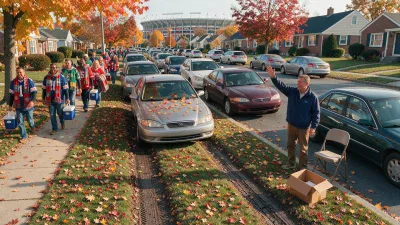
When World Cup matches came to Gillette Stadium in Foxborough, Massachusetts, homeowners in neighboring South Walpole turned their front lawns into parking lots. According to GBH News, one homeowner planned to rent 25 spaces[1] for the tournament. GBH News reported she charged $100[1] a spot across seven matches, per GBH News, a plan GBH News said adds up to $17,500. She called it "a good side income."
Most lawns hold fewer cars. A neighbor with room for only a few told GBH News: "Man, we bought the wrong house on the block."
Why These Lawns Filled Up So Fast
Three conditions lined up in South Walpole. These included homes within walking distance of the stadium, a global event drawing out-of-town fans, and prices below the official lot. GBH News reported that parking at the stadium cost $175[1], so homeowners could undercut it and still charge a premium.
A neighbor told GBH News the $100 price was higher than their normal rates. Regular-season game days may not command tournament prices, so treat the World Cup figures as a ceiling for your planning.
Rules and Costs That Shrink Your Take
- Permits and bans. GBH News reported that Foxborough bans front-lawn parking, while South Walpole homeowners get permits through the town. Cities do apply these rules: NBC Los Angeles reported that Inglewood residents renting parking to World Cup fans received a warning from the city.
- Liability. If a fan trips on your steps or a car gets damaged on your property, you could be on the hook. Before the first car pulls in, ask your insurance company whether your homeowners policy covers paid parking.
- Lawn damage. A full day of cars on wet turf leaves grooves, and the cost of reseeding comes out of your earnings.
- HOA rules. Association covenants can limit commercial activity or parking on lawns. Read yours before you advertise.
What the IRS Expects From Parking Cash in 2026
Parking income is taxable, whether you get paid in cash or through an app. Federal law lists rents[2] as gross income under 26 U.S.C. § 61(a)(5). IRS Publication 17 explains that when your main purpose is profit and you rent "with continuity and regularity," the IRS generally treats the activity as a business. That classification determines which form you file, so keep records of every payment and expense.
For tax year 2026, single filers pay 12% on taxable income over $12,400 up to $50,400, and 22% above that up to $105,700. For joint filers, the 12% bracket runs from $24,800 to $100,800. Massachusetts taxes this income at 5.00% for 2026.
Retirees should watch one more number. The senior deduction is $6,000 for each qualified individual, but it shrinks by 6% of modified adjusted gross income above $75,000 ($150,000 on a joint return). A strong parking season can push you past that line.
If you don’t have tax withheld, you may need to make estimated payments. IRS Publication 505 lists a September 15, 2026 due date for income earned from June through August, and January 15, 2027 for income earned from September through December.
Who This Side Income Fits Best
Driveway rental works best if you have a large, level lot within walking distance of a venue that hosts big events and you’re home on event days to direct traffic. Retirees with flexible schedules fit that profile well. Before you put up a sign, call your town or city clerk and ask whether you need a permit or whether lawn parking is banned on your street.
Contact [email protected] for any questions or corrections.
Austin Smith is a financial publisher with over two decades of experience as an investor, analyst, and advisor. He covers stocks, ETFs, Artificial intelligence and personal finance for 24/7 Wall St. Previously, he spent over a decade at The Motley Fool as a senior editor for Fool.com, portfolio advisor for Millionacres, and launched The Ascent to help reader take control of their personal finances.
His work has been featured on Fool.com, NPR, CNBC, USA Today, Yahoo Finance, MSN, AOL, Marketwatch, and many other publications. He is as an advisor to private companies, and co-hosts The AI Investor Podcast with Eric Bleeker.
When not looking for investment opportunities, he can be found skiing, running, or playing soccer with his children. Learn more about Austin's investment approach here.