Dad Will Take a Reverse Mortgage to Pay Mom’s Nursing Home Bill. The Lender Will Pay Off Their $180,000 Mortgage at 2.9% First, and What They Owe Will Start Growing at 6.59% Plus Mortgage Insurance

This post may contain links from our sponsors and affiliates, and Flywheel Publishing may receive compensation for actions taken through them.
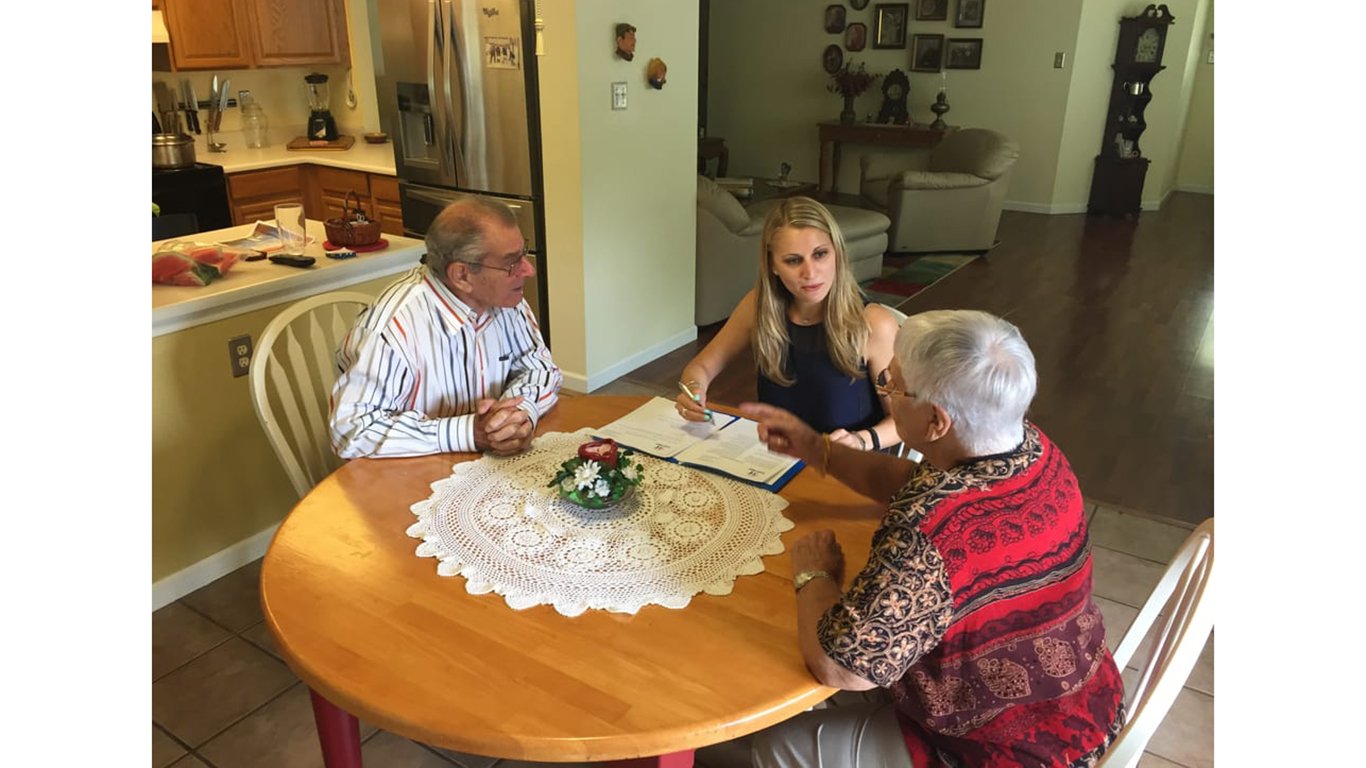
Picture a couple in their late 70s. Mom will enter residential care this winter. Dad will stay in the house they’ve owned for decades, which still carries a $180,000 mortgage locked at 2.9%. To cover her bill, Dad will borrow against his equity with a HECM, the FHA-insured Home Equity Conversion Mortgage (HECM). He expects to keep the cheap loan and add fresh cash on top of it.
He won’t get to keep it. Under the U.S. Department of Housing and Urban Development’s (HUD’s) rules, a HECM must be the first mortgage on the home, so the lender will pay off that $180,000 at closing using the new loan’s own proceeds. The 2.9% rate disappears. The payoff becomes the opening balance of a new loan that grows at the HECM’s interest rate plus FHA mortgage insurance.
HUD’s First Mortgage Rule Wipes Out the 2.9% Loan
HUD’s consumer material leaves no wiggle room: “A HECM must be a first mortgage. If you have an existing mortgage, it must be paid off prior to closing or paid off at closing with funds you receive from the HECM.” Any other lien has to be subordinated to the HECM.
If the proceeds fall short of what Dad needs to pay off the old mortgage, he can bring his own cash to closing. HUD’s rules for counselors prevent borrowers from covering the gap with a credit card cash advance or a new home equity loan, based on HUD Handbook 7610.1.
So the first $180,000 of Dad’s borrowing power goes to his old lender before a dime reaches the facility caring for Mom. How much is left depends on his age, what the house is worth and the interest rate. Older borrowers, pricier homes and lower rates unlock more cash.
Balance Grows at the Loan Rate Plus a 0.5% Annual Insurance Charge
A reverse mortgage requires no repayment of principal, interest or servicing fees while a borrower lives in the home. That’s the appeal. It’s also the catch. Unpaid interest and fees roll into the balance, and next month’s interest is charged on the bigger number. HUD calls these “rising-debt, falling-equity” loans.
FHA insurance piles on. Borrowers pay an upfront premium of 2% of the maximum claim amount (the lesser of the appraised value or the FHA loan limit), plus an annual premium of 0.5% of the loan balance. Those premiums run for the life of the loan and aren’t refundable. Origination fees top out at $6,000, and borrowers can finance all of these costs into the balance.
Adjustable HECM rates start from a Treasury index plus a lender margin. The 1-year Treasury rate stood at 4.61% on November 27, 2026, before any margin.
Illustrative Example: Same $180,000, Two Paths
| Item | Old mortgage | Reverse mortgage |
|---|---|---|
| Rate | 2.9% | Treasury index plus lender margin, plus 0.5% annual insurance |
| Year-one interest on $180,000 | About $5,220 | Depends on the HECM rate |
| Annual FHA insurance on $180,000 | None in this example | $900, added to the balance |
| Monthly payment | Dad pays it | None required |
| Balance over time | Shrinks with each payment | Grows every month |
The $5,220 assumes the balance stays at $180,000 all year. The old loan got smaller every time Dad mailed a check. The reverse mortgage balance keeps growing until the loan is paid off.
Why Dad Must Keep Living in the House
At least one borrower must keep the home as the principal residence, under HUD’s rules. The loan comes due if the last borrower alive stops living there for more than 12 consecutive months because of physical or mental illness. With Dad at home and on the loan, Mom’s move doesn’t trigger repayment.
When Dad moves out, sells or dies, the debt comes due. Heirs can keep the house by paying off the loan.
HUD treats a spouse under age 62 as a possible Non-Borrowing Spouse who may defer repayment and stay in the home by meeting HUD’s requirements. That spouse can’t draw any money from the loan.
Unspent Cash Can Count Against Medicaid
Medicare, the federal health insurance for older Americans, ignores home equity debt because its eligibility doesn’t depend on income or assets. It also pays only for brief periods of skilled nursing care, and its Part A skilled nursing coinsurance rises to $222[1] a day for covered days 21 through 100 in 2027. Medicaid, the needs-based program families turn to once savings run low, works differently.
Per HUD, needs-based programs generally don’t treat loan advances as income. Money that sits in a bank account past the end of the month it arrived, however, counts as a “liquid resource” and may disqualify the borrower. HUD-required counseling must cover this impact on public benefits.
Each state runs its own Medicaid program, so asset limits and the treatment of a lump sum versus monthly draws differ depending on where Mom receives care. Families paying for institutional care ask the counselor and the state agency exactly how unspent proceeds will count before choosing a payout plan.
Is Mom’s Care Worth Giving Up 2.9%?
Dad’s real decision comes down to one trade: a 2.9% loan he was steadily paying down, swapped for a loan at the HECM rate plus insurance that grows on its own. If the cash keeps Mom in good care while Dad stays put, the math may work. If the house was the family’s inheritance plan, the shrinking equity is the price of that cash.
Contact [email protected] for any questions or corrections.
Gerelyn Terzo is the author of dividend investing handbook "Dividend Investing Strategies: How to Have Your Cake & Eat It Too." A veteran financial journalist, she covers agri-finance for outlets like Global AgInvesting and the broader stock market and personal finance for 24/7 Wall Street. She began at CNBC and later helped launch Fox Business in New York. Gerelyn currently resides in Woodland Park, Colorado and dabbles in nature photography as a hobby.