Marcus by Goldman Sachs Savings, Reviewed
Marcus by Goldman Sachs (NYSE:GS | GS Price Prediction) is the consumer banking arm of a Wall Street investment bank. Its flagship product is a plain online high yield savings account with no fees, no minimum balance, and no branches.…

This post may contain links from our sponsors and affiliates, and Flywheel Publishing may receive compensation for actions taken through them.
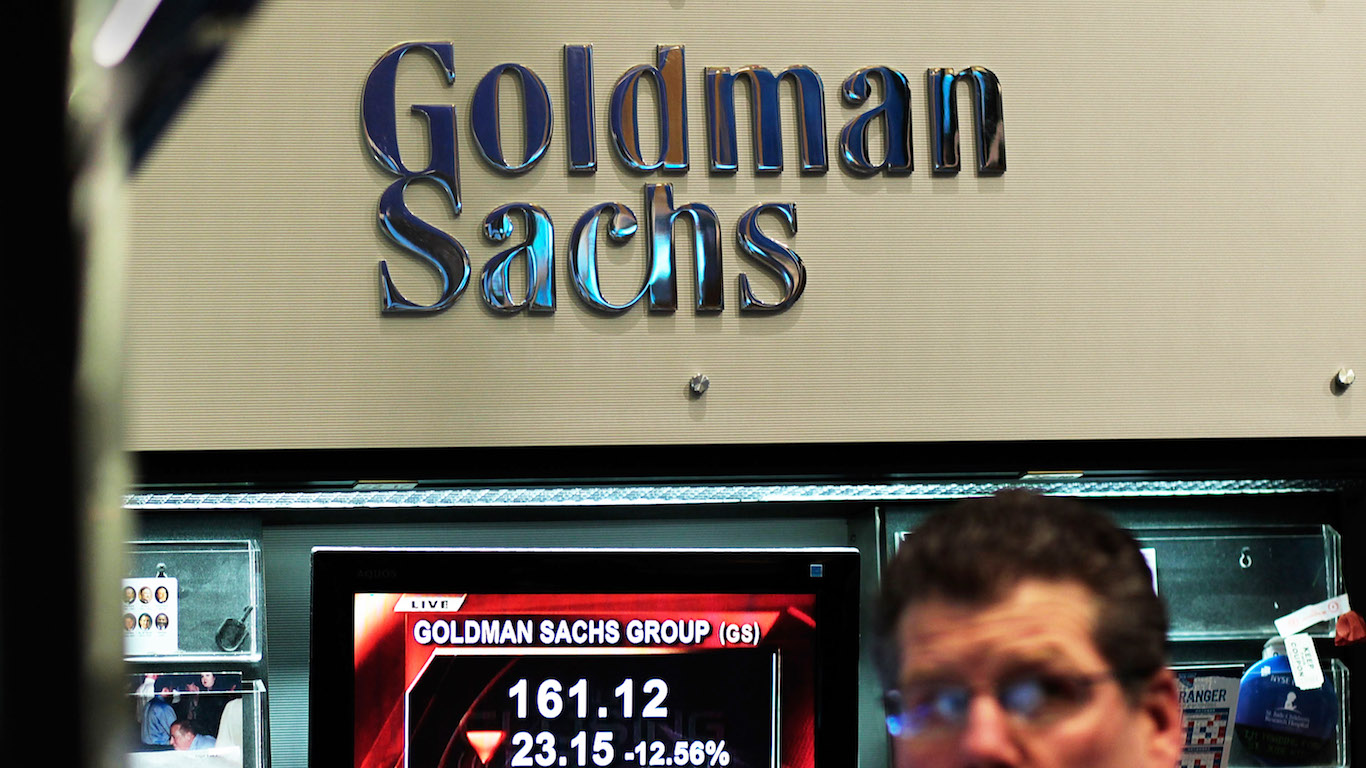
Marcus by Goldman Sachs (NYSE:GS | GS Price Prediction) is the consumer banking arm of a Wall Street investment bank. Its flagship product is a plain online high yield savings account with no fees, no minimum balance, and no branches. It suits savers who want a straightforward place to park cash at a competitive rate and do not need checking, debit card access, or in-person service.
What Marcus Is and Who Stands Behind It
Marcus is the retail deposit brand of Goldman Sachs Bank USA, an FDIC insured banking subsidiary of Goldman Sachs. Deposits carry the standard federal insurance ceiling of $250,000 per depositor, per ownership category. The parent has been a household name in institutional finance for over a century. Everything happens through the Marcus website or mobile app, with customer service available by phone during extended hours.
How the Marcus Online Savings Account Works
The savings account has no monthly maintenance fee, no minimum balance to open, and no minimum to earn the posted rate. Interest compounds daily and posts monthly. Funding and withdrawals move through linked external accounts by ACH transfer, and you can link multiple outside banks. Wire transfers are supported for larger movements. Marcus typically pays a multiple of the FDIC national savings average, which hovered near 1.65% on comparable insured products in mid 2026.
Marcus removed the old federal six per month withdrawal cap after Regulation D was eased, so outbound transfers are not artificially limited. Interest is reported to the IRS on a 1099-INT, and the account can be held individually or jointly. There is no promotional rate that steps down. The rate you see is the rate everyone gets.
How Marcus Certificates of Deposit Work
Marcus offers fixed rate CDs across terms from a few months to six years, plus a No Penalty CD in shorter terms that lets you withdraw the full balance after the first week without forfeiting interest. The standard CDs have a modest minimum to open, typically a few hundred dollars. Early withdrawal penalties scale with the term, running from a few months of interest on shorter maturities up to about a year on the longest ones.
Marcus honors a rate guarantee window on new CDs. If the posted rate for the same term rises within ten days of funding, you get the higher rate automatically. With the federal funds target at 3.75% as of July 8, 2026 and one year Treasury bills yielding around 4.00%, CD shoppers have real alternatives, and the rate guarantee narrows the risk of locking in too early.
Real Strengths
The core case for Marcus is simplicity plus a credible balance sheet.
Fee structure: No monthly fees, no minimum balance fees, no excess transaction fees, no wire fees on incoming wires, and no fee to close the account. CFPB complaint data shows that fee disputes and unexpected charges are among the most common frustrations consumers file about deposit accounts.
Consistent rate: Marcus does not use teaser tiers, and the same rate applies whether you deposit a few hundred dollars or a few hundred thousand.
Stable platform: The app is unremarkable in a good way. Money moves when it is supposed to, statements are clear, tax documents show up on time, and customer service is answered by a person during business hours and into the evening.
Notable Drawbacks
Marcus is deliberately narrow. There is no checking account, no debit card, and no ATM access on the savings side. Every withdrawal must be routed to a linked outside bank by ACH or wire, which takes a business day or two to settle. If you need same day access to cash, this is the wrong home for it.
There are no branches, which rules Marcus out for anyone who wants to sit down with a banker, get a cashier’s check the same afternoon, or handle a complicated estate matter in person. The product menu is thin. No money market account with check writing, no brokerage integration for retail customers, and no credit card tie-in after Marcus wound down that business.
Rate leadership is also not guaranteed. Marcus is usually competitive, but on any given week a handful of online only banks and credit unions will post a higher headline yield.
How Marcus Compares to the Alternatives
Against other online high yield savings accounts from banks like Ally, Discover, Capital One 360, American Express, and Synchrony, Marcus lands in the same neighborhood on rate and beats most on the absence of gotchas. The tradeoff is that Ally and Capital One offer checking, debit, and ATM networks that Marcus does not.
Against a money market fund at a brokerage, Marcus gives up a bit of yield in exchange for FDIC insurance and true liquidity. Against Treasury bills bought directly, Marcus loses on yield when the curve favors short bills, as it does now with the one year bill near 4.00%, but wins on flexibility. Against a local bank savings account paying the national average, there is no contest. The rate gap is large enough that on a five figure balance the difference over a year is real money.
Who Should Use Marcus and Who Should Not
Marcus is a good fit for savers who already have a checking account elsewhere and want a separate home for their emergency fund, a house down payment being staged, a tax reserve, or cash waiting to be invested. It suits people who value low friction and a recognizable name over squeezing an extra fraction of a percent from a smaller online bank. It works well for CD ladders, thanks to low minimums and the rate guarantee.
It is a poor fit for anyone who wants savings and checking under one login with a debit card attached, for people who need branch service, for savers who chase the absolute top rate every month, and for those who need frequent same day access to cash.
Frequently Asked Questions
Is Marcus by Goldman Sachs Safe?
Marcus deposits are held at Goldman Sachs Bank USA, an FDIC insured institution. Balances are insured up to $250,000 per depositor, per ownership category. That protection is identical in strength to what any other insured US bank offers.
How Long Does It Take to Move Money in and out of Marcus?
Standard ACH transfers to and from a linked external bank typically settle in one to three business days. Wires move faster, usually the same day if initiated before the cutoff. Marcus does not offer a debit card or ATM network on the savings account, so all withdrawals route through a linked bank.
Does Marcus Offer a Checking Account?
No. Marcus offers a high yield savings account and certificates of deposit. There is no checking account, no debit card, and no branch network.
Can I Break a Marcus CD Early?
Yes, but the standard fixed rate CDs charge an early withdrawal penalty that scales with the term, from a few months of interest on shorter maturities up to about a year on the longest ones. The No Penalty CD lets you withdraw the full balance after the first seven days from funding without forfeiting interest.
How Does the Marcus Rate Compare to Inflation?
With CPI running above the Fed’s 2% target through much of the past year, a top tier high yield savings rate at Marcus tends to keep pace with or modestly outrun inflation, while the FDIC national average of 1.65% on a comparable insured product does not. The real return on cash is small in most environments, which is why savings accounts are meant for short term and emergency money rather than long term wealth building.
Contact [email protected] for any questions or corrections.
Austin Smith is a financial publisher with over two decades of experience as an investor, analyst, and advisor. He covers stocks, ETFs, Artificial intelligence and personal finance for 24/7 Wall St. Previously, he spent over a decade at The Motley Fool as a senior editor for Fool.com, portfolio advisor for Millionacres, and launched The Ascent to help reader take control of their personal finances.
His work has been featured on Fool.com, NPR, CNBC, USA Today, Yahoo Finance, MSN, AOL, Marketwatch, and many other publications. He is as an advisor to private companies, and co-hosts The AI Investor Podcast with Eric Bleeker.
When not looking for investment opportunities, he can be found skiing, running, or playing soccer with his children. Learn more about Austin's investment approach here.