He Flies JetBlue to See His Grandkids for Christmas and Gets Stung by Rising Bag Fees. One Suitcase Costs More Than His $75 January Social Security Raise
A single checked bag on a holiday flight can look like it swallows an entire Social Security raise. Run the numbers over a full year, and Medicare's cut, and the picture shifts in a way most retirees miss.

This post may contain links from our sponsors and affiliates, and Flywheel Publishing may receive compensation for actions taken through them.
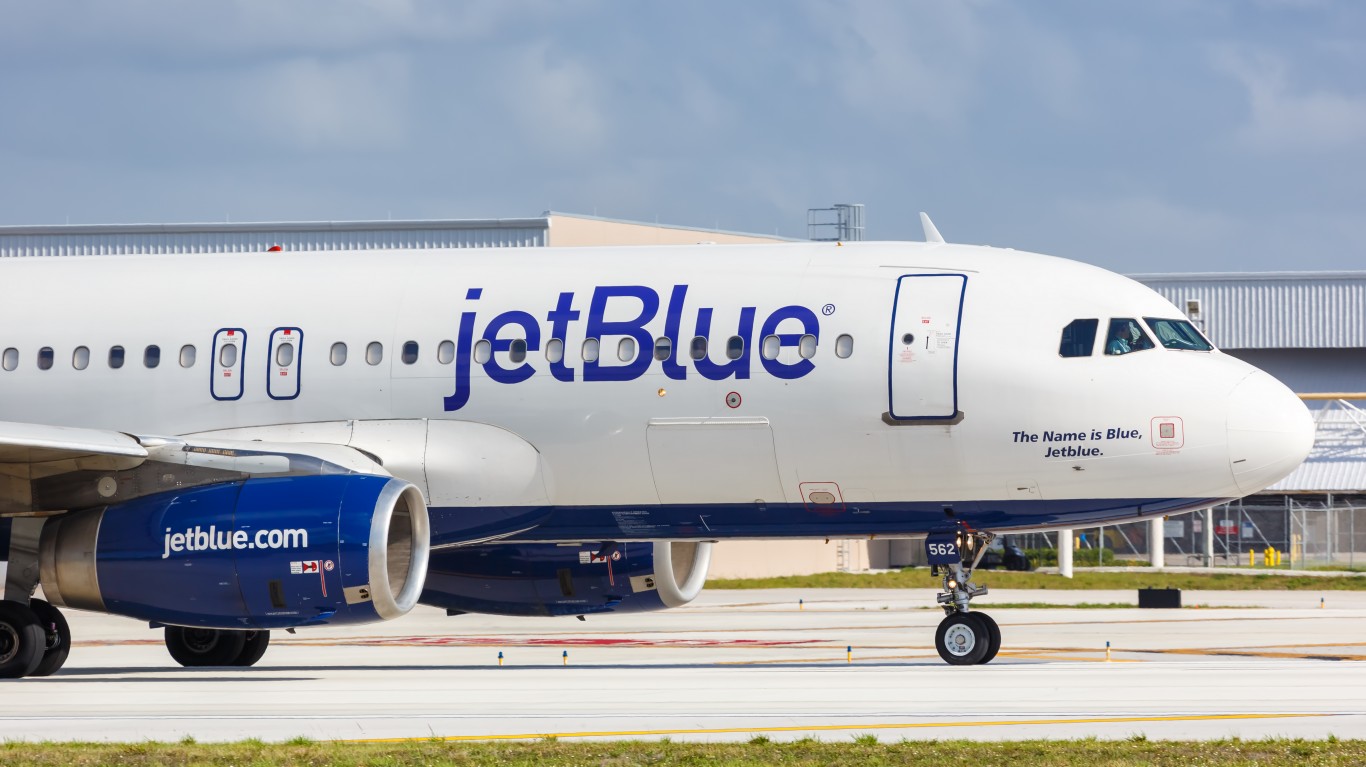
Consider a hypothetical retiree flying JetBlue Airways (NASDAQ: JBLU) to see his grandkids this Christmas. He’s booked a round trip and plans to check one suitcase. By the time he gets home, that bag alone will have cost him $110, or $35 more than the average retiree’s entire Social Security raise for January.
JetBlue raised its checked-bag fees for the third time in a 12-month stretch, with the new rates applying to tickets purchased on or after November 3. During peak holiday travel, the first checked bag now costs $55 each way when paid for at least 24 hours in advance. The increase comes just weeks after Social Security set a 3.6% cost-of-living adjustment (COLA) for 2027, worth roughly $75 a month for the average retired worker.
The timing stings, especially for retirees already watching every dollar. But there’s an important difference between a one-time travel expense and a Social Security raise that keeps arriving every month.
Your Raise Is Bigger Than One Month Makes It Look
Comparing a one-time travel fee with a single month of a raise shortchanges Social Security, because the raise repeats every month. The average retired worker is expected to collect $2,095 a month by the end of 2026. A 3.6% increase raises that to roughly $2,170 in January, and the extra money arrives in all 12 checks.
Over a full year, that adds up to about $900. A $110 round-trip bag fee takes roughly 12% of it. That’s a real bite, but it’s not the whole raise.
Couples face the same math at twice the scale. When both spouses collect benefits, their average combined check of $3,238 grows by about $117 a month. Two checked bags on the same holiday round trip cost $220.
The raise also compounds. Each future adjustment is calculated on the larger base, so this January’s increase continues working for you for the rest of your life. A bag fee is paid once per trip.
Medicare Takes Its Share of the Raise First
The amount that reaches your bank account is often smaller than the headline raise, because Medicare Part B premiums come straight out of most retirees’ Social Security checks. For 2026, the standard premium rose from $185 to $202.90 a month.
That $17.90 premium increase took a chunk out of this year’s average raise of $56. The typical retiree was left with about $38 in new spending money each month. Medicare hasn’t announced its 2027 premium yet. When it does, subtract the increase from your $75 to see how much room your budget actually cleared.
There’s a second reason the raise can feel thin. The annual adjustment follows the Consumer Price Index for Urban Wage Earners and Clerical Workers, which doesn’t always reflect how retirees spend. The government also tracks an experimental index for Americans 62 and older that gives more weight to housing and medical care. When those costs rise faster than the expenses reflected in Social Security’s formula, the raise can fall behind.
Where Holiday Travel Money Belongs
Use your monthly benefit for bills that come every month, such as utilities, groceries and the Part B premium. A holiday flight is an irregular expense. It fits better in a separate travel fund that you fill from savings once or twice a year than in a single month’s Social Security deposit.
How you fill that fund matters at tax time. A large lump-sum withdrawal from a traditional IRA raises your taxable income, and that can make more of your Social Security benefit taxable. Higher-income retirees can also cross into Medicare’s premium surcharge, which starts above $109,000 for single filers in 2026. Taking regular, planned withdrawals avoids both problems (we mapped out the IRMAA thresholds and the other Medicare bills that catch retirees off guard in a free guide here: Medicare’s Hidden Bills).
Two Habits That Protect Your January Raise
First, pay for checked bags online at least a day before you fly. JetBlue charges more when travelers pay within the final 24 hours before departure, so a few minutes of planning keeps the fee at $55. If your fare includes a carry-on, or you can ship gifts ahead, you may be able to skip the bag fee altogether.
Second, think of your raise as a yearly amount. Compare your January deposit with December’s, and plan your spending around what actually arrived after Medicare’s cut. That figure tells you more than the 3.6% headline. Your benefit, premiums and travel plans won’t match these averages exactly, so your numbers may come out a little better or a little tighter.
Contact [email protected] for any questions or corrections.
Gerelyn Terzo is the author of dividend investing handbook "Dividend Investing Strategies: How to Have Your Cake & Eat It Too." A veteran financial journalist, she covers agri-finance for outlets like Global AgInvesting and the broader stock market and personal finance for 24/7 Wall Street. She began at CNBC and later helped launch Fox Business in New York. Gerelyn currently resides in Woodland Park, Colorado and dabbles in nature photography as a hobby.