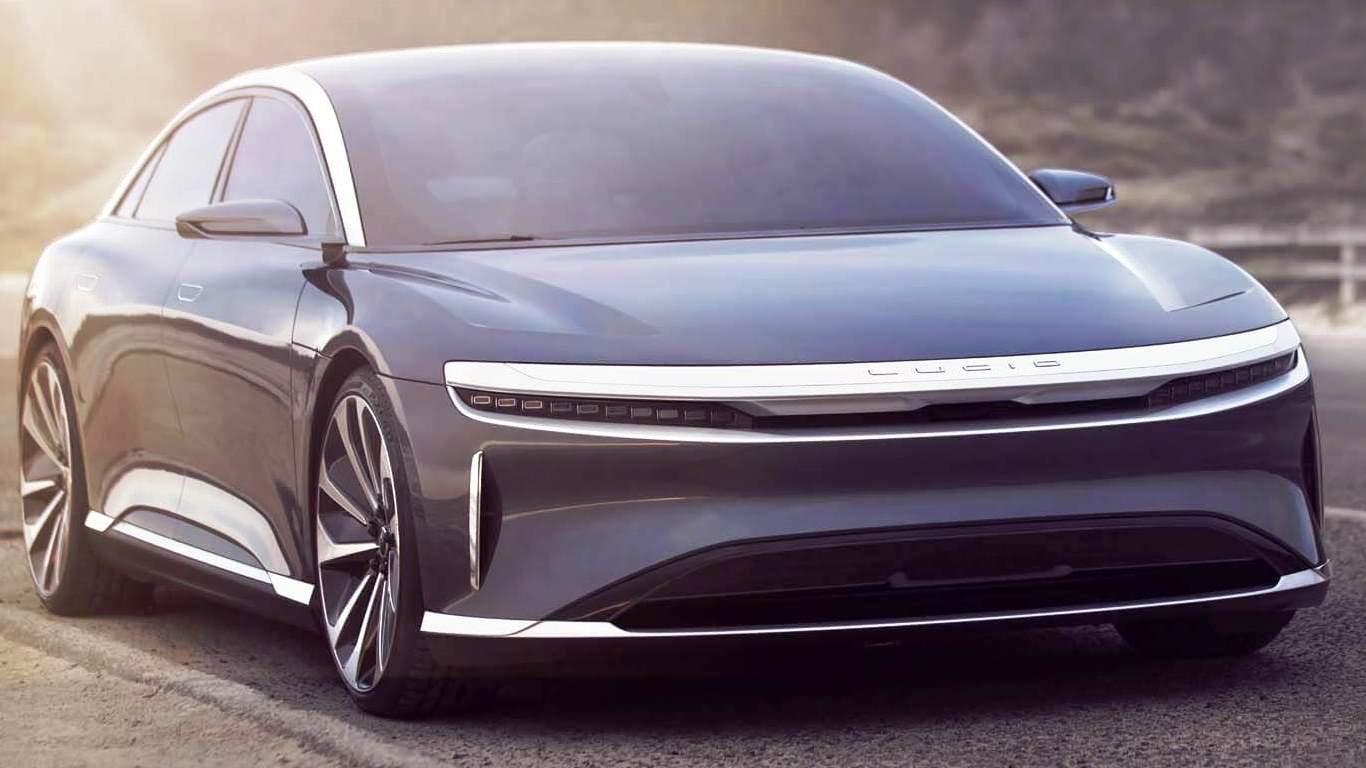
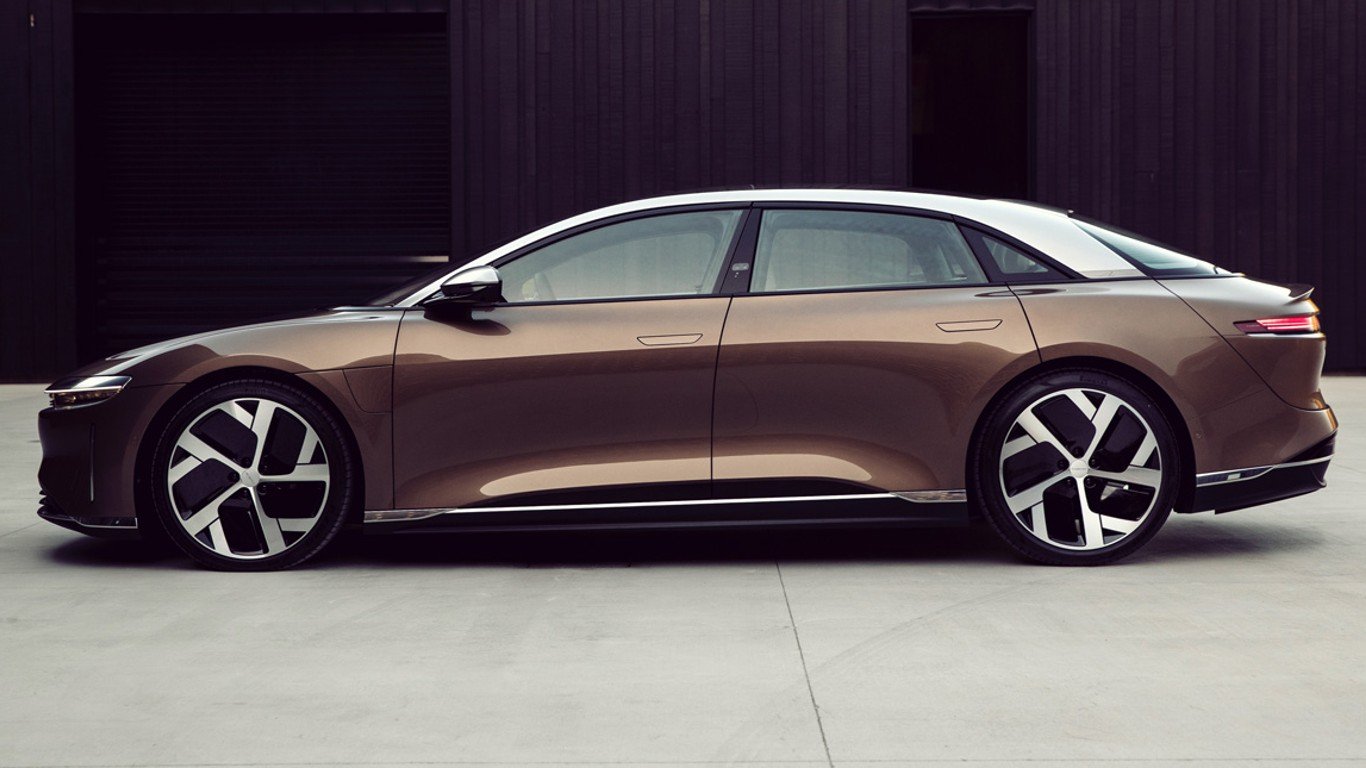
Lucid Surges Toward Deepening Problems
Management faces the thorny question of how long Lucid can survive.

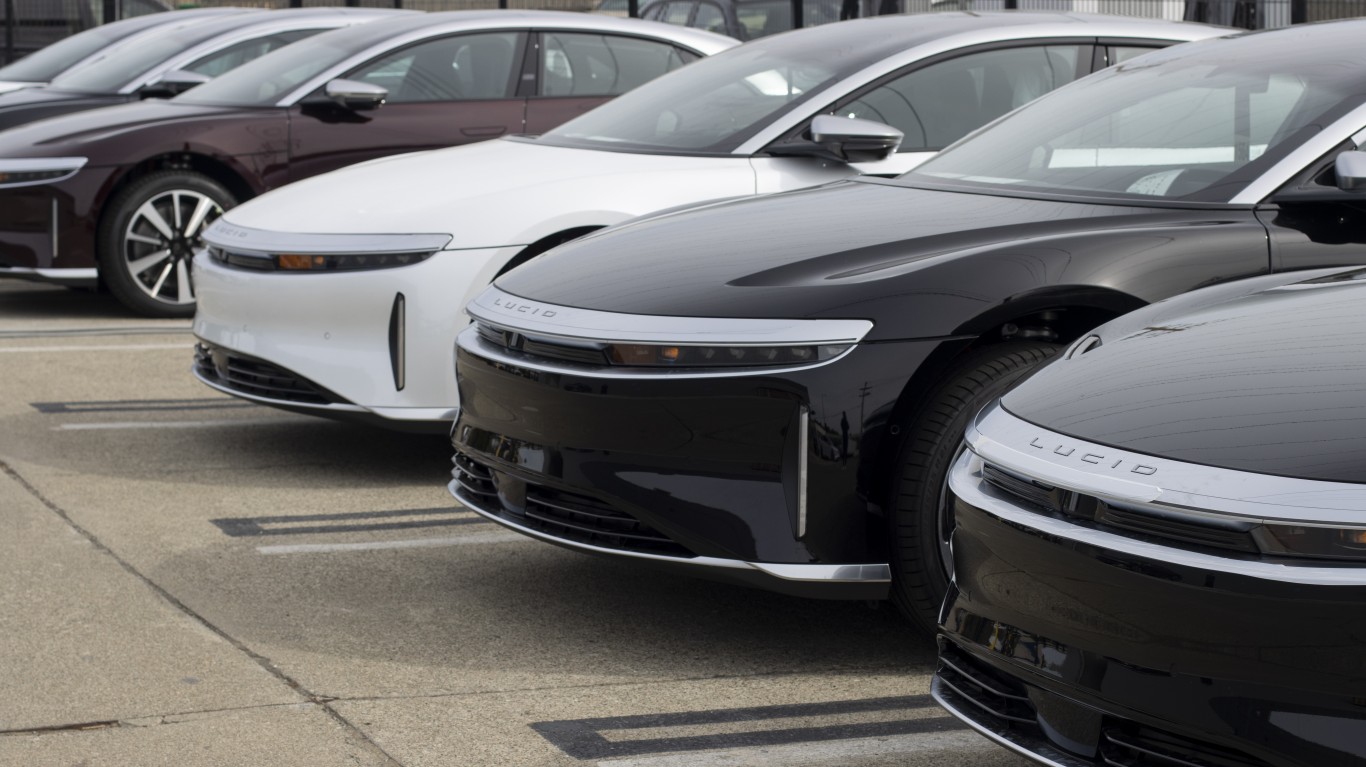
When electric vehicle maker Lucid announced earnings, every part of them was disappointing. The figures also pointed out that the company likely will be gone within a year or two. (These are the worst new cars for humans and the environment.)
CEO Peter Rawlinson commented on its quarterly numbers: “We are on track to produce over 10,000 vehicles in 2023, with companywide initiatives ongoing that will enable Lucid to pivot to higher volumes as market conditions allow,” Early this year, the 2023 forecast was a range of 10,000 to 14,000.
Even at the high end of the forecast range, the figure is not large enough for Lucid to compete in a market made vicious by price cuts to gain market share. The base price of a Lucid model is an absurdly high $87,400. Its highest-priced model carries a sticker price of $249,000.
The first thing Lucid’s results did was disappoint Wall Street. Revenue of $149.4 million was short of expectations for $209.98 million, a major miss. Lucid lost $0.43 a share, against an expected loss of $0.41.
Management made the absurd claim that its revenue was up 159% from the same quarter a year ago. The current number is still particularly low. Despite the increase in revenue, Lucid lost $772 million on an operating basis, compared to $598 million last year.
Lucid’s most significant problem is its dwindling cash. At the end of the quarter, it had cash and cash equivalents of $2.9 billion, compared to $3.2 billion in the same period a year before. Lucid also has $441 million in long-term debt, down from $530 million. Management faces the thorny question of how long Lucid can survive.
Contact [email protected] for any questions or corrections.
Douglas A. McIntyre is the co-founder, chief executive officer and editor in chief of 24/7 Wall St. and 24/7 Tempo. He has held these jobs since 2006.
McIntyre has written thousands of articles for 24/7 Wall St. He is an expert on corporate finance, the automotive industry, media companies and international finance. He has edited articles on national demographics, sports, personal income and travel.
His work has been quoted or mentioned in The New York Times, The Wall Street Journal, Los Angeles Times, The Washington Post, NBC News, Time, The New Yorker, HuffPost USA Today, Business Insider, Yahoo, AOL, MarketWatch, The Atlantic, Bloomberg, New York Post, Chicago Tribune, Forbes, The Guardian and many other major publications. McIntyre has been a guest on CNBC, the BBC and television and radio stations across the country.
A magna cum laude graduate of Harvard College, McIntyre also was president of The Harvard Advocate. Founded in 1866, the Advocate is the oldest college publication in the United States.
TheStreet.com, Comps.com and Edgar Online are some of the public companies for which McIntyre served on the board of directors. He was a Vicinity Corporation board member when the company was sold to Microsoft in 2002. He served on the audit committees of some of these companies.
McIntyre has been the CEO of FutureSource, a provider of trading terminals and news to commodities and futures traders. He was president of Switchboard, the online phone directory company. He served as chairman and CEO of On2 Technologies, the video compression company that provided video compression software for Adobe’s Flash. Google bought On2 in 2009.