SpaceX Quietly Admits to a Threat It Helped Create, and Can’t Stop

This post may contain links from our sponsors and affiliates, and Flywheel Publishing may receive compensation for actions taken through them.
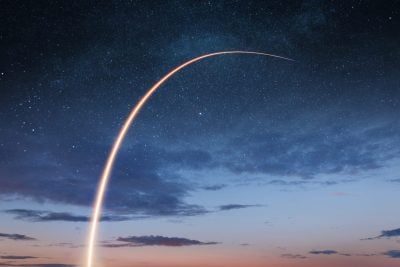
Buried deep in SpaceX’s S-1 filing sits one of the strangest risk disclosures in recent IPO history. It describes a threat that could limit launches, ground satellites, and force expensive course corrections in orbit. SpaceX itself is the single biggest contributor to that threat.
This is the first time the company has quietly conceded, in black-and-white legalese, that its own success may be building the wall it eventually runs into.
The Admission Hiding in Plain Sight
The S-1 disclosures lay it out plainly. Space Exploration Technologies Corp. (NASDAQ:SPCX | SPCX Price Prediction) warns that “the continued proliferation of satellite constellations in Low-Earth Orbit, as well as the risk of collisions with space debris or other spacecraft, could limit or impair our launch flexibility and satellite deployment.”
The company goes further, acknowledging that as more objects crowd LEO, “the probability of accidental collisions, fragmentation events, or other in-orbit incidents increases, which could result in the loss or degradation of our satellites, increased costs for collision avoidance maneuvers, or the need to replace or reposition assets on an accelerated schedule.”
The worst-case scenario named in the filing: a strike that could “trigger a cascading collision event that renders our licensed orbits, and potentially other orbits, unusable for an extended period.” Scientists call this outcome the Kessler syndrome, a runaway chain reaction in which one collision generates debris clouds that strike other satellites, producing still more debris in an accelerating cascade. As of mid-2026, roughly 34,000 trackable debris objects larger than 10 cm already orbit Earth, alongside an estimated 130 million fragments too small to track reliably but large enough to disable a satellite on impact.
There is one more detail worth noting from the filing: SpaceX does not typically obtain insurance coverage for its satellites, payloads, or launch vehicles. Any collision loss falls directly on the balance sheet.
The Irony Nobody at SpaceX Wants to Underline
Here is the uncomfortable part. SpaceX is the proliferation.
As of the March 31, 2026 S-1 filing date, Starlink operated over 9,600 broadband and mobile satellites in Low-Earth Orbit, accounting for approximately 75% of all active maneuverable satellites in orbit. By October 2026, the working Starlink fleet had grown to roughly 11,100 satellites. Roughly three out of every four steerable satellites circling Earth carry a Starlink badge, and the company is adding to that count every month.
The scale of the avoidance problem is growing faster than the constellation itself. Starlink satellites made over 355,000 collision avoidance maneuvers in the past year, more than three times the total performed in 2024. SpaceX separately disclosed to the FCC that its satellites performed 207,152 maneuvers just between December 2025 and May 2026 alone. Each satellite now dodges debris and other spacecraft on an almost weekly basis.
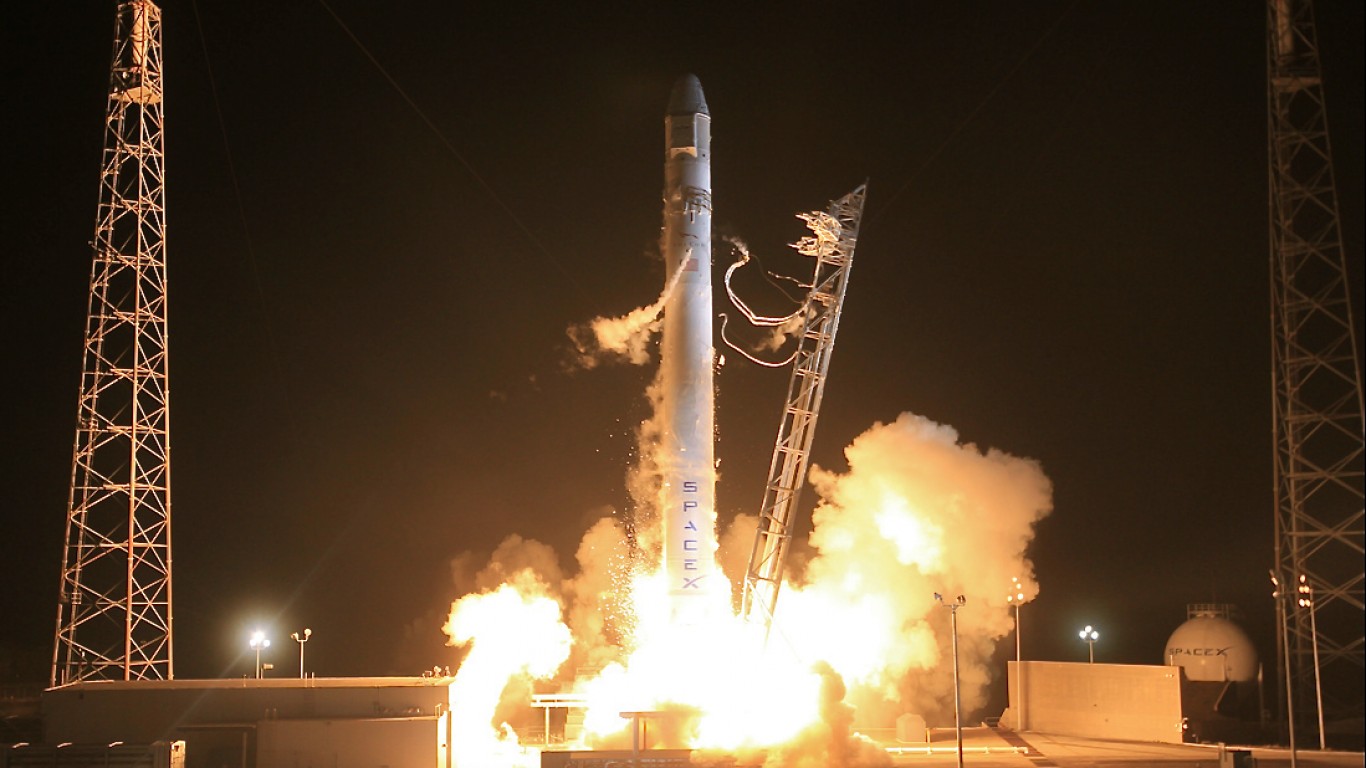
The plan is to go much, much bigger. SpaceX tells shareholders that its orbital ambitions, including AI compute platforms in space, “will require the operation of very large satellite constellations, potentially numbering up to one million satellites.” The S-1 also warns that any failure or delay in Starship development would cascade through everything from next-generation Starlink satellites to the AI data centers the company aims to begin deploying by 2028. A single Starship launch is expected to deploy up to 60 V3 satellites, a twenty-fold increase in Starlink downlink capacity relative to a Falcon 9 launch, with the first such deployments targeted for the second half of 2026.
What This Means for Shareholders Now
SpaceX listed on the Nasdaq as SPCX on June 12, 2026, pricing at $135 per share. Shares surged 19% on the first day of trading to close near $161, giving the company a market capitalization of roughly $2.1 trillion at the open. Since then, SPCX has pulled back, trading around $147 as of late October 2026, as the market digests a valuation that leaves little room for the operational risks the S-1 itself flags.
SpaceX also flags regulatory blowback in the filing, warning that “failure to meet debris requirements could result in monetary penalties or loss of licensing authority” and that liability regimes resembling environmental Superfund laws are being explored for orbit. Space traffic management is currently voluntary and largely uncoordinated across the U.S., Russia, and China, meaning no binding international framework exists to slow the accumulation of debris.
The toll bridge SpaceX built over LEO has become the busiest road in the sky, and SpaceX is the one paying to widen it while regulators consider charging passage. If Starlink’s 10.3 million subscribers across 164 countries represents the floor of a global utility, the congestion risk is a cost of doing business that shareholders now own alongside the upside. If one cascading collision were to freeze deployment for years, the prospectus already told investors exactly where the trapdoor is. The threat SpaceX helped create is the same one it now has to outrun.
Editor’s note: This article has been updated to reflect SpaceX’s completed Nasdaq listing under ticker SPCX on June 12, 2026, at $135 per share (Day 1 close near $161; recent trading near $147), the growth of the working Starlink fleet to roughly 11,100 satellites as of October 2026, and newly available data showing Starlink performed over 355,000 collision avoidance maneuvers in the past year, more than triple the 2024 total. Context on the Kessler syndrome, the current debris environment (roughly 34,000 trackable objects larger than 10 cm), SpaceX’s practice of carrying no satellite insurance, and the 2028 target for AI data center deployment has also been added.
Contact [email protected] for any questions or corrections.
I've been writing about stocks and personal finance for 20+ years. I believe all great companies are tech companies in the long run, and I invest accordingly.