Best States to Have Money in the Bank
It is hard to say whether hacking, number of branches, extra fees or troubles like those at Wells Fargo are the greatest danger to consumers. MoneyRates.com thinks it is none of these.


It is hard to say whether hacking, number of branches, extra fees or troubles like those at Wells Fargo & Co.(NYSE: WFC) are the greatest danger to consumers. MoneyRates.com thinks it is none of these, surprisingly. It recently released its list of the “Best and Worst States for Bank Health,” based on a number of factors rarely in the news.
Its cut at risk:
The condition of the banking market in each state, as measured by the number of banks headquartered there and the rate of change of market size.
Financial leverage, i.e., vulnerability to setbacks. This was measured using the tier 1 financial leverage ratio, an international standard measuring the ratio of financial resources to potential liabilities.
Loan performance. The percentage of non-current loans shows the proportion of loans that are behind on payments. The more bad loans a state’s banks have, the worse the health of that state’s banks is likely to become.
The averages of each state’s banks data for the above characteristics were ranked, and then the rankings were combined to come up with an overall ranking.
Of these, the least useful would seen to be whether a bank is headquartered in a state. One state could get weight because of an accident of history. Who knows why a bank is headquartered in this state or that. These are decisions that in some cases were made decades ago. The other measures are absolutely fair.
These are the states with the best and worst states for bank health, according to MoneyRates.com:
| Best States for Bank Health | Worst States for Bank Health |
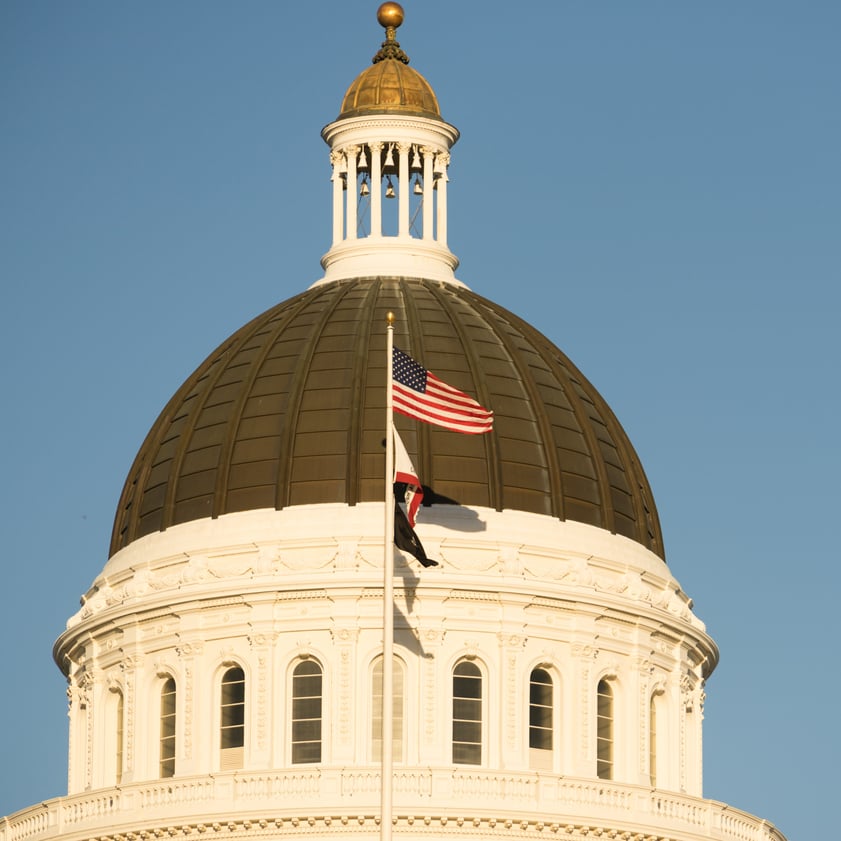
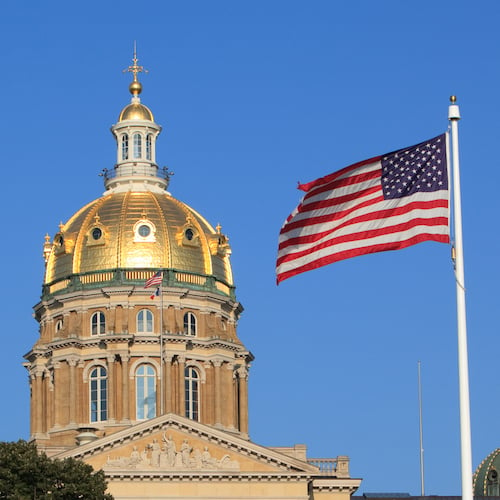
| 1. Iowa | 1. Maryland/DC |
| 2. California | 2. New Jersey |
| 3. South Dakota | 3. Michigan |
| 4. Nebraska | 4. Montana |
| 5. Kansas | 5. South Carolina |
Contact [email protected] for any questions or corrections.
Douglas A. McIntyre is the co-founder, chief executive officer and editor in chief of 24/7 Wall St. and 24/7 Tempo. He has held these jobs since 2006.
McIntyre has written thousands of articles for 24/7 Wall St. He is an expert on corporate finance, the automotive industry, media companies and international finance. He has edited articles on national demographics, sports, personal income and travel.
His work has been quoted or mentioned in The New York Times, The Wall Street Journal, Los Angeles Times, The Washington Post, NBC News, Time, The New Yorker, HuffPost USA Today, Business Insider, Yahoo, AOL, MarketWatch, The Atlantic, Bloomberg, New York Post, Chicago Tribune, Forbes, The Guardian and many other major publications. McIntyre has been a guest on CNBC, the BBC and television and radio stations across the country.
A magna cum laude graduate of Harvard College, McIntyre also was president of The Harvard Advocate. Founded in 1866, the Advocate is the oldest college publication in the United States.
TheStreet.com, Comps.com and Edgar Online are some of the public companies for which McIntyre served on the board of directors. He was a Vicinity Corporation board member when the company was sold to Microsoft in 2002. He served on the audit committees of some of these companies.
McIntyre has been the CEO of FutureSource, a provider of trading terminals and news to commodities and futures traders. He was president of Switchboard, the online phone directory company. He served as chairman and CEO of On2 Technologies, the video compression company that provided video compression software for Adobe’s Flash. Google bought On2 in 2009.