Under Biden, National Debt Grew by $5 Trillion — Still Less Than Recent Presidents
America’s National Debt has reached over $35 trillion, a staggering amount that is hard to wrap our minds around. Carrying a massive amount of debt is not a new phenomenon for the U.S. Ever since the Revolutionary War, America has…


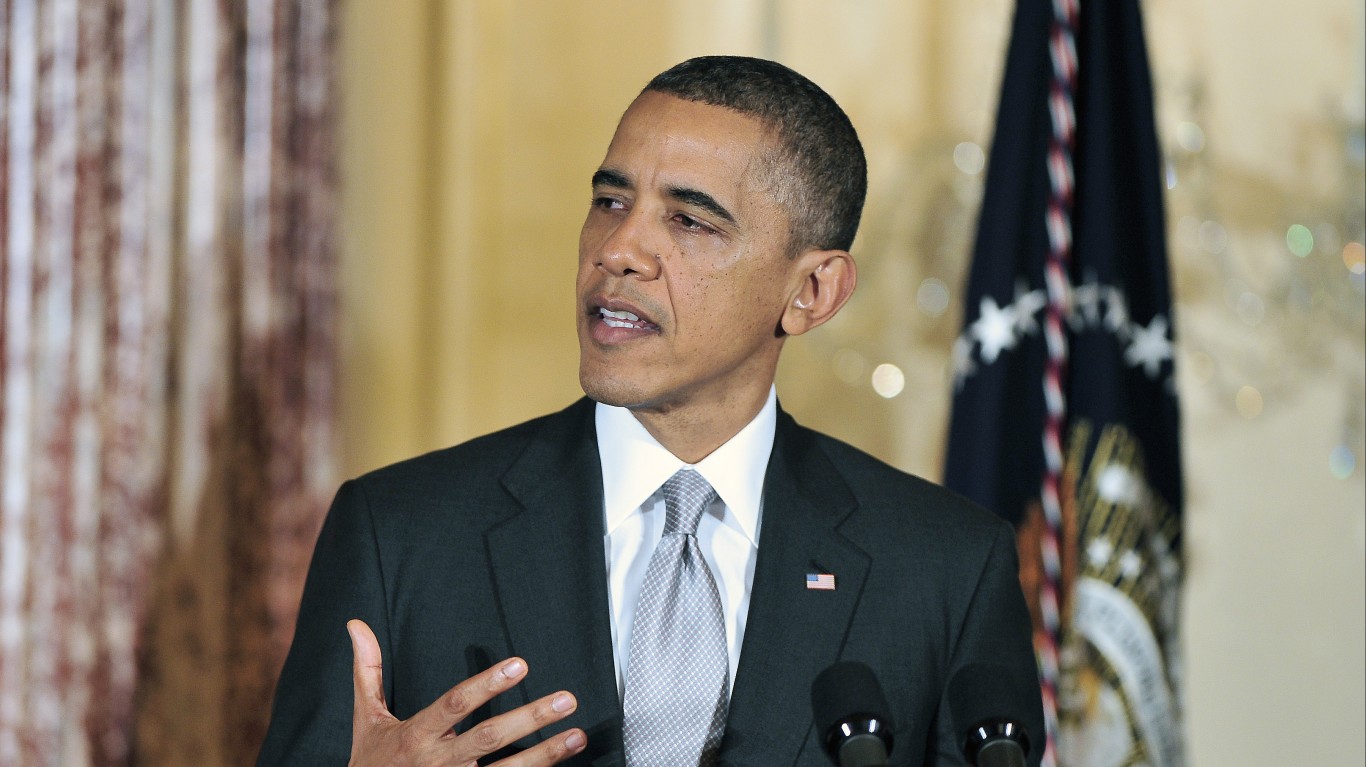
America’s National Debt has reached over $35 trillion, a staggering amount that is hard to wrap our minds around. Carrying a massive amount of debt is not a new phenomenon for the U.S. Ever since the Revolutionary War, America has been racking up debt. (These are the U.S. Presidents who have added the most to the national debt.) Recently, President Biden increased the national debt by nearly $5 trillion, although an astounding number, it is less than under Barack Obama ($7.6 trillion) or Donald Trump ($6.7 trillion).
To find out what the Biden administration did to increase the debt and how it compares with previous administrations, 24/7 Wall St. reviewed data from the U.S. Treasury Department, Whitehouse.gov, the Bipartisan Policy Center, Investopedia, and the Committee for a Responsible Federal Budget.
Why This Matters

Reducing the federal deficit should be an urgent priority for lawmakers and something all Americans should hold their elected officials accountable for. At the same time, we need to be inquisitive about the expenditures that drive the debt and consider whether these are things we support, and what the effect would be of not doing them.
Even though we as individuals might not have much influence on national policy, becoming informed on this issue might also help us reflect on our personal spending and whether the debt we take on is constructive and sustainable.
National Debt Increases Under Modern Presidents

Some of the major factors that contribute to the national debt are wars, inflation, infrastructure development, and expanding social services. Demographic factors, such as the aging of the large Baby Boom generation, which is supported by the smaller generations following it, also affect the solvency of programs like Social Security and Medicare.
Among modern presidencies, Barack Obama added the most to the debt: $7.6 trillion. Second place goes to Donald Trump with a $6.7 trillion increase. Joe Biden takes the bronze third place medal for a $4.7 trillion deficit increase during his presidency.
National Debt Increases on a Percentage Basis

Deficits of trillions of dollars are terrifying, but the flip side of that is that the U.S. GDP itself has grown to $28.8 trillion. Some presidents have expanded the national debt by a greater percentage than others from the debt they inherited.
Franklin D. Roosevelt added just $178 billion to the national debt, but this was a 791.8% increase in the debt. Woodrow Wilson, Ronald Reagan, George W. Bush, Barack Obama, George H.W. Bush, and Richard Nixon all increased the deficit by a greater percentage than Donald Trump (who added $6.7 trillion, a 33.1% increase). After Trump, Jimmy Carter, Bill Clinton, and Theodore Roosevelt all added a higher percentage to the deficit than Biden. Biden’s contribution was $4.7 trillion (a 16.7% increase).
Biden Policies that Have Increased the Debt

These are the main policies President Biden and Congress have approved that have increased the national debt over the last 3 1/2 years.
- The American Rescue Plan Act ($2.1 trillion debt increase) – Support for small businesses, stimulus checks for individuals, lowering health insurance premiums, and increasing tax credit for children.
- 2022-23 Appropriations ($1.4 trillion debt increase) – budget areas such as national defense, education, federal salaries, etc. with a limit set by Congress.
- Student Debt Relief ($620 billion debt increase) – Lowering or eliminating student loan debt for Americans most in need, including those who enrolled in institutions that have failed in accountability standards and returned low value for the investment.
- The Honoring Our PACT Act ($520 billion debt increase) – health care and other services for veterans exposed to toxic substances during military service.
- The Bipartisan Infrastructure Law ($439 billion debt increase) – improving roads, bridges, railroads, public transportation, airports, and ports, modernizing the power grid, promoting clean energy, improving drinking water and wastewater services, and expanding access to broadband Internet.
Biden Policies that Have Decreased the Debt

To pay for increased spending in other areas, the Biden Administration has approved some measures to reduce the debt. Here are two examples:
- The Fiscal Responsibility Act ($1.5 trillion debt reduction) – increases the debt limit while imposing new spending limits on programs, rescinding unobligated funds, and expanding work requirements for federal aid programs.
- The Inflation Reduction Act ($252 billion debt reduction) – tax reform, expanding the IRS, lowering prescription drug costs, and investing in clean energy.
Can You Do Better?

The Committee for a Responsible Federal Budget has an online tool that lets you make decisions about spending levels for federal programs to stabilize the GDP at 98% of GDP by 2034 and reduce it to 60% of GDP by 2050. Give it a try. Can you do better than Biden?
Contact [email protected] for any questions or corrections.