The Rise and Fall of America’s Tire Dynasty: Four Brands Bought by Foreign Giants and the One Titan Left
For decades, Akron's rubber barons supplied tires to nearly every car rolling off an American assembly line, building an industrial empire so dominant it seemed untouchable. Then a French patent filed in 1946 quietly set the whole dynasty on a…

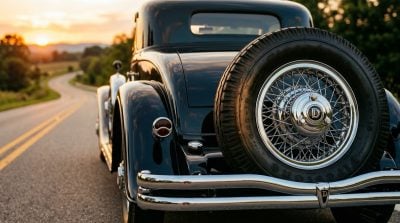
For the middle half of the twentieth century, almost every road in America led back to a single bend of the Little Cuyahoga River in northeast Ohio.
Akron was the rubber capital of the world. Buy an American car between the 1920s and the late 1950s, and there was a three-in-four chance the tires rolling off the showroom floor came from an Akron factory. Names like Firestone, B.F. Goodrich, General Tire, and Goodyear were not just corporate logos; they were industrial royalty.
Walk through a tire warehouse today, and those same heritage logos still sit on the racks.
Look at the corporate registrations, though, and you will notice something striking:
- General Tire is owned by Continental AG in Hanover, Germany ($628 million in 1987).
- Firestone is owned by Bridgestone in Tokyo, Japan ($2.6 billion in 1988).
- Uniroyal-Goodrich is owned by Michelin in Clermont-Ferrand, France ($1.5 billion in 1989 to 1990).
- Cooper Tire was absorbed by Goodyear for $2.5 billion in 2021.
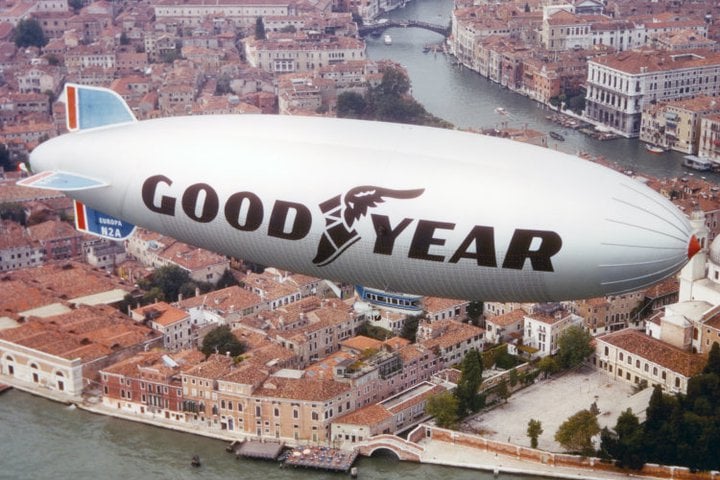
Of the original titans that once commanded 80% of the domestic market, only Goodyear (NASDAQ:GT | GT Price Prediction) remains an independent, American-headquartered manufacturer.
The unraveling of an industrial dynasty into a multi-billion-dollar foreign buyout wave did not happen overnight. And it did not happen because Akron’s executives were unintelligent.
It happened because of a universal rule of business: What makes you wildly successful in one era is often the exact thing that paralyzes you in the next.
Built for Yesterday
Dominance rarely happens by accident.
In 1870, Dr. Benjamin Franklin Goodrich grew tired of practicing medicine and moved to Summit County, Ohio. He saw the logistical promise of the Ohio & Erie Canal and built the first rubber factory west of the Alleghenies, producing garden hoses, fire equipment, and bicycle tires. Then Detroit started building cars.
In 1898, Frank Seiberling bought an abandoned strawboard factory to launch Goodyear. Harvey Firestone set up shop in 1900. William O’Neil founded General Tire in 1915.
The inflection point arrived in 1906, when Henry Ford ordered 2,000 sets of pneumatic tires from Firestone for his Model N. Two years later, the Model T arrived, mass production took off, and Akron locked in Detroit’s original-equipment supply contracts for half a century.
Between 1910 and 1920, Akron’s population surged 201.8%, from 69,067 to 208,435, as tens of thousands of workers crossed the Ohio River to take factory jobs.
To meet the insatiable demand, companies built massive, multi-story brick factories packed tight against the hillsides. The plants were designed around gravity: freight elevators hauled raw rubber bales and carbon black to the top floors, where mixers broke them down. The rubber then dropped floor by floor through chutes to be milled, calendered, built, and cured in subterranean pit presses.
For fifty years, this vertical assembly line was an engineering masterpiece. Then the physics of tire building changed.
The Sunk-Cost Trap
In 1946, a French company named Michelin patented the steel-belted radial tire.
Traditional American “bias-ply” tires used cords running diagonally across the tire carcass at a 30- to 40-degree angle. Every time the wheel turned, the sidewall and tread flexed together, generating internal friction and heat, and the tire wore out after roughly 15,000 miles.
Michelin’s radial design ran its plies straight across the tire at a 90-degree angle, capped by a rigid steel-wire belt under the tread. That architecture separated sidewall flex from the contact patch, cut rolling resistance by 5% to 10%, and pushed tread life past 40,000 miles.
Every American executive knew radials were a vastly superior product. So why didn’t they immediately build them?
Because doing so meant writing off hundreds of millions of dollars in existing infrastructure. Radial tires required two-stage drum machinery instead of flat drums. More critically, they required continuous, single-story horizontal layouts: assembly lines that physically could not fit inside Akron’s multi-story brick towers.
When the cost of admitting your existing setup is obsolete is high enough, smart people will do almost anything to convince themselves the old way can be saved.
American manufacturers hedged. They rolled out compromise “belted-bias” tires, like the Goodyear Polyglas, hoping minor tweaks would keep radial imports at bay without requiring an overhaul of their capital base. The gamble failed.
When Detroit finally demanded true radial tires in the 1970s, the transition turned into an emergency. Firestone tried to modify its existing bias-ply machinery to manufacture radials on the cheap.
The shortcut was catastrophic. Inadequate curing and poor wire adhesion caused widespread tread separations, leading to an estimated 250 fatalities, congressional hearings, and the October 1978 federal recall of 7.3 million Firestone 500 tires.
The liability and debt broke the back of Ohio’s manufacturing base. Goodyear ended passenger tire production in Akron in the late 1970s. Firestone closed its primary passenger plants between 1980 and 1981. B.F. Goodrich exited in 1981.
On August 20, 1982, General Tire built its final passenger tire on Englewood Avenue, ending 112 years of passenger tire manufacturing in Rubber City.
The New Map
When a domestic industry is crippled by restructuring debts and product liabilities, foreign competitors with advanced technology and clean balance sheets see an obvious opportunity.
Over the next four decades, foreign conglomerates bought the dealer networks and automaker contracts they lacked:
- Continental AG acquired General Tire in 1987.
- Bridgestone bought Firestone in 1988, moving its commercial headquarters to Nashville, Tennessee.
- Michelin absorbed Uniroyal-Goodrich by 1990.
The manufacturing did not leave America; it simply relocated.
Companies traded the Rust Belt’s unionized plants and high legacy costs for Southeastern right-to-work states offering cheaper power, local tax incentives, and direct shipping through the Port of Charleston.
Today, South Carolina is the tire-manufacturing capital of North America, producing over 100,000 tires a day across facilities run by Michelin (Greenville and Lexington), Bridgestone (Aiken County), Continental (Sumter), and Giti (Richburg). Along the I-85 and I-75 corridors, tire factories feed directly into foreign-owned assembly plants: BMW in Spartanburg, Volvo in Ridgeville, Mercedes-Benz in Vance, Alabama, and Volkswagen in Chattanooga, Tennessee.
Investment kept flowing in. Hankook poured $1.6 billion into Clarksville, Tennessee; Bridgestone invested $550 million in Warren County, Tennessee; Continental added $500 million in Sumter; and Finland’s Nokian Tyres built a $174 million plant in Dayton, Tennessee.
The factories stayed in the United States, but the ultimate profits now flow across the Atlantic and Pacific.
The Compounding Friction of Heavy Industry
A century after Henry Ford’s first order, tire manufacturing remains an unforgiving, capital-heavy business facing a fresh wave of disruptions.
The Electric Vehicle Paradox. Heavy battery packs increase vehicle curb weight by 20% to 30%, while electric motors deliver instant torque from a standstill. That combination wears tires down in 20,000 to 25,000 miles, a 20% to 30% reduction compared to gas-powered cars. To cope, manufacturers developed High Load (HL) tires running at 42 psi (2.9 bar) to carry up to 34% more weight, and they line tire interiors with acoustic polyurethane foam to mute 170 to 230 Hz cavity rumble by 2 to 3 decibels.
The Raw Material Bottleneck. Between 85% and 90% of natural rubber (Hevea brasiliensis) comes from Southeast Asia, exposed to blights and shipping chokepoints. Bridgestone has committed over $100 million to cultivating desert guayule in Arizona, while Goodyear is partnering with the Department of Defense and BioMADE to harvest rubber from Russian dandelions.
The Regulatory Quirk. Under FTC rules (16 CFR Part 323), an unqualified “Made in USA” label requires “all or virtually all” domestic components. Because natural rubber makes up 15% to 50% of a tire’s weight and cannot be grown domestically at commercial scale, no tire made in America legally qualifies for that label.
The Tariff Squeeze. New U.S. trade tariffs have added a fresh layer of cost pressure across the industry. At their mid-2025 peak, Goodyear’s annualized tariff burden reached roughly $350 million, driven in part by higher rates on retread products from Brazil and truck tires from its Vietnam joint venture. By the time Goodyear filed its 2025 Annual Report, the company’s estimated annualized tariff cost for 2026 had moderated to approximately $300 million based on prevailing rates, though the headwind continues to complicate an already demanding turnaround.
For Goodyear, surviving as the last domestic giant has demanded relentless restructuring. Its “Goodyear Forward” transformation plan, launched in late 2023, originally targeted $1.3 billion in combined cost and top-line improvements by end of 2025. The program delivered: Goodyear recorded $1.25 billion in cumulative segment operating income benefits by year-end 2025, surpassing its original commitment, while also hitting a $1.5 billion annualized cost run-rate.
On the divestiture side, the company executed three major asset sales. It sold its off-the-road tire business to Yokohama Rubber in February 2025 for $905 million, completed the sale of the Dunlop brand to Sumitomo Rubber Industries in May 2025 for $526 million (plus an additional $209 million in transition fees and inventory), and sold its polymer chemicals division to Gemspring Capital in October 2025 for $650 million. Total gross proceeds from those three transactions reached approximately $2.3 billion, the bulk of which went toward reducing debt. Even so, Goodyear carried more than $7 billion in debt as of mid-2026, posted a net loss of $453 million through the first half of the year, and saw tire unit shipments fall 11.6% in the first quarter compared with the same period in 2025.
The Takeaway
History is full of companies that failed not because they made bad products, but because they made brilliant products for a world that suddenly moved on.
Akron built the ultimate twentieth-century manufacturing machine. It engineered vertical plants, secured the biggest customers, and commanded an entire nation’s supply chain.
Yet when radial technology arrived, that very same machine became an anchor. The physical factories were too tall to retool, the sunk capital was too large to abandon, and the temptation to settle for minor compromises was too strong to resist.
In business, as in investing, the hardest thing to manage is rarely competition from the outside. It is the psychological weight of your own past success.
Editor’s note: This pass adds the previously omitted Dunlop brand sale to Sumitomo Rubber Industries ($526 million, completed May 2025) to the divestiture narrative, bringing the three-transaction gross proceeds total to approximately $2.3 billion. The annualized tariff figure has been corrected to reflect Goodyear’s 2025 Annual Report estimate of approximately $300 million for 2026, with the $350 million figure properly contextualized as the mid-2025 peak.
Contact [email protected] for any questions or corrections.
Don Lair writes about options income, dividend strategy, and the kind of boring-but-durable investing that actually funds retirement. He's the founder of FITools.com, an independent contributor to 24/7 Wall St., and a former writer for The Motley Fool.