The Rise and Fall of America’s Tire Dynasty: Four Brands Bought by Foreign Giants and the One Titan Left

This post may contain links from our sponsors and affiliates, and Flywheel Publishing may receive compensation for actions taken through them.
For the middle half of the twentieth century, almost every road in America led back to a single bend of the Little Cuyahoga River in northeast Ohio.
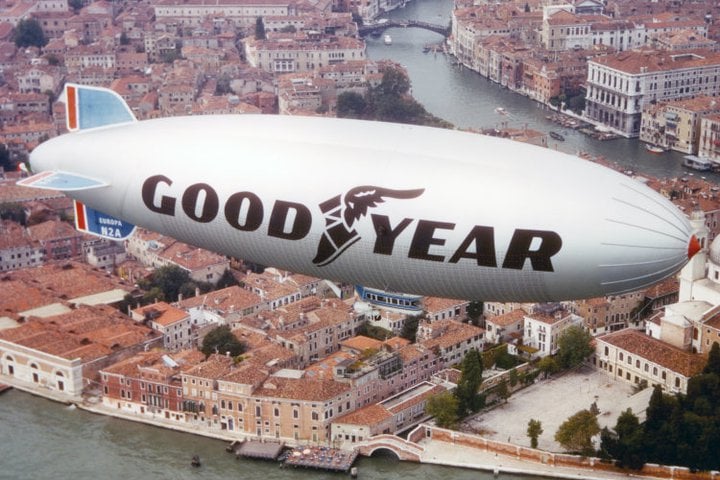
Akron was the rubber capital of the world. Buy an American car between the 1920s and the late 1950s, and there was a three-in-four chance the tires on the showroom floor came from an Akron factory. Firestone, B.F. Goodrich, General Tire, and Goodyear (NASDAQ:GT | GT Price Prediction) were more than corporate logos. They were industrial royalty.
Those heritage logos still sit on tire warehouse racks today. Look at the corporate registrations, however, and the ownership picture changes quickly:
- General Tire is owned by Continental AG in Hanover, Germany ($628 million in 1987).
- Firestone is owned by Bridgestone in Tokyo, Japan ($2.6 billion in 1988).
- Uniroyal-Goodrich is owned by Michelin in Clermont-Ferrand, France ($1.5 billion in 1989 to 1990).
- Cooper Tire was acquired by Goodyear in 2021, in a deal with an enterprise value of roughly $2.5 billion.
Of the original titans that once commanded 80% of the domestic market, only Goodyear remains an independent, American-headquartered manufacturer.
The slide unfolded over decades, and it followed a pattern that successful companies often fall into. What makes you wildly successful in one era is often the exact thing that paralyzes you in the next.
Built for Yesterday
Dominance rarely happens by accident.
In 1870, Dr. Benjamin Franklin Goodrich grew tired of practicing medicine and moved to Summit County, Ohio. He saw the logistical promise of the Ohio & Erie Canal and built the first rubber factory west of the Alleghenies, producing garden hoses, fire equipment, and bicycle tires. Then Detroit started building cars.
In 1898, Frank Seiberling bought an abandoned strawboard factory to launch Goodyear. Harvey Firestone set up shop in 1900. William O’Neil founded General Tire in 1915.
The inflection point came in 1906, when Henry Ford ordered 2,000 sets of pneumatic tires from Firestone for his Model N. Two years later, the Model T arrived, mass production took off, and Akron locked in Detroit’s original-equipment supply contracts for half a century.
Between 1910 and 1920, Akron’s population more than tripled as tens of thousands of workers crossed the Ohio River to take factory jobs.
To meet that demand, companies built massive, multi-story brick factories packed tight against the hillsides. The plants were designed around gravity. Freight elevators hauled raw rubber bales and carbon black to the top floors, where mixers broke them down. The rubber then dropped floor by floor through chutes to be milled, calendered, built, and cured in subterranean pit presses.
For fifty years, this vertical assembly line was an engineering masterpiece. Then the physics of tire building changed.
The Sunk-Cost Trap
In 1946, a French company named Michelin patented the steel-belted radial tire.
Traditional American “bias-ply” tires used cords running diagonally across the tire carcass. As the wheel turned, the sidewall and tread flexed together, generating internal friction and heat, and the tire wore out sooner than its radial rival.
Michelin’s radial design ran its plies straight across the tire, capped by a rigid steel-wire belt under the tread. That architecture separated sidewall flex from the contact patch, reduced rolling resistance, and extended tread life.
Every American executive knew radials were a superior product. So why didn’t they build them immediately?
Because doing so meant writing off hundreds of millions of dollars in existing infrastructure. Radial tires required two-stage drum machinery instead of flat drums. More critically, they required continuous, single-story horizontal layouts, assembly lines that could not fit inside Akron’s multi-story brick towers.
When the cost of admitting your existing setup is obsolete runs high enough, smart people will go to great lengths to convince themselves the old way can be saved.
American manufacturers hedged. They rolled out compromise “belted-bias” tires, such as the Goodyear Polyglas, hoping minor tweaks would hold off radial imports without an overhaul of their capital base. The gamble failed.
When Detroit finally demanded true radial tires in the 1970s, the transition turned into an emergency. Firestone tried to modify its existing bias-ply machinery to manufacture radials on the cheap.
The shortcut proved catastrophic. Adhesion and curing problems caused widespread tread separations, which contributed to 34 deaths, congressional hearings, and an October 1978 recall of roughly 7 million Firestone 500 tires.
The liability and debt broke the back of Ohio’s manufacturing base. Goodyear ended passenger tire production in Akron in the late 1970s. Firestone closed its primary passenger plants between 1980 and 1981. B.F. Goodrich exited in 1981.
On August 20, 1982, General Tire built its final passenger tire on Englewood Avenue, ending 112 years of passenger tire manufacturing in Rubber City.
The New Map
When a domestic industry is crippled by restructuring debt and product liability, foreign competitors with advanced technology and clean balance sheets see an obvious opening.
Over the next four decades, foreign conglomerates bought the dealer networks and automaker contracts they lacked:
- Continental AG acquired General Tire in 1987.
- Bridgestone bought Firestone in 1988, moving its commercial headquarters to Nashville, Tennessee.
- Michelin absorbed Uniroyal-Goodrich by 1990.
Production stayed in the United States and simply moved south.
Manufacturers traded the Rust Belt’s unionized plants and high legacy costs for Southeastern right-to-work states offering cheaper power and local tax incentives.
Today, South Carolina is widely called the tire capital of the United States. Modern Tire Dealer’s 2023 Book of Facts counts 12 tire plants in the state producing 144,000 tires per day, and the state’s tire exports topped $1.7 billion in 2021. Michelin, Bridgestone, Continental, and Giti all run plants there. Along the I-85 and I-75 corridors, tire factories feed foreign-owned assembly plants, including BMW in Spartanburg, Volvo in Ridgeville, Mercedes-Benz in Vance, Alabama, and Volkswagen in Chattanooga, Tennessee.
Investment has continued. Foreign tire makers keep adding plants across Tennessee and South Carolina. The factories remain in America, but a growing share of the profits flows to overseas owners.
The Compounding Friction of Heavy Industry
A century after Henry Ford’s first order, tire manufacturing remains an unforgiving, capital-heavy business facing a fresh wave of disruption.
The Electric Vehicle Paradox. Heavy battery packs add considerable curb weight, while electric motors deliver instant torque from a standstill. That combination wears tires down faster than on gas-powered cars. Manufacturers have responded with tires engineered to carry heavier loads and with acoustic foam lining the tire interior to dampen cavity noise.
The Raw Material Bottleneck. Natural rubber comes overwhelmingly from Southeast Asia. Thailand, Indonesia, Vietnam, and Malaysia account for nearly 80% of global natural rubber output, which leaves supply exposed to plant disease and shipping disruptions.
The Regulatory Quirk. Under FTC rules, an unqualified “Made in USA” label requires “all or virtually all” domestic components. Natural rubber is a major part of a tire’s weight and cannot be grown at commercial scale in the United States, so few if any tires can meet that standard.
The Tariff Squeeze. New U.S. trade tariffs have added a fresh layer of cost pressure across the industry. In August 2025, Goodyear raised its estimate of the annualized tariff cost to about $350 million, citing higher U.S. rates on Brazil-sourced retread products and truck tires from its Vietnam joint venture. By its February 2026 earnings presentation, the company’s estimated annualized tariff cost had come down to about $300 million. On the second-quarter 2026 earnings call, management said tariffs were a $32 million headwind in that quarter and expected a full-year impact of about $50 million.
For Goodyear, staying independent has required relentless restructuring. The “Goodyear Forward” plan, announced at the end of 2023, originally aimed to cut costs by $1.3 billion by the end of 2025. By year-end 2025, the company reported $1.25 billion in cumulative segment operating income benefits, about $150 million above its original commitment, and had reached a $1.5 billion annualized run rate.
The company also completed three major asset sales. It sold its off-the-road tire business to Yokohama Rubber in February 2025 for $905 million in cash. It completed the Dunlop brand sale to Sumitomo Rubber Industries in May 2025, for $735 million in gross closing proceeds: $526 million for the brand, $105 million as a transition support fee, and $104 million for inventory. In October 2025, it completed the $650 million sale of its polymer chemicals business. Goodyear said the three deals generated about $2.3 billion, which it used primarily to reduce debt.
The results since then have remained difficult. Goodyear reported a second-quarter 2026 net loss of $204 million and a first-half net loss of $453 million, with total debt of $7.19 billion at mid-year.
Its third-quarter 2026 net loss was $238 million, following a first quarter in which tire unit shipments had already fallen 11.6% from the year before. Goodyear’s independence has been bought with restructuring, and the balance sheet still carries the cost.
The Takeaway
History is full of companies that made excellent products for a world that had already moved on.
Akron built the defining manufacturing machine of the twentieth century. It engineered vertical plants, won the biggest customers, and set the terms of an entire nation’s supply chain.
Yet when radial technology arrived, that same machine became an anchor. The plants were too tall to retool, the sunk capital was too large to walk away from, and minor compromises were too tempting to resist.
In business, the hardest rival to defeat is often the weight of your own past success.
Editor’s note: This update adds Goodyear’s 2026 results, including a $204 million second-quarter net loss, a $238 million third-quarter net loss, and $7.19 billion in total debt at mid-year. It also corrects the Dunlop sale to its $735 million closing total, updates the tariff and Goodyear Forward figures, and revises South Carolina tire output to 144,000 tires per day and the 1978 Firestone recall details.
Contact [email protected] for any questions or corrections.
Don Lair writes about options income, dividend strategy, and the kind of boring-but-durable investing that actually funds retirement. He's the founder of FITools.com, an independent contributor to 24/7 Wall St., and a former writer for The Motley Fool.