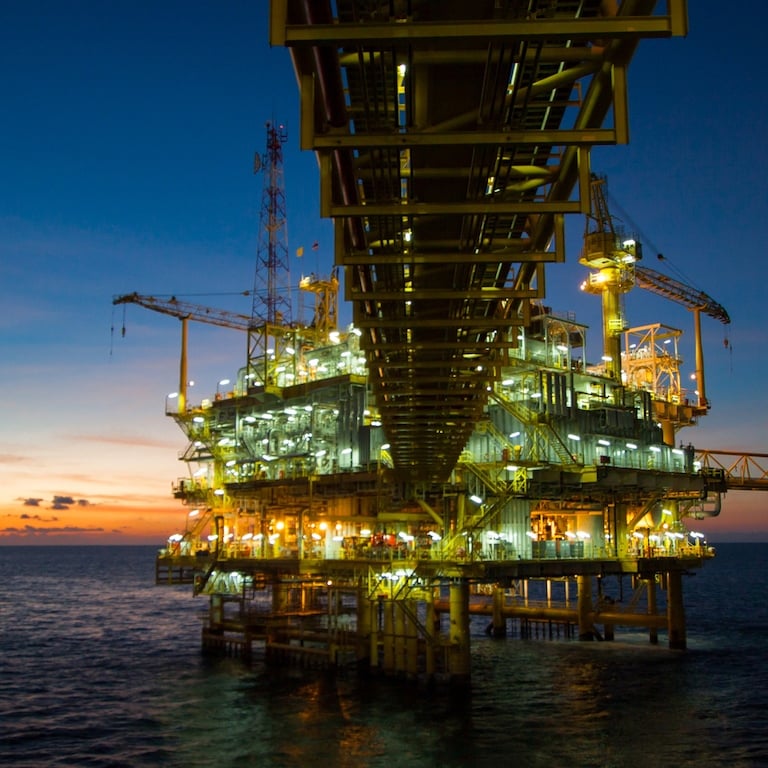
Are the Bahamas at Risk as Oil Companies Start Drilling in the Area?
Mention the Bahamas to most people and you’ll get a sigh, followed by imagined images of a tropical paradise surrounded by azure waters. That romantic image may be about to change, perhaps for good. According to the recent “Assessment of…


That romantic image may be about to change, perhaps for good. According to the recent “Assessment of undiscovered conventional oil and gas resources of South America and the Caribbean, 2012” report by the U.S. Geological Survey, the region hold an estimated 126 billion barrels of oil and 679 trillion cubic feet of undiscovered natural gas in 31 geologic provinces of South America and the Caribbean.
The Bahamas share of this windfall?
Up to 4.3 billion barrels. Hedging its bets, the authors noted that these were high-end estimates, but that there was a “95 percent chance” of at least 554 million barrels of recoverable oil in Bahamian waters.
Will these remain undeveloped?
Unlikely – the Bahamas Petroleum Company’s annual report for 2011 noted that the licenses it received in 2007 from the government were for a 12-year period, giving BPC a 100 percent interest in five large offshore oil and natural gas exploration licenses covering more than 6,100 square miles, the equivalent to 80 UK North Sea blocs.
But this is a mere drop in the proverbial bucket, as the Bahamas Exclusive Economic Zone Territorial waters cover nearly 243,000 square miles, from offshore Florida to the northern coasts of Cuba and Jamaica.
Champing at the bit, in 2011 Canaccord Brokers issued “A Competent Person’s Report” (CPR) on the Bahamas noting that the islands’ waters could contain recoverable resources of 2.2 billion barrels in three structures, placing the geological chance of success for the individual structures at 11 percent to 30 percent, which Canaccord said was relatively high for wildcat exploration territory.
What about the recent empty offshore boreholes drilled by Spain’s Repsol S.A. in Cuban waters? Could Bahamian waters also come up dry?
Not to worry, according to the Bahamas Petroleum Company’s CEO Simon Potter, who told the press, “There’s very little read across to our well at all. It’s a different geographical area, the rocks the Repsol guys are targeting. We are targeting in our area rocks we believe are much more prospective. They are deeper and thousands of years older.” Further calming the stomachs of nervous investors Potter added that BPC had “much better prospects” of striking and that its $50 million investment to-date had exceeded its license requirements “by over 60 times.”
Not surprisingly, the Bahamian business community is strongly behind BPC. Last month the Bahamas Chamber of Commerce and Employers Confederation (BCCEC) chairman Chester Cooper backed oil exploration in Bahamian waters once regulatory safeguards were in place, saying, “The likely revenues can eliminate the National Debt in five years and contribute significantly to education, healthcare and development of infrastructure across the country and, importantly, an expansion in GDP leading to more favourable economic metrics.”
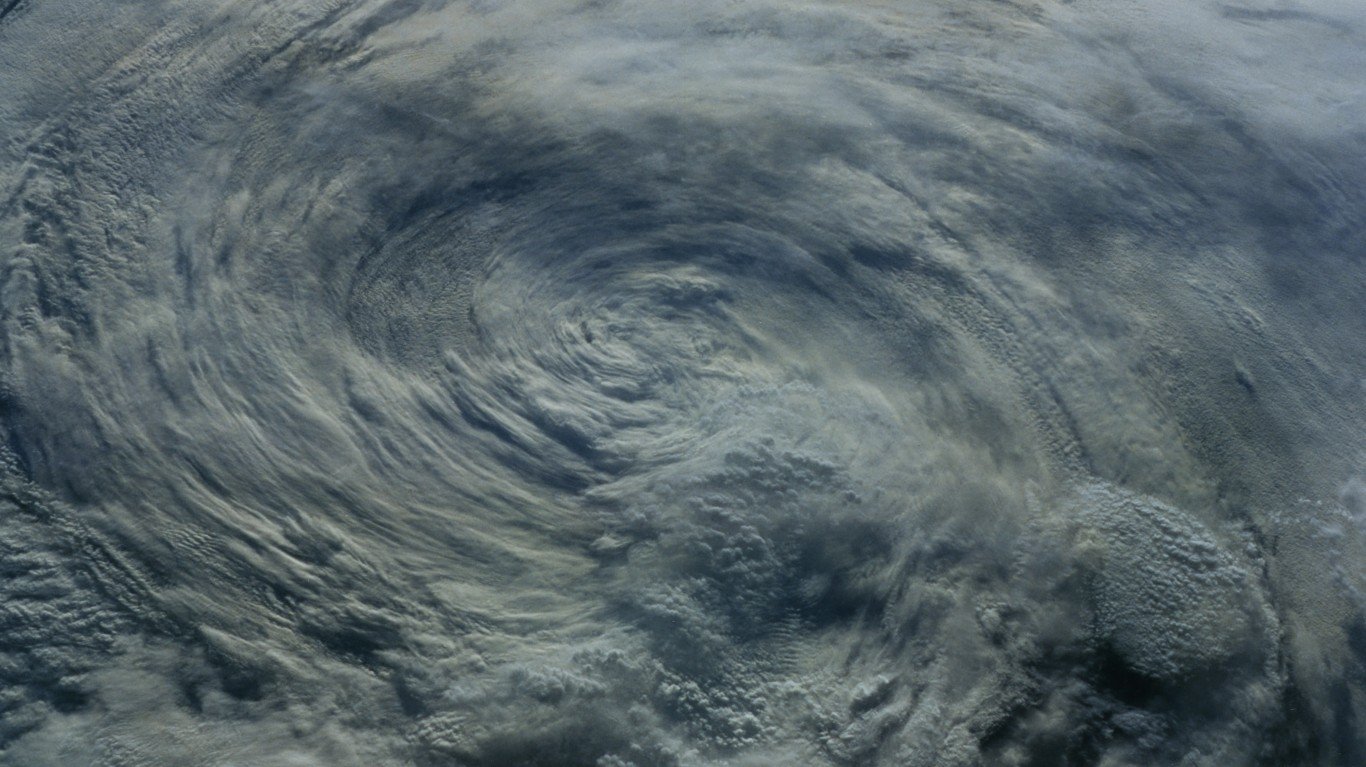
Cooper added that that a conservative estimate was that more $1 billion annually could be generated if BPC discovered extractable oil and that the country’s oil sector had the potential to “transform the economy,” both directly and through spin-off commercial activities. While the projected oil revenues are focusing the minds of Bahamian politicians, perhaps they should talk to some meteorologists before making final decisions. As a local news source notes, “The Bahamas on average gets brushed or hit by a hurricane once every three years, and gets hit by a major hurricane once every 12 years. There are three Bahamian islands ranked in the top 10 effects from tropical systems of all cities, islands and countries in the North Atlantic Basin – Andros, Abaco and Grand Bahama.” As the Atlantic hurricane season officially runs from 1 June to 30 November, Mother Nature might yet remind the politicians in Nassau of the fact during the next five months.
Furthering inducing caution amongst the Bahamian political elite is the fact that, should a major oil spill occur, it could quickly find itself enmeshed in some nasty demands for compensation from the United States, Cuba and Jamaica, which could drain its Treasury fairly quickly.
If the last two years have taught the global community, if not energy companies anything, it is that no amount of technology is failsafe (BP, Gulf of Mexico), or that nature cannot suddenly turn more violent than expected (Fukushima.)
The Bahamian electorate should pressure its politicians to take these variables into account before their pristine turquoise waters turn muddy brown whilst not forgetting that tourists, unlike oil, are a renewable resource and that the tourism industry employs directly or indirectly about 50 percent of the Bahamian workforce and currently accounts for approximately half of the country’s Gross Domestic Product.
By. John C.K. Daly of Oilprice.com
Contact [email protected] for any questions or corrections.
Douglas A. McIntyre is the co-founder, chief executive officer and editor in chief of 24/7 Wall St. and 24/7 Tempo. He has held these jobs since 2006.
McIntyre has written thousands of articles for 24/7 Wall St. He is an expert on corporate finance, the automotive industry, media companies and international finance. He has edited articles on national demographics, sports, personal income and travel.
His work has been quoted or mentioned in The New York Times, The Wall Street Journal, Los Angeles Times, The Washington Post, NBC News, Time, The New Yorker, HuffPost USA Today, Business Insider, Yahoo, AOL, MarketWatch, The Atlantic, Bloomberg, New York Post, Chicago Tribune, Forbes, The Guardian and many other major publications. McIntyre has been a guest on CNBC, the BBC and television and radio stations across the country.
A magna cum laude graduate of Harvard College, McIntyre also was president of The Harvard Advocate. Founded in 1866, the Advocate is the oldest college publication in the United States.
TheStreet.com, Comps.com and Edgar Online are some of the public companies for which McIntyre served on the board of directors. He was a Vicinity Corporation board member when the company was sold to Microsoft in 2002. He served on the audit committees of some of these companies.
McIntyre has been the CEO of FutureSource, a provider of trading terminals and news to commodities and futures traders. He was president of Switchboard, the online phone directory company. He served as chairman and CEO of On2 Technologies, the video compression company that provided video compression software for Adobe’s Flash. Google bought On2 in 2009.