Ahead of Earnings, Is Exxon or Chevron a Better Value?
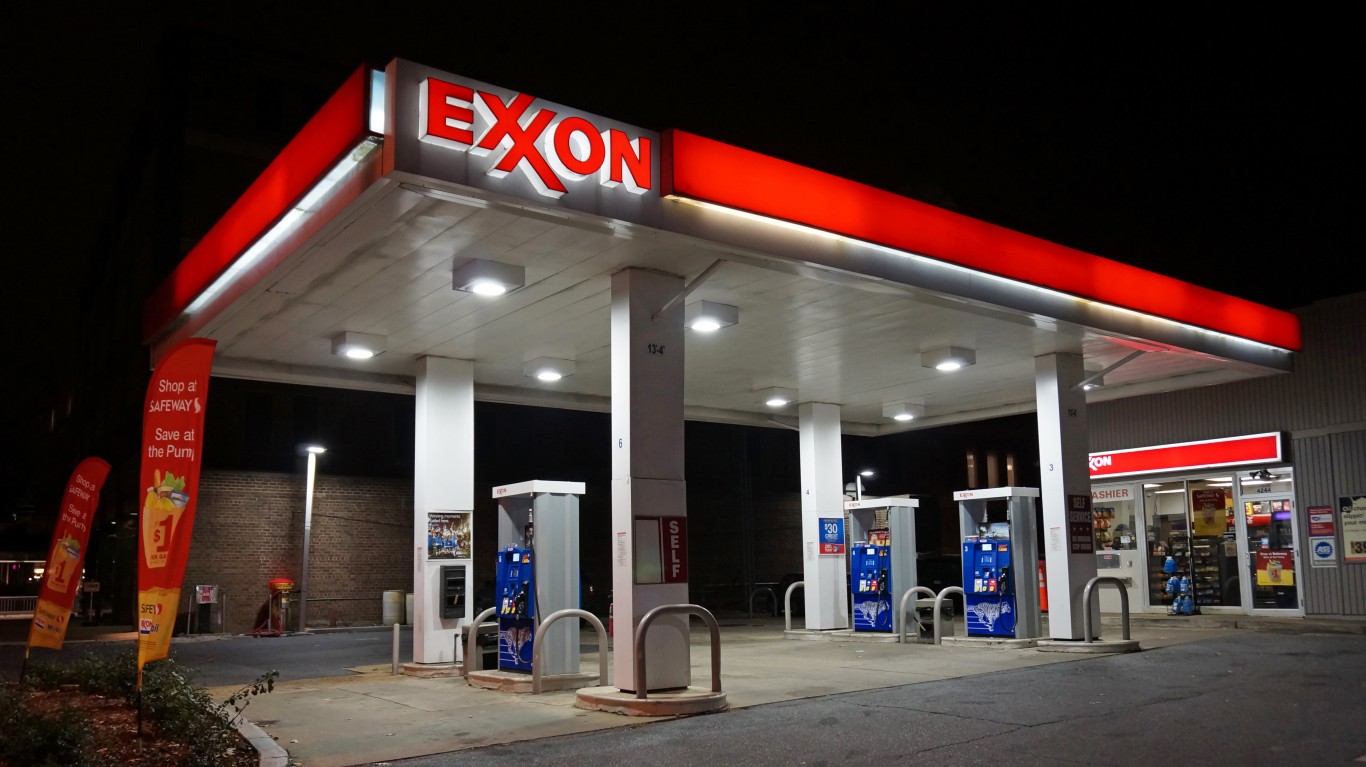
Before markets open next Friday, Exxon Mobil and Chevron are scheduled to report second-quarter earnings. Which looks like the better value now?

 Before markets open next Friday, Exxon Mobil Corp. (NYSE: XOM) and Chevron Corp. (NYSE: CVX) are scheduled to report second-quarter earnings. The two U.S.-based super-major integrated oil companies have had a tough 12 months. Crude oil prices began dropping in mid-July of 2014 and a dip has become a landslide. Exxon’s shares have dropped nearly 23% in the 12-month period and Chevron’s are down nearly 32%.
West Texas Intermediate (WTI) crude oil set a new 52-week low on Thursday at $48.21, nearly 50% below its high of $94.88 in the same period. That means that the billions of barrels of oil and natural gas that oil companies own are worth about 50% less than they were a year ago.
As bad as oil prices have been, natural gas prices have not fared much better. Natural gas closed at $2.82 per million BTUs on Thursday, more than a dollar per million BTUs below the year ago price of $3.93.
These adjustments to the two companies’ asset values are, however, just one element in the total picture. Because shareholders often care most about dividends, Chevron’s 4.6% dividend yield looks a lot better than Exxon’s 3.6% yield. The issue, of course, is how long the two companies can maintain those yields with oil price below $50 a barrel and natural gas below $3 per thousand cubic feet.
ALSO READ: With Natural Gas Demand Growing, 4 Preferred Stocks to Buy
On the basis of their forward price-to-earnings (P/E) ratios, the two companies are roughly equal, with a ratio of 15.47 for Chevron and 15.28 for Exxon. Historically, forward P/E for these two companies falls in a range of 11 to 12. Comparing price-to-book ratios for both, Exxon’s P/B is 1.98, compared with Chevron’s 1.12.
When it comes to those dividend payments, cash on hand is good metric to consider. Exxon reported about $5.2 billion cash at the end of the first quarter, while Chevron reported $13.1 billion. Exxon’s annual dividend of $2.92 is paid on about 4.2 billion shares outstanding and totals about $12.3 billion a year. With operating cash flow of $38 billion over the past 12 months, Exxon faces no significant danger of reducing or eliminating its dividend.
Chevron’s annual dividend is currently $4.28 and the company has about 1.88 billion shares outstanding. That works out to about $8.05 billion in annual dividend payments. Chevron’s operating cash flow was $25.38 billion, so its dividend is not in much danger either.
Share price gains are less encouraging. At Exxon, the consensus price target on the stock is $92.35. At Thursday’s closing price of $81.14, the potential upside on the stock is 13.8%.
Chevron stock closed at $92.94 on Thursday, and the consensus price target is $110.17, which pencils out to an implied gain of about 18.5%.
On the basis of dividend yield alone, Chevron looks like a better choice. And at a P/B ratio of 1.12, the stock also appears to be a better value.
ALSO READ: 5 Long-Term Opportunities Forming in MLPs
The catch is which direction the price of oil decides to take. Both stocks are more likely candidates for buy-and-hold investors, but again, the price of oil will determine share price growth.
Both Exxon and Chevron are set to report second-quarter results on Friday, July 31. Exxon is expected to post earnings per share of $1.06 on revenues of $72.48 billion, compared with per-share earnings of $2.05 and revenues of $111.65 billion in the second quarter of 2015.
Chevron is tagged to post earnings per share of $1.08 on revenues of $30.91 billion, compared with per-share earnings of $2.98 and revenues of $57.94 billion in the year-ago quarter.
Contact [email protected] for any questions or corrections.
Paul Ausick has been writing for 247Wallst.com for more than a decade. He has written extensively on investing in the energy, defense, and technology sectors. In a previous life, he wrote technical documentation and managed a marketing communications group in Silicon Valley.
He has a bachelor's degree in English from the University of Chicago and now lives in Montana, where he fishes for trout in the summer and stays inside during the winter.