Homebuilder Confidence Takes a Hit in June
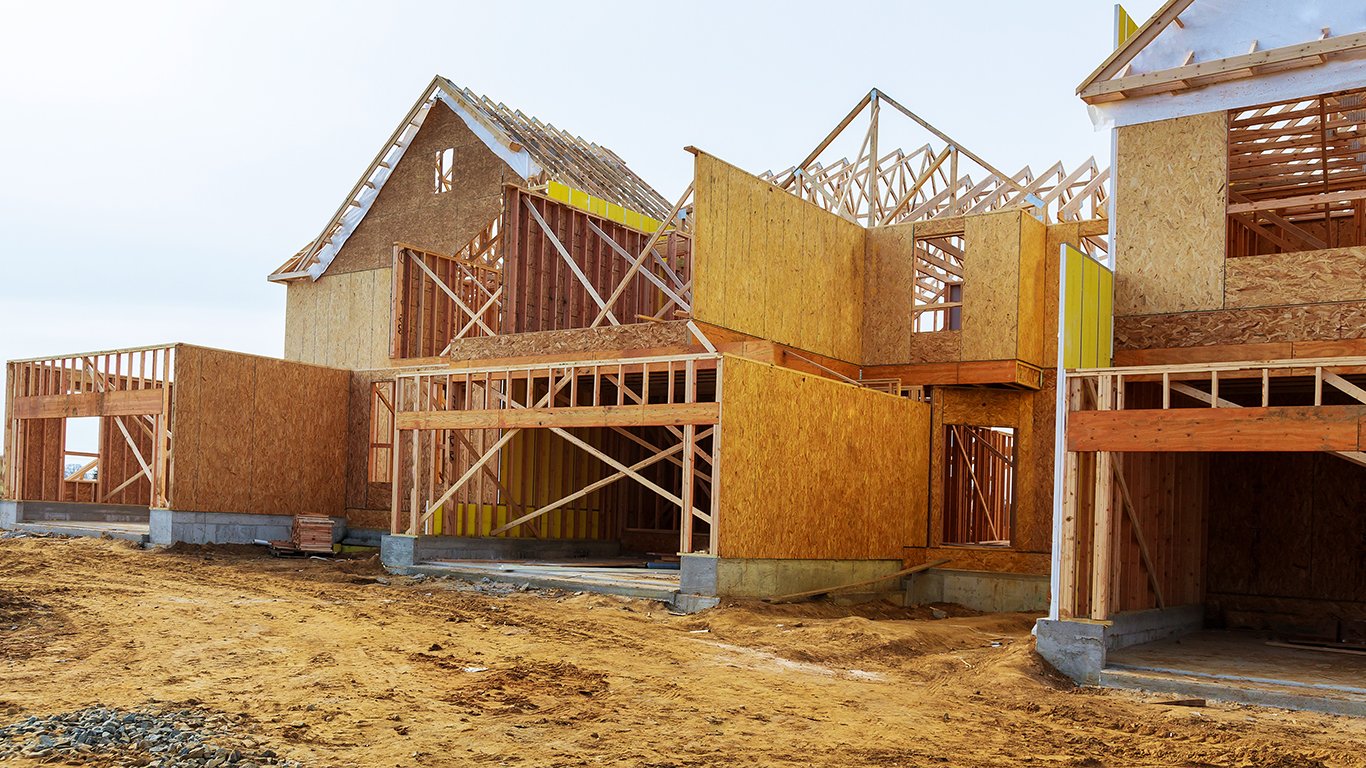
The National Association of Home Builders reported a drop of two points in its housing market index in June. Soaring prices for lumber could get worse as trade relations between the U.S. and Canada deteriorate.


The National Association of Home Builders (NAHB)/Wells Fargo housing market index (HMI) for June dipped two points from the May reading of 70 to 68. The HMI posted an 18-year high of 74 in December 2017. Economists polled by Bloomberg were expecting an index reading of 70.
An index reading above 50 indicates that more builders view sales conditions as good than view them as poor. NAHB Chair Randy Noel said that while demand continues rising, record-high lumber prices have added nearly $9,000 to the price of a new single-family home since January 2017.
Further tariffs on imports from Canada may exacerbate the cost problem for builders. Lumber futures have risen by about 20% in the past six months and are up about 84% over the past 24 months.
The current sales conditions subindex for May slipped from 76 to 75 and the subindex that estimates prospective buyer traffic also slipped a point to 50. The subindex measuring sales expectations for the next six months dropped from 77 to 76.
NAHB’s chief economist, Robert Dietz, said:
Improved economic growth, continued job creation and solid housing demand should spur additional single-family construction in the months ahead. However, builders do need access to lumber and other construction materials at reasonable costs in order to provide homes at competitive price points, particularly for the entry-level market where inventory is most needed.
In the NAHB’s regions, three-month moving average indexes dipped in just one of four regions. The South’s index score fell one point to 71 while scores in the Midwest and West were unchanged at 65 and 76, respectively. The score rose two points to 57 in the Northeast.
Contact [email protected] for any questions or corrections.
Paul Ausick has been writing for 247Wallst.com for more than a decade. He has written extensively on investing in the energy, defense, and technology sectors. In a previous life, he wrote technical documentation and managed a marketing communications group in Silicon Valley.
He has a bachelor's degree in English from the University of Chicago and now lives in Montana, where he fishes for trout in the summer and stays inside during the winter.