When Mortgages Rate Jump to 7%, Who Can Afford a House?
Mortgage rates rose to over 7% on a 30-year fixed loan. Many potential first-time homeowners believe they cannot afford to purchase a home.

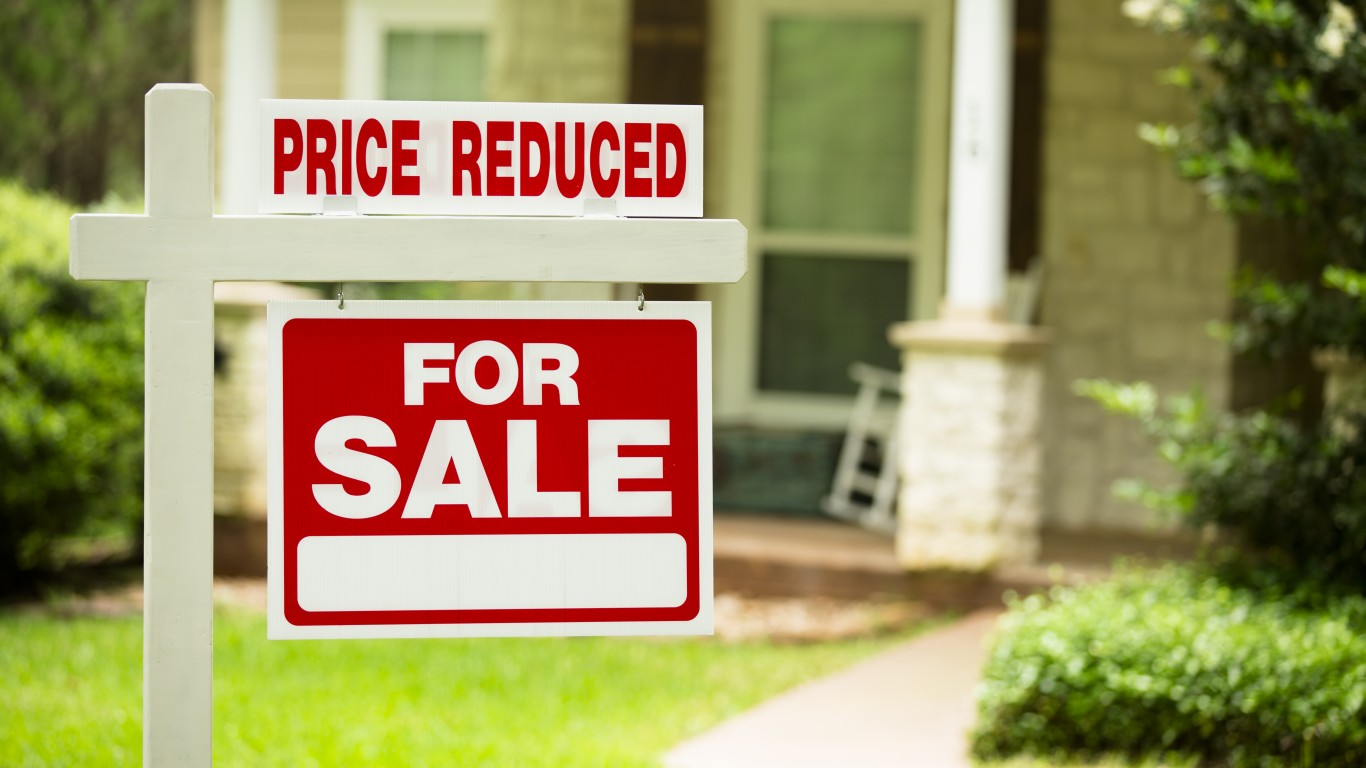
Mortgage rates rose to over 7% on a 30-year fixed loan. It is the first time they have been that high since May. It is also a reminder that the days when 3% mortgages made homes more affordable are long past. The average rate was 2.96% in 2021.
The Wall Street Journal pointed out that “Rates add up quickly when it comes to mortgages: A difference of a few percentage points can translate to hundreds of thousands of dollars in interest over the life of a 30-year loan.” A 3% mortgage on a $450,000 house drove a monthly payment of $1,925. When rates moved to 7%, the monthly payment rose to $2,923, according to the National Association of Home Builders.
One byproduct of this was that people with low mortgage rates decided not to sell their houses. Their low payments were simply too attractive. That took potential inventory off the market, which likely made home prices even higher as supply fell.
Americans turned to renting as potential buyers waited for mortgage rates to drop. A third of people rented homes and apartments in 2024. About half of potential first-time homeowners believe they cannot afford to purchase a home. Among the solutions to this is people who have saved tens of thousands for down payments. However, to reduce monthly payments, a down payment would need to rise to 30% to 40% of the total home price.
Under normal circumstances, the income needed to buy a home is not only based on monthly payments. People need to come up with down payments, which are usually 20%. They also need to cover property taxes and insurance. Usually, renters do not have this problem.
Owning a home in the United States requires an income of well over $110,000 at current mortgage rates. Most of the balance of potential buyers will need to wait until their incomes rise or mortgages come down. Right now, for these people, rates are moving in the wrong direction.
This Is How Much You Need to Make to Comfortably Afford a $1 Million Home
Contact [email protected] for any questions or corrections.
Douglas A. McIntyre is the co-founder, chief executive officer and editor in chief of 24/7 Wall St. and 24/7 Tempo. He has held these jobs since 2006.
McIntyre has written thousands of articles for 24/7 Wall St. He is an expert on corporate finance, the automotive industry, media companies and international finance. He has edited articles on national demographics, sports, personal income and travel.
His work has been quoted or mentioned in The New York Times, The Wall Street Journal, Los Angeles Times, The Washington Post, NBC News, Time, The New Yorker, HuffPost USA Today, Business Insider, Yahoo, AOL, MarketWatch, The Atlantic, Bloomberg, New York Post, Chicago Tribune, Forbes, The Guardian and many other major publications. McIntyre has been a guest on CNBC, the BBC and television and radio stations across the country.
A magna cum laude graduate of Harvard College, McIntyre also was president of The Harvard Advocate. Founded in 1866, the Advocate is the oldest college publication in the United States.
TheStreet.com, Comps.com and Edgar Online are some of the public companies for which McIntyre served on the board of directors. He was a Vicinity Corporation board member when the company was sold to Microsoft in 2002. He served on the audit committees of some of these companies.
McIntyre has been the CEO of FutureSource, a provider of trading terminals and news to commodities and futures traders. He was president of Switchboard, the online phone directory company. He served as chairman and CEO of On2 Technologies, the video compression company that provided video compression software for Adobe’s Flash. Google bought On2 in 2009.