Global Economic Agency Says Worldwide GDP Has Peaked, Will Drop
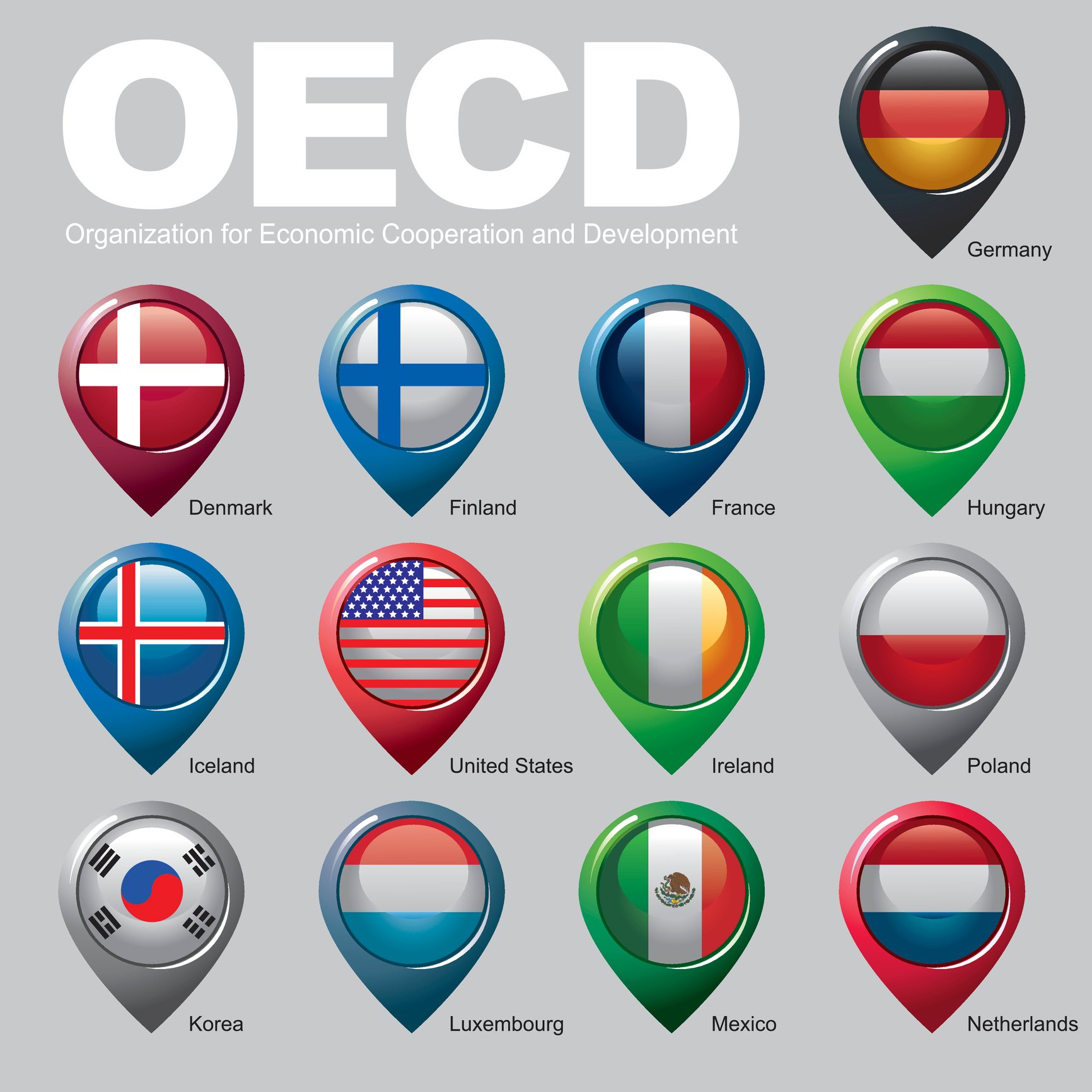
The Organisation for Economic Co-operation and Development (OECD) issued its forecast for the global economy. The widely regarded agency reported worldwide GDP growth has peaked and will start to fall, particularly in the U.S. and other developed countries. The OECD…


The Organisation for Economic Co-operation and Development (OECD) issued its forecast for the global economy. The widely regarded agency reported worldwide GDP growth has peaked and will start to fall, particularly in the U.S. and other developed countries.
The OECD Economic Outlook 2018 covers the economies of 46 nations and reviews the effects of tariffs, regulations, debt, wages, and central bank policies among other things. The report’s authors take into account the average GDP growth rate from 2011 to 2018 both worldwide and by nation. In addition, its analysis covers real GDP growth in 2017, and forecasts for 2018, 2019, and 2020. It also includes forecasts for the final quarter of 2018, 2019, and 2020. The primary conclusion of the authors is that “The global economy has peaked. Global GDP is expected to ease gradually from 3.7% in 2018 to 3.5% in 2019 and 2020 broadly in line with underlying global potential output growth.”
The deceleration will vary widely. U.S. GDP growth is expected to drop to from a 3.1% rate in the fourth quarter of this year to 2% in the same quarter of 2020. This is broadly in line with other estimates from The World Bank and IMF. Private economists have also issued pessimistic forecasts for the U.S.
GDP in the two other major developed nations are also expected to slow considerably. In particular, Euro area GDP expansion is forecast to be 1.5% in the fourth quarter of this year dropping to 1.4% in the fourth quarter of 2020.
Particularly notable is the prediction for China, the world’s second largest economy by GDP. The OECD expects China’s GDP rise will by 6.4% in Q4 of this year and will drop to 6% in the same period in 2020. China’s average GDP expansion by year from 2011 to 2018 was 7.1%.
Trade tensions were listed as one of three primary reasons for the global slowdown. This was followed by oil prices and tightening financial conditions. Although crude prices have dropped recently, the OECD does not expect that trend to continue, but rather will reverse itself in years ahead. Inflation was also listed as a concern, and in some economies, it has already started to pick up for the first time since The Great Recession.
The effects of trade tensions would be particularly burdensome for the U.S. and Chinese economies. The authors of the report write “Further moves by the United States and China to raise barriers on bilateral trade would hit output in these economies with adverse effects on global growth and trade” Current and pending tariffs between the U.S. and China have already reached above $200 billion.
The OECD believes there is still a chance for what is known as a “soft landing” if national leaders can improve wage growth and drop trade tensions. However, the numbers the organization released show that the chances for that are not encouraging.
Contact [email protected] for any questions or corrections.
Douglas A. McIntyre is the co-founder, chief executive officer and editor in chief of 24/7 Wall St. and 24/7 Tempo. He has held these jobs since 2006.
McIntyre has written thousands of articles for 24/7 Wall St. He is an expert on corporate finance, the automotive industry, media companies and international finance. He has edited articles on national demographics, sports, personal income and travel.
His work has been quoted or mentioned in The New York Times, The Wall Street Journal, Los Angeles Times, The Washington Post, NBC News, Time, The New Yorker, HuffPost USA Today, Business Insider, Yahoo, AOL, MarketWatch, The Atlantic, Bloomberg, New York Post, Chicago Tribune, Forbes, The Guardian and many other major publications. McIntyre has been a guest on CNBC, the BBC and television and radio stations across the country.
A magna cum laude graduate of Harvard College, McIntyre also was president of The Harvard Advocate. Founded in 1866, the Advocate is the oldest college publication in the United States.
TheStreet.com, Comps.com and Edgar Online are some of the public companies for which McIntyre served on the board of directors. He was a Vicinity Corporation board member when the company was sold to Microsoft in 2002. He served on the audit committees of some of these companies.
McIntyre has been the CEO of FutureSource, a provider of trading terminals and news to commodities and futures traders. He was president of Switchboard, the online phone directory company. He served as chairman and CEO of On2 Technologies, the video compression company that provided video compression software for Adobe’s Flash. Google bought On2 in 2009.